.jpg)
Arina|Oct 13, 2026
Do you want to get notified when new software or services are added to Krowdbase? Sign up for our newsletter and stay ahead with the latest tools, providers, features, and updates.

Apr 20, 2026
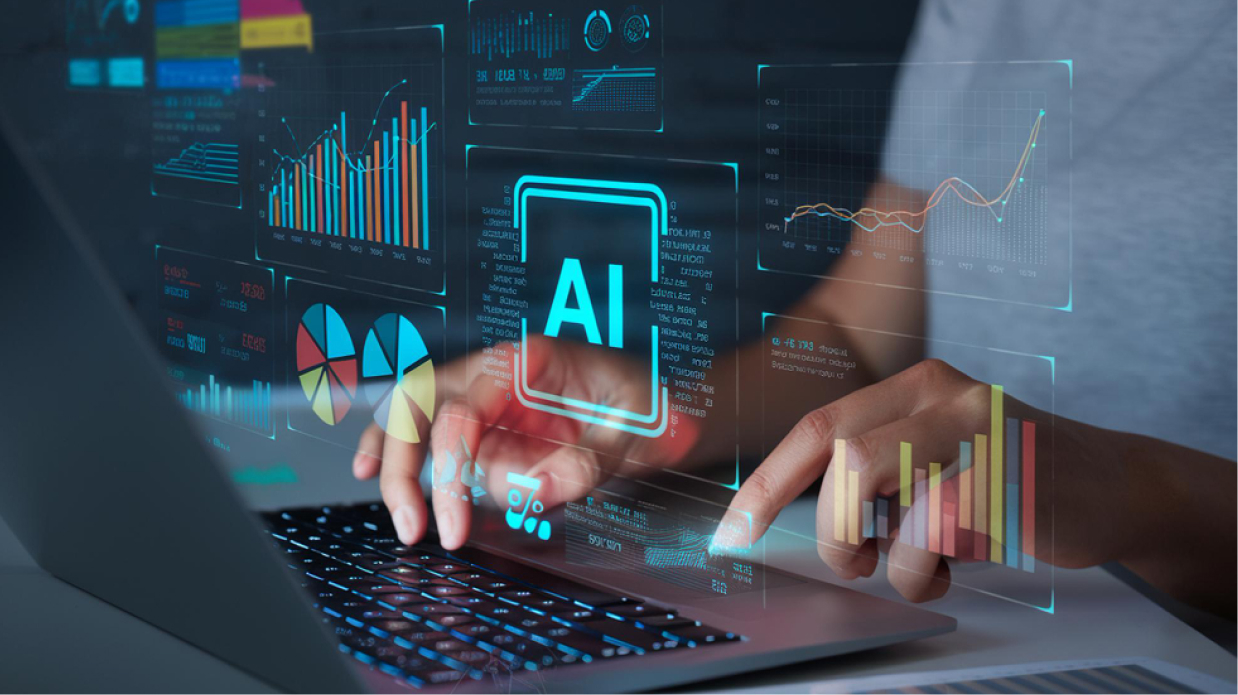
In today’s data-driven economy, businesses are no longer making decisions based solely on intuition or past experience. The sheer volume of data generated across operations, marketing, finance, and customer interactions has created both an opportunity and a challenge. While data holds valuable insights, extracting meaningful patterns and predicting future outcomes requires more than traditional analysis.
This is where artificial intelligence has emerged as a powerful solution.
AI is transforming how businesses approach forecasting and decision-making. Instead of reacting to past events, organizations can now anticipate trends, predict outcomes, and act proactively. This shift is redefining how companies operate, compete, and grow.
Understanding how AI for predictive analytics and forecasting works—and how businesses are using it—can provide valuable insights for organizations looking to stay ahead in an increasingly competitive environment.
Predictive analytics refers to the use of data, statistical algorithms, and machine learning techniques to identify patterns and predict future outcomes. Forecasting, on the other hand, focuses specifically on estimating future trends, such as sales, demand, or financial performance.
Traditionally, these processes relied on historical data and basic statistical models. While effective to some extent, they often lacked the ability to handle complex variables and real-time changes.
AI has significantly enhanced these capabilities. By analyzing vast datasets and identifying hidden patterns, AI can deliver more accurate and dynamic predictions.
This evolution allows businesses to move from reactive decision-making to proactive strategy.
In 2026, businesses operate in an environment where speed and accuracy are critical.
Market conditions change rapidly, customer preferences evolve constantly, and competition is more intense than ever. In such a landscape, relying on outdated forecasting methods can lead to missed opportunities and costly mistakes.
AI addresses this challenge by providing real-time insights and predictive capabilities. It enables businesses to anticipate demand, optimize operations, and respond quickly to changes.
As a result, AI has become an essential component of modern business strategy.
One of the most common applications of AI is in demand forecasting.
Businesses can analyze historical sales data, seasonal trends, and external factors to predict future demand. This helps optimize inventory levels, reducing the risk of overstocking or stockouts.
For example, retailers can anticipate which products will be in high demand during specific periods, ensuring they are adequately stocked.
Understanding customer behavior is crucial for business success.
AI enables companies to analyze customer interactions, purchase history, and browsing patterns to predict future actions. This allows businesses to tailor their marketing strategies and improve customer engagement.
Predictive models can identify which customers are likely to make a purchase, churn, or respond to specific campaigns.
Accurate sales forecasting is essential for planning and growth.
AI models can analyze multiple variables, including market trends, customer demand, and economic factors, to predict sales performance. This helps businesses allocate resources effectively and set realistic targets.
Unlike traditional methods, AI-driven forecasting adapts to changes in real time, improving accuracy.
AI is also transforming financial forecasting.
Businesses can use AI to predict revenue, expenses, and cash flow. This enables better financial planning and decision-making.
Additionally, AI can identify potential risks, such as market fluctuations or operational inefficiencies, allowing businesses to take preventive measures.
Supply chain management involves multiple variables and uncertainties.
AI helps businesses forecast demand, optimize logistics, and manage supplier relationships. By predicting potential disruptions, companies can take proactive steps to maintain efficiency.
This leads to improved reliability and reduced costs.
One of the most significant advantages of AI in predictive analytics is its ability to improve accuracy.
Traditional forecasting methods often rely on limited datasets and assumptions. In contrast, AI can process vast amounts of data and identify complex patterns that humans might overlook.
This leads to more precise predictions and better decision-making.
Efficiency is another key benefit. AI automates data analysis, reducing the time and effort required to generate insights. This allows businesses to focus on strategy and execution rather than manual processes.
Consider an eCommerce company that struggles with fluctuating demand.
By implementing AI-driven predictive analytics, the company can analyze customer behavior and seasonal trends to forecast demand accurately. This enables better inventory management and reduces waste.
Another example is a financial services firm that uses AI to predict market trends.
By analyzing historical data and real-time information, the firm can make informed investment decisions and minimize risk.
These real-world applications demonstrate the practical value of AI in forecasting and decision-making.
Businesses that do not adopt AI for predictive analytics often face several challenges.
Inaccurate forecasts can lead to poor decision-making, resulting in lost revenue or increased costs. Manual analysis is time-consuming and may not capture complex patterns.
Lack of real-time insights can make it difficult to respond to changes in the market. This puts businesses at a disadvantage compared to competitors who leverage AI.
These challenges highlight the importance of adopting advanced technologies.
Implementing AI requires a strategic approach.
Businesses must first identify areas where predictive analytics can create value. This involves understanding key challenges and defining clear objectives.
Data quality is critical. AI models rely on accurate and relevant data to generate reliable predictions.
Choosing the right tools and platforms is equally important. Businesses should look for solutions that align with their needs and integrate seamlessly with existing systems.
Platforms like Krowdbase.com can help organizations explore and compare AI-powered tools, making it easier to find suitable solutions.
The future of predictive analytics is closely tied to advancements in AI.
Machine learning models will become more sophisticated, enabling even more accurate predictions. Real-time analytics will continue to evolve, providing instant insights.
Integration with other technologies, such as IoT and cloud computing, will further enhance capabilities.
AI-driven forecasting will also become more accessible, allowing smaller businesses to benefit from advanced analytics.
These trends indicate that AI will play an increasingly important role in business strategy.
While AI offers significant benefits, businesses must avoid common pitfalls.
One mistake is relying solely on technology without understanding the underlying data. Human oversight is still essential.
Another issue is poor data quality, which can lead to inaccurate predictions.
Overcomplicating implementation can also create challenges. Businesses should start with clear objectives and scale gradually.
Finally, failing to measure results can limit the effectiveness of AI initiatives.
AI for predictive analytics and forecasting is transforming how businesses operate and compete.
By enabling accurate predictions, improving efficiency, and providing real-time insights, AI empowers organizations to make smarter decisions and stay ahead of the competition.
As businesses continue to generate and rely on data, the importance of AI-driven analytics will only grow.
For those looking to explore AI-powered tools and solutions, platforms like Krowdbase.com offer a valuable resource. By providing access to a wide range of technologies, they help businesses make informed decisions and unlock the full potential of their data.
In a rapidly evolving business landscape, the ability to predict and adapt is a powerful advantage—and AI is making that possible.