Arina|Oct 13, 2026
Do you want to get notified when new software or services are added to Krowdbase? Sign up for our newsletter and stay ahead with the latest tools, providers, features, and updates.

Apr 20, 2026

Artificial Intelligence is no longer a futuristic concept reserved for large tech companies—it has become a core driver of how modern businesses operate.
In 2026, organizations across industries are shifting from traditional, manual workflows to intelligent, AI-powered systems that can analyze, automate, and optimize tasks in real time. What once required hours of human effort can now be completed in minutes, often with greater accuracy and consistency.
This shift is not just about adopting new technology—it’s about redefining how work gets done.
Businesses today face increasing pressure to operate efficiently, reduce costs, and scale quickly. AI offers a solution by transforming routine processes into automated, data-driven workflows. From customer service to marketing and decision-making, AI is reshaping the foundation of business operations.
In this blog, we’ll explore how AI in business processes is driving this transformation, the challenges it solves, and how companies can leverage it to improve productivity and growth.
Before AI became widely accessible, business processes were largely manual and fragmented.
Operations teams relied on spreadsheets, emails, and disconnected systems to manage workflows. Customer support depended heavily on human agents handling repetitive queries. Marketing decisions were often based on assumptions rather than real-time data. While these systems worked, they were slow, prone to errors, and difficult to scale.
As businesses grew, these inefficiencies became more pronounced. Managing large volumes of data, coordinating across teams, and maintaining consistency required significant effort. Scaling operations often meant hiring more people, which increased costs without necessarily improving efficiency.
The introduction of AI has fundamentally changed this dynamic.
Today, AI systems can process vast amounts of data instantly, identify patterns, and automate repetitive tasks. Instead of reacting to problems, businesses can now predict and prevent them. Processes that once required multiple steps and human intervention can now run seamlessly in the background.
This evolution has shifted the focus from manual execution to strategic thinking, enabling businesses to operate more intelligently and efficiently.
One of the most significant impacts of AI can be seen in operations.
Traditional workflows often involve repetitive tasks such as data entry, order processing, and inventory management. These tasks are time-consuming and susceptible to human error. AI-powered automation eliminates these inefficiencies by handling routine processes with speed and precision.
For example, an eCommerce business can use AI to automatically update inventory levels, process orders, and manage logistics without manual intervention. This not only improves accuracy but also frees up time for teams to focus on more strategic activities.
Over time, this leads to smoother operations and better resource utilization.
Customer support has undergone a major transformation with AI.
In the past, businesses relied entirely on human agents to respond to customer queries. This often resulted in delays, inconsistent responses, and high operational costs. AI-powered chatbots and virtual assistants now provide instant, accurate responses to common questions, improving both speed and consistency.
More importantly, AI systems can learn from interactions and continuously improve over time. They can understand customer intent, provide personalized responses, and even predict issues before they arise.
This shift not only enhances customer satisfaction but also reduces the workload on support teams.
Marketing has become significantly more data-driven with the introduction of AI.
Instead of relying on broad campaigns, businesses can now create highly personalized experiences for their customers. AI analyzes user behavior, preferences, and interactions to deliver targeted content, recommendations, and offers.
For instance, an online store can show different product recommendations to each visitor based on their browsing history. This level of personalization increases engagement and conversion rates.
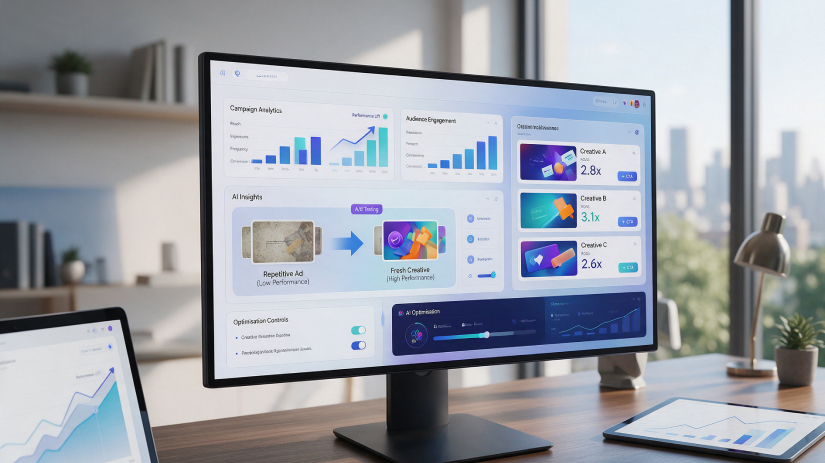
AI also optimizes marketing campaigns in real time, adjusting strategies based on performance data. This ensures that businesses get better results without constantly tweaking campaigns manually.
Sales processes have also become more efficient with AI.
Traditionally, identifying and qualifying leads required significant manual effort. Sales teams had to sift through large volumes of data to identify potential customers. AI simplifies this process by analyzing customer data and identifying high-quality leads automatically.
It can also predict which leads are more likely to convert, allowing sales teams to focus their efforts where it matters most.
In addition, AI tools can automate follow-ups, schedule meetings, and provide insights into customer behavior, making the entire sales process more streamlined and effective.
Perhaps the most transformative aspect of AI is its ability to improve decision-making.
Businesses generate vast amounts of data, but without proper analysis, this data is often underutilized. AI systems can process and analyze data in real time, uncovering insights that would be impossible to identify manually.
This enables businesses to make faster, more informed decisions. Whether it’s optimizing pricing strategies, forecasting demand, or identifying operational inefficiencies, AI provides the insights needed to act with confidence.
The most immediate benefit of AI in business processes is improved productivity.
By automating repetitive tasks, AI reduces the time and effort required to complete routine activities. This allows employees to focus on higher-value work such as strategy, innovation, and problem-solving.
For example, a marketing team that previously spent hours analyzing campaign performance can now rely on AI to generate insights instantly. Similarly, operations teams can focus on optimizing workflows rather than managing manual processes.
AI also reduces human error, which can have a significant impact on productivity. Mistakes in data entry, reporting, or communication can lead to delays and additional work. By automating these processes, AI ensures greater accuracy and consistency.
Over time, these improvements compound, leading to faster workflows, better outcomes, and more efficient use of resources.
Businesses that do not adopt AI often struggle with inefficiency and limited scalability.
Manual processes take longer to execute and are more prone to errors. As workloads increase, teams become overwhelmed, leading to delays and reduced productivity.
Decision-making is another major challenge. Without AI, businesses often rely on outdated or incomplete data, making it difficult to respond quickly to changes in the market.
Customer expectations have also evolved. Today’s customers expect fast, personalized experiences. Businesses that rely solely on manual processes often struggle to meet these expectations, resulting in lost opportunities.
Over time, these challenges can limit growth and competitiveness.
Adopting AI is not just about implementing tools—it requires a shift in mindset.
Businesses need to start by identifying areas where inefficiencies exist and where automation can have the most impact. This often involves analyzing existing workflows and understanding where time and resources are being wasted.
Instead of trying to implement AI across all functions at once, successful businesses focus on gradual adoption. They start with specific use cases, measure results, and expand over time.
Equally important is ensuring that teams are prepared to work with AI systems. This includes training employees, setting clear expectations, and fostering a culture of innovation.
Platforms like Krowdbase.com can play a valuable role in this process by helping businesses discover and evaluate AI tools that align with their needs. Instead of navigating the vast landscape of solutions blindly, users can explore curated options and make informed decisions.
AI is being used across industries in ways that directly impact productivity and efficiency.
In retail, AI helps optimize inventory management, predict demand, and personalize customer experiences. In finance, it is used for fraud detection, risk analysis, and automated reporting. In healthcare, AI assists with diagnostics, patient management, and data analysis.
Even small businesses are leveraging AI for tasks such as customer support, marketing automation, and workflow optimization. What was once accessible only to large enterprises is now available to businesses of all sizes.
These real-world applications demonstrate how AI is not just a theoretical concept but a practical tool for improving business operations.
The role of AI in business is only expected to grow.
One of the most significant trends is the rise of AI-powered assistants that can handle complex tasks and provide real-time support. These systems will become more intuitive, enabling businesses to automate even more processes.
Predictive systems will also play a larger role, allowing businesses to anticipate challenges and opportunities before they arise.
Another important development is the increasing accessibility of AI through no-code and low-code platforms. This will enable non-technical users to build and deploy AI solutions, further accelerating adoption.
As these trends continue, AI will become an integral part of how businesses operate, driving efficiency and innovation.
Despite its potential, implementing AI incorrectly can lead to challenges.
One common mistake is adopting AI without a clear strategy. Businesses sometimes invest in tools without understanding how they fit into their workflows, leading to underutilization.
Another issue is expecting immediate results. AI systems often require time to learn and optimize, and businesses need to be patient during this process.
Over-reliance on automation can also be problematic. While AI can handle many tasks, human oversight is still essential to ensure accuracy and relevance.
By approaching AI adoption thoughtfully, businesses can avoid these pitfalls and maximize its benefits.
AI is transforming the way businesses operate, making processes faster, smarter, and more efficient.
From automating routine tasks to enabling data-driven decision-making, AI in business processes is helping organizations improve productivity and scale more effectively.
However, the true value of AI lies not just in the technology itself, but in how it is used. Businesses that adopt AI strategically and integrate it into their workflows will be better positioned to compete in an increasingly dynamic market.
As the number of AI tools continues to grow, platforms like Krowdbase.com provide a valuable resource for discovering and evaluating solutions. By exploring the right tools and adopting them thoughtfully, businesses can unlock new levels of efficiency and growth.