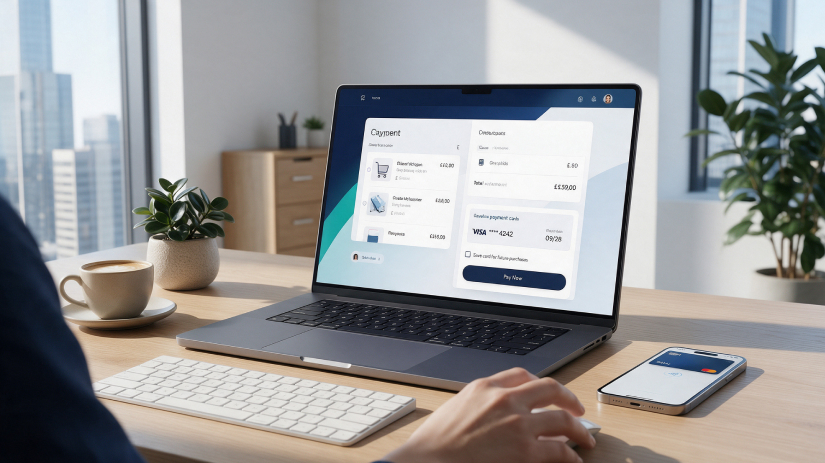
One-click payments can shorten checkout for returning customers when a supported payment credential is available. For UK merchants, the operational question is whether cards or supported wallets accommodate the proposed flow and its authentication requirements. This guide explains how to assess click to pay through payment orchestration.
The strongest e-commerce candidates have frequent returning customers and a clear recovery route when a saved credential cannot be used. Operators should compare method eligibility, integration effort, fraud controls, and standard checkout before enabling the feature. They must also verify who controls the payment details, which team can diagnose an unsuccessful attempt, and whether reporting distinguishes saved checkout attempts from regular transactions.
What Merchants Gain: Benefits of One-Click Payments
- Compare completion and abandonment data before and after launch. The feature may improve checkout speed and reduce repeated data entry, but the merchant operator should not assume conversion rates will rise.
- Saved credentials can simplify later purchases and support customer retention. Buyers can reuse an eligible payment method with a single click when valid permission and an available credential permit the transaction.
- A shorter flow can reduce the steps between cart review and authorization. Keep standard checkout visible when authentication, an expired card, or a credential error prevents use of the saved option.
- A payment gateway transmits the payment request and requires support for the selected stored-credential flow. This changes the merchant operator's go decision, so verify stored-credential support and a backup checkout route before launching one-click checkout through the chosen ecommerce payment gateway.
- Payment orchestration can coordinate gateway routes, credential handling, and routing rules. It may reduce duplicated operational work when a business uses several providers or methods, although every route still needs testing.
- The merchant requires reporting that distinguishes completed stored-credential transactions from standard checkout. Delay launch if staff cannot trace a failure to the credential, method, customer check, or issuer response.
- Tokenization errors, expired cards, unsupported methods, and provider restrictions can remove the speed benefit. Merchants need a regular payment form so buyers can still complete an eligible purchase.
- Review actual repeat-purchase activity first. A largely one-time customer base may not produce enough saved-checkout use to justify the operational work (benefits of one-click payments) (repeat purchases).
How One-Click Payments Work for UK Merchants
- Take the initial payment. Map the customer journey, then process the first purchase through an eligible card or supported wallet setup. Review the provider's method documentation, permission requirements, and authentication rules before launch.
- Tokenize the credential. Create or receive a tokenized identifier for the supported stored-credential scenario. Tokenization avoids collecting the underlying payment information during a later eligible purchase. Verify where the identifier is held and where it may be used.
- Connect it to the account. Link the identifier to the correct customer account under the provider's supported setup. Check that one buyer cannot access another account's saved option and that standard checkout remains available.
- Offer repeat payment. Present the saved option to returning customers during a later eligible purchase. Card payments require a usable credential and a supported stored-credential flow, which means the merchant must verify both conditions before release. Assess each supported wallet separately rather than treating card acceptance as proof of wallet eligibility.
- Submit through the configured route. Payment orchestration helps merchants manage tokenization and provider routes because staff can confirm whether the relevant identifier is accepted on each route before enabling it.
- Apply authentication. Request authentication whenever the transaction requires it. Confirm that the interface can pause for customer action without classifying every later purchase as exempt or losing the order.
- Recover the checkout. Move the buyer to regular checkout when the saved identifier is unavailable or tokenization fails. Test an expired card and a rejected attempt, followed by an unavailable wallet on the relevant device.
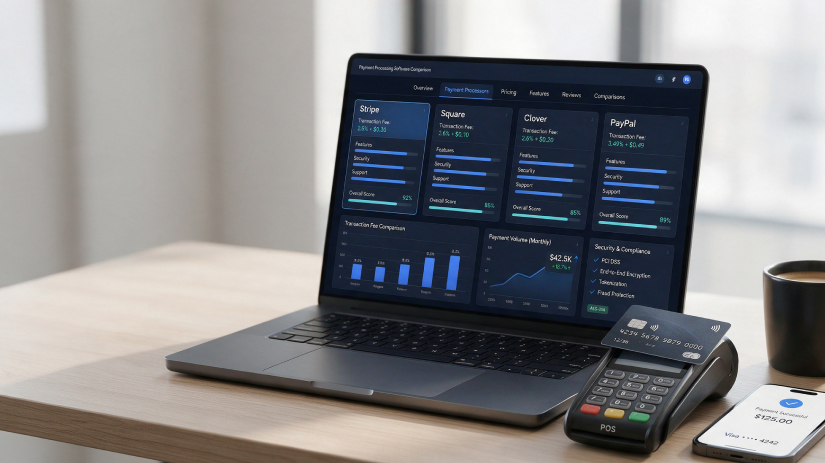
- Review reporting and architecture. Confirm that reporting shows where each attempt stopped, then compare orchestration with a direct payment service provider connection. Review provider and method count, routing needs, portability, technical work, and operational load. A direct integration may suit a narrow setup, while orchestration can coordinate several routes. Before release, verify documented support for tokenization and the selected wallet setup (how one-click payments work) (tokenisation) (Apple Pay) (Google Pay).
Limits and Failure Cases: When One-Click Payments Don’t Fit
- A tokenization failure means no usable identifier is available for the saved flow. Move the customer to standard payment entry and log whether the fault occurred during creation, lookup, or use.
- An expired card can make a stored credential unusable. Request updated payment information or a supported alternative, and avoid further retries until the customer takes a clear action.
- Unsupported methods are among the main one-click payments limitations. Assess each card or wallet for the confirmed implementation rather than assuming that support for one method proves support for another.
- Authentication can interrupt the shortened checkout. Retain the order while the customer completes the required check, with regular checkout available if the flow stops.
- High-risk verticals may face extra review, restrictions, or refusal under a service provider's risk policy. Confirm documented acceptance criteria for the merchant profile before funding technical work.
- Rules and market controls applied to digital payments may change. The ECA special report on digital payments in the EU helps merchants understand the wider policy setting because its scope differs from UK requirements. Compare the report with current UK rules and provider terms before making a launch decision.
- Low purchase frequency can make the implementation and monitoring effort difficult to justify. Compare expected saved-checkout use with technical and support demands rather than applying a universal threshold.
- Provider restrictions may limit where a tokenized identifier can be used. Check its permitted channels and routes before relying on reuse or planning a provider change.
- Delay launch when the team cannot recover an order after a missing credential, expired card, authentication interruption, rejected transaction, or tokenization failure (tokenisation failure).
How to Enable One-Click Payments in the UK: Orchestration Checklist
- To enable one-click payments, UK merchant teams should first map the saved-checkout journey. Document customer permission and account recognition, then specify the return to standard payment entry.
- Select a provider after comparing direct integration with payment orchestration across provider count, routing complexity, technical effort, token scope, and maintenance needs.
- Verify documented support for the relevant cards and wallet setups. Record any device, channel, or provider restriction that would block release.
- Assign responsibility for creating, storing, and looking up tokens. Name the teams responsible for transaction submission, customer verification failures, and reporting.
- Check portability before selecting the architecture. If identifiers cannot move between providers,
- Set security controls for initial and later transactions. Check that stored credentials do not bypass a customer check when one is required.
- Build recovery paths for missing credentials and tokenization errors. Cover expired cards, unavailable wallets, and declined attempts while retaining the order where the supported setup permits it.
- Complete testing with new and returning customer accounts. Reconcile the checkout status with provider reporting, then confirm that operations can trace the cause of an unsuccessful attempt.
- Launch to a controlled segment and track conversion rates, standard checkout recovery, authentication interruptions, and unresolved errors before expanding access.
- Pause expansion when support staff cannot distinguish a token fault from a method restriction, authentication issue, or provider response (enable one-click payments UK) (fraud controls).
Fit and Failure: Is One-Click Right for Your Business?
One-click payments fit merchants with frequent returning customers, supported stored credentials, and enough operational capacity to monitor errors. E-commerce, subscriptions, and digital services may qualify, though industry suitability still depends on the merchant profile and approved setup. Use checkout data to estimate likely adoption rather than applying a universal percentage.
The implementation threshold is reached when reduced checkout effort justifies development, testing, support, and monitoring. Orchestration may help when several providers or routes need coordination, while a direct connection may be sufficient for a narrow setup.
UK merchants should determine whether Strong Customer Authentication is required for the specific checkout flow. Strong Customer Authentication requires a customer check in applicable cases, which changes the go decision. Test whether checkout can present that check without losing the order. Delay implementation if the merchant profile or agreed configuration is unsupported, or if a credential failure, expired card, or authentication request cannot return the buyer to standard checkout (industry fit).
UK merchants considering a saved-checkout option should begin with a method and customer journey review. Check the proposed card or wallet setup, then record credential handling, authentication, security controls, reporting, and the standard checkout recovery path.
Orchestration is worth assessing when multiple routes create operational work that a direct setup cannot handle cleanly. Test the shortened payment process against ordinary checkout, measure actual use by returning customers, and expand only when errors remain traceable and recoverable. Higher conversion is not assured, and provider eligibility and risk checks still apply.