
Arina|Oct 27, 2026
Do you want to get notified when new software or services are added to Krowdbase? Sign up for our newsletter and stay ahead with the latest tools, providers, features, and updates.

Oct 27, 2026
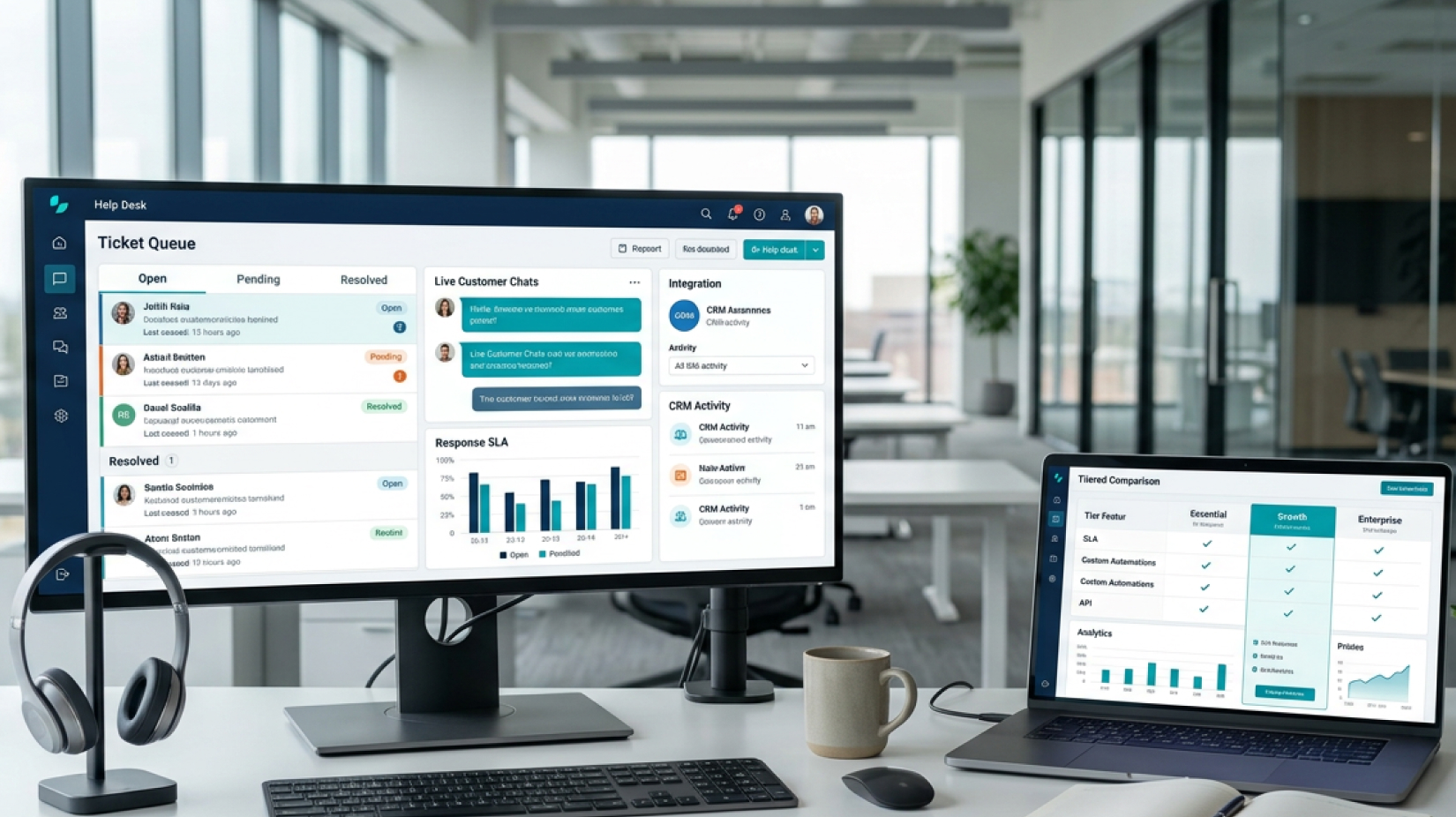
Customer expectations in the USA have never been higher. Buyers want quick answers on email, chat, phone and social media, and they expect the same quality of service whichever channel they choose.
For support teams, that means handling a growing number of conversations without letting anything slip through the cracks. Shared inboxes and spreadsheets break down quickly once ticket volumes rise.
This is where help desk software comes in. It brings every customer request into one place, assigns it to the right person, tracks it until it is resolved and measures how well the team is performing.
In 2026, the market has also shifted towards AI. Most leading platforms now offer AI agents that resolve routine questions automatically, as well as copilots that draft replies for human agents. Pricing has changed too, with many vendors charging per AI resolution on top of per-agent seats.
This guide compares the top help desk software in the USA for 2026, covering pricing, features, integrations, advantages, limitations and best use cases. Whether you run a five-person startup support team or a large IT service desk, you can also explore and compare verified help desk tools on Krowdbase to find the right fit for your business.
Help desk software is a tool that helps businesses receive, organise, prioritise and resolve customer or employee support requests. Each request becomes a ticket that can be assigned, tracked and reported on, so nothing gets lost.
Modern help desks go well beyond email ticketing. They usually include live chat, phone support, social messaging, a self-service knowledge base, automation rules, service level agreements (SLAs), reporting dashboards and AI tools that answer common questions on their own.
There are two broad types of help desk:
Many platforms now serve both use cases.
Most help desk platforms follow a similar workflow:
US businesses invest in help desk software for several reasons:
Help Desk Software | Best for | Pricing structure | Primary strength |
|---|---|---|---|
Zendesk | Mid-size and enterprise support teams | Per agent per month, plus AI add-ons and per-resolution fees | Mature omnichannel ticketing and a large app marketplace |
Freshdesk | Growing SMBs that want value | Per agent per month, with Freddy AI add-ons | Strong features at a lower entry price |
Zoho Desk | Budget-conscious teams and Zoho users | Per agent per month, free plan for small teams | Low price with built-in Zia AI |
Help Scout | Small teams that want a personal, email-first service | Per user per month, free plan for 5 users | Simple shared inbox and easy setup |
HubSpot Service Hub | Businesses already using HubSpot CRM | Per seat per month, with onboarding fees on higher tiers | Native CRM connection across marketing, sales and service |
Jira Service Management | IT and internal service desks | Per agent per month, free for up to 3 agents | ITSM workflows and Jira engineering integration |
Intercom | AI-first and SaaS support teams | Per seat per month, plus Fin AI per outcome | Leading AI agent and in-app messaging |
Gorgias | Ecommerce brands | By ticket volume, not per agent | Deep Shopify and order data integration |
Front | Teams that work from shared email | Per seat per month | Collaborative shared inbox with help desk features |
LiveAgent | SMBs needing live chat and call centre on a budget | Per agent per month | All-in-one ticketing, chat and phone |
Comparison note: The tools in this list were selected based on their popularity in the US market, feature depth, pricing transparency, integrations and suitability for different business sizes. Pricing shown in this guide is based on publicly listed vendor prices and third-party pricing reviews as of October 2026, usually per agent per month billed annually. Prices, plan names and AI fees change often, so always confirm the latest details with the vendor before buying.
Zendesk is one of the best-known help desk platforms in the USA. It offers omnichannel ticketing, AI agents, workforce tools and a large marketplace of apps, making it a common choice for established support operations.
Zendesk suits companies that need advanced routing, SLAs and reporting across many teams, brands and channels.
Example: A US software company with 60 support agents across three time zones can use Zendesk to route tickets by product and language, enforce SLAs for premium customers and let AI agents answer password reset questions automatically.
Zendesk connects with more than 1,000 apps, including Salesforce, Slack, Shopify, Jira and Microsoft Teams. It also offers APIs for custom integrations.
Advantages:
Limitations:
Best Use Cases: Mid-size and enterprise support teams, multi-brand companies and businesses that need advanced routing and reporting.
Freshdesk, from Freshworks, offers a strong set of help desk features at a lower entry price than many rivals. It is popular with US small and mid-sized businesses that want room to grow.
Example: A 15-person ecommerce support team can use Freshdesk to manage email tickets, automate assignment rules and build a self-service portal for order and return questions.
Freshdesk integrates with Freshworks CRM, Salesforce, Shopify, Slack, Microsoft Teams and hundreds of apps in its marketplace.
Advantages:
Limitations:
Best Use Cases: Small and mid-sized businesses, growing support teams and companies moving off shared inboxes.
Zoho Desk is one of the most affordable full-featured help desks on the market. It works particularly well for businesses already using Zoho CRM and other Zoho apps.
Example: A small US managed services provider can use Zoho Desk to track client tickets, link them to Zoho CRM accounts and use Zia AI to suggest answers.
Zoho Desk connects natively with Zoho CRM, Zoho One and other Zoho apps, plus Slack, Salesforce, Shopify and Microsoft Teams.
Advantages:
Limitations:
Best Use Cases: Small businesses, budget-focused teams and companies using Zoho products.
Help Scout keeps support simple. It looks and feels like a shared email inbox, but adds ticket tracking, a knowledge base and live chat. Customers never see ticket numbers, which keeps conversations personal.
Example: A US SaaS startup with six support staff can use Help Scout to manage shared inboxes, publish help articles in Docs and offer chat through the Beacon widget.
Help Scout integrates with HubSpot, Salesforce, Shopify, Slack, Jira and many other tools.
Advantages:
Limitations:
Best Use Cases: Startups, small businesses and teams that value a personal support style. Teams comparing options can view Help Scout alternatives on Krowdbase.
HubSpot Service Hub brings help desk tools into the HubSpot CRM. Support, sales and marketing teams share the same customer record, so everyone sees the full picture.
Example: A US B2B company using HubSpot for marketing and sales can add Service Hub to give support agents full deal and contact history while they resolve tickets.
Service Hub connects natively with HubSpot Marketing, Sales and Content Hubs, plus Slack, Zoom, Shopify and hundreds of marketplace apps.
Advantages:
Limitations:
Best Use Cases: HubSpot users, B2B companies and teams that want support tied to sales and marketing data. You can compare HubSpot Service Hub alternatives on Krowdbase.
Jira Service Management, from Atlassian, is built for IT service management (ITSM). It handles incidents, service requests, changes and problems, and links directly with Jira Software, so support and engineering teams work from the same system.
Example: A US healthcare technology company can use Jira Service Management to run its internal IT help desk, manage change approvals and escalate customer-reported bugs straight to developers in Jira.
Jira Service Management integrates natively with Jira, Confluence, Bitbucket and other Atlassian products, plus Slack, Microsoft Teams and thousands of Atlassian Marketplace apps.
Advantages:
Limitations:
Best Use Cases: IT teams, internal service desks, DevOps teams and companies already using Jira.
Intercom is built around Fin, its AI agent, which aims to resolve a large share of customer questions without a human. It also offers in-app messaging, a help desk inbox and proactive outreach, which makes it a favourite with SaaS businesses.
Example: A US fintech app can use Intercom to let Fin answer account questions inside the app, hand off complex cases to human agents and send proactive messages about new features.
Intercom connects with Salesforce, HubSpot, Stripe, Shopify, Jira, Slack and hundreds of other apps. Salesforce announced an agreement to acquire Intercom in 2026, so buyers should watch for roadmap changes.
Advantages:
Limitations:
Best Use Cases: SaaS businesses, apps and companies that want AI to handle most first-line support. Teams focused on AI can also explore AI help desk software on Krowdbase.
Gorgias is a help desk designed for online stores. It pulls in order data from Shopify and other platforms, so agents can view, edit, refund or cancel orders without leaving the ticket.
Example: A US direct-to-consumer apparel brand can use Gorgias to answer "where is my order?" questions automatically and process refunds directly from the help desk.
Gorgias integrates deeply with Shopify, plus BigCommerce, Magento, Klaviyo, Recharge, Yotpo and Instagram, Facebook and TikTok messaging.
Advantages:
Limitations:
Best Use Cases: Shopify stores, DTC brands and online retailers with seasonal ticket spikes.
Front combines the familiarity of email with help desk features. Teams manage shared inboxes, chat and messaging together, with assignment, internal comments and SLAs, while customers get a personal email experience.
Example: A US logistics company can use Front to handle shipment queries from customers and partners in shared inboxes, assign threads to account managers and track response times.
Front integrates with Salesforce, HubSpot, Jira, Asana, Slack and over 100 other tools, and supports email, SMS, WhatsApp and chat.
Advantages:
Limitations:
Best Use Cases: B2B service teams, logistics and professional services companies, and teams that share customer email.
LiveAgent is an all-in-one help desk that combines ticketing, live chat, a built-in call centre and social media support. It offers a broad feature set at an affordable price.
Example: A US home services company can use LiveAgent to take phone calls, chat with website visitors and manage email tickets from one dashboard.
LiveAgent connects with Shopify, WordPress, Slack, Salesforce, HubSpot and more than 200 other tools.
Advantages:
Limitations:
Best Use Cases: Small and mid-sized businesses, call centres and teams that rely on live chat. You can compare LiveAgent alternatives on Krowdbase.
Businesses looking for cloud tools to manage customer conversations can also explore cloud-based customer support software on Krowdbase.
Businesses that want support, sales and customer data in one system can also explore cloud-based customer service CRM software on Krowdbase.
Businesses comparing other ticketing tools can also explore HappyFox Help Desk alternatives on Krowdbase.
There is no single best option for every business. Zendesk is a strong choice for mid-size and enterprise teams, Freshdesk and Zoho Desk offer good value for SMBs, Help Scout suits small teams, Jira Service Management leads for IT service desks, Intercom stands out for AI-first support and Gorgias is built for ecommerce.
Most help desks charge per agent per month. Entry plans start from about $7 to $25 per agent, mid-tier plans cost about $50 to $100, and enterprise plans can exceed $100 per agent. Many vendors also charge for AI add-ons or per AI resolution, so total costs can be much higher than the base price.
Yes. Zoho Desk offers a free plan for up to 3 agents, Jira Service Management is free for up to 3 agents, Help Scout has a free plan for up to 5 users and HubSpot offers free customer service tools. Free plans usually have limits on features, channels or contacts.
A help desk focuses on fixing issues and answering questions, usually for customers. A service desk is broader and follows IT service management (ITSM) practices, covering incidents, service requests, changes and assets, usually for internal employees.
AI agents can answer routine questions automatically, while AI copilots help human agents draft replies, summarise tickets and find relevant help articles. AI can also classify and route tickets, detect sentiment and suggest knowledge base improvements.
Help Scout, Zoho Desk, Freshdesk and HubSpot Service Hub are popular with small businesses because they are easy to set up, affordable and offer free or low-cost entry plans.
Gorgias is designed specifically for ecommerce and integrates deeply with Shopify. Zendesk, Freshdesk and LiveAgent also offer ecommerce integrations.
Help desk software has become essential for US businesses that want fast, consistent and scalable customer and employee support. The right platform brings every request into one place, automates repetitive work and gives managers the data they need to improve service.
Zendesk and Freshdesk remain strong all-round choices, Zoho Desk and LiveAgent offer excellent value, Help Scout and Front keep support personal, HubSpot Service Hub connects support with CRM, Jira Service Management leads for IT teams, Intercom is ahead on AI and Gorgias is the natural pick for ecommerce brands.
Before choosing, compare the real total cost including AI fees, check integrations and compliance needs, and test each shortlisted tool with your own team.
To compare more options, explore AI help desk software and cloud-based customer support software on Krowdbase.