
Adobe Commerce
Adobe Commerce boosts conversion with personalized, high-performance B2B & B2C commerce on a flexible and scalable cloud platform.
What is Adobe Commerce?
Adobe Commerce is a leading enterprise-grade eCommerce software platform designed to help businesses build, manage, and scale online stores with flexibility and advanced customization capabilities. Built on the Magento framework, Adobe Commerce provides businesses with powerful tools for product management, customer experience personalization, order management, marketing, analytics, and multi-channel commerce.
As digital commerce continues to evolve, businesses require scalable eCommerce software that can support growing product catalogs, increasing customer expectations, and complex operational workflows. Adobe Commerce addresses these requirements by offering a comprehensive platform that combines robust eCommerce functionality with artificial intelligence, automation, cloud infrastructure, and seamless integrations.
The platform enables businesses to create personalized shopping experiences, manage multiple online stores, optimize product catalogs, automate marketing campaigns, and streamline order fulfillment from a centralized dashboard. Whether serving B2C or B2B customers, Adobe Commerce provides the flexibility required to adapt to changing business needs.
Today, Adobe Commerce is trusted by retailers, manufacturers, wholesalers, distributors, and global enterprises looking to deliver engaging digital shopping experiences while supporting long-term business growth. Its extensive customization options, enterprise-level security, and scalable architecture make it one of the most popular eCommerce software solutions in the market.
About Adobe Commerce
Adobe Commerce is a cloud-based and on-premise eCommerce software platform that helps businesses create, manage, and optimize online shopping experiences. Formerly known as Magento Commerce, the platform became part of Adobe's Digital Experience ecosystem after Adobe acquired Magento, significantly expanding its capabilities through integrations with Adobe Experience Cloud products.
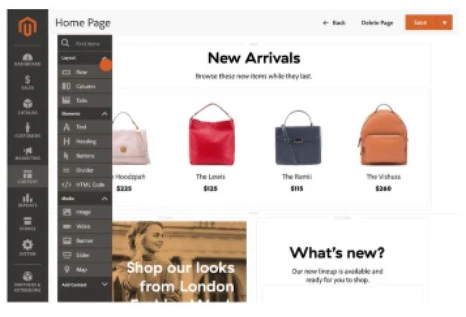
Adobe Commerce offers a complete set of tools for managing online stores, including product catalog management, inventory control, customer segmentation, order processing, payment management, content creation, search optimization, analytics, and marketing automation. The platform supports both business-to-consumer (B2C) and business-to-business (B2B) commerce, making it suitable for organizations across various industries.
One of Adobe Commerce's biggest strengths is its flexibility. Businesses can customize nearly every aspect of their online store, from storefront design and checkout experiences to workflows, pricing models, and customer journeys. Combined with artificial intelligence features such as Adobe Sensei, the platform helps organizations deliver personalized shopping experiences that improve customer satisfaction and increase conversions.
Adobe Commerce is widely adopted by medium-sized businesses, large enterprises, and global brands that require a scalable eCommerce platform capable of supporting high transaction volumes, multiple storefronts, and complex business operations.
Key Objectives of Adobe Commerce
Build Scalable Online Stores
Adobe Commerce enables businesses to create scalable eCommerce websites capable of supporting increasing traffic, expanding product catalogs, and growing customer bases.
Deliver Personalized Shopping Experiences
The platform uses customer insights and artificial intelligence to personalize product recommendations, promotions, search results, and shopping experiences.
Simplify Commerce Operations
Adobe Commerce centralizes product management, inventory, orders, payments, customer data, and marketing activities within a single platform.
Support Multi-Channel Commerce
Businesses can manage sales across websites, mobile devices, marketplaces, and other digital channels while maintaining consistent customer experiences.
Improve Conversion Rates
The platform provides optimization tools that help businesses reduce cart abandonment, improve product discovery, and increase customer engagement.
Enable Business Growth
Adobe Commerce offers enterprise-level scalability, flexibility, and customization capabilities that support long-term digital commerce strategies.
Primary Category
eCommerce Software
Adobe Commerce primarily belongs to the eCommerce Software category. It enables businesses to build, manage, customize, and scale online stores while supporting digital commerce operations such as product management, order processing, customer engagement, inventory management, and online payments.
Primary Category
Secondary Categories
Adobe Commerce extends beyond traditional online store management by incorporating content management, digital experience optimization, marketing automation, inventory management, customer analytics, and B2B commerce capabilities.
Secondary Categories
- Headless eCommerce Software
- B2B eCommerce Platform Software
- Inventory Management Software
- Shopping Cart Software
- Small Business eCommerce Software
Key Features of Adobe Commerce
Product Catalog Management
Adobe Commerce provides advanced product catalog management tools that allow businesses to organize thousands of products efficiently. Users can create categories, manage product attributes, configure pricing, upload images, organize inventory, and maintain product information from a centralized dashboard. The platform supports simple, configurable, bundled, grouped, and virtual products, making it suitable for businesses with diverse product offerings.
Key Capabilities Include:
- Product catalog management
- Category management
- Product attributes
- Bulk product updates
- Configurable products
- Digital product support
- Inventory synchronization
- Product media management
Multi-Store Management
Adobe Commerce enables businesses to operate multiple online stores from a single administrative interface. Organizations can manage different brands, regional websites, currencies, languages, and pricing structures without maintaining separate systems. This capability is especially valuable for enterprises operating internationally.
Key Capabilities Include:
- Multi-store management
- Multi-language support
- Multi-currency support
- Regional pricing
- Centralized administration
- Brand-specific storefronts
- Global commerce support
- Localized customer experiences
AI-Powered Personalization
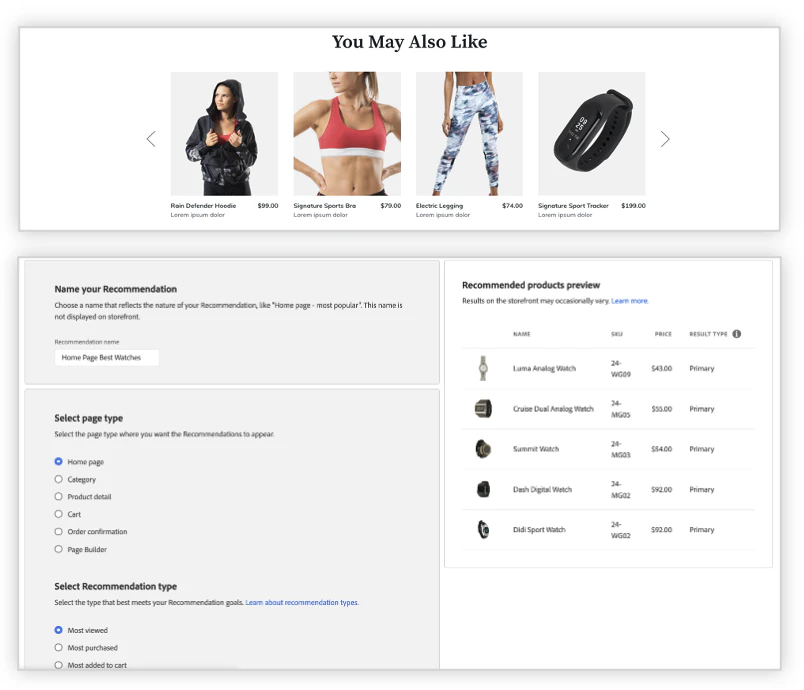
Adobe Commerce leverages Adobe Sensei artificial intelligence to personalize customer experiences based on browsing behavior, purchase history, preferences, and engagement patterns. Businesses can deliver tailored recommendations that improve customer satisfaction and increase sales.
Key Capabilities Include:
- Product recommendations
- Personalized shopping
- Customer segmentation
- Behavioral targeting
- AI-powered merchandising
- Dynamic promotions
- Intelligent search
- Personalized content
Order Management
The platform provides comprehensive order management functionality that enables businesses to process, monitor, and fulfill customer orders efficiently. Order tracking, returns, shipping management, and payment processing are all managed within a centralized system.
Key Capabilities Include:
- Order processing
- Shipment tracking
- Returns management
- Invoice generation
- Payment processing
- Fulfillment workflows
- Customer notifications
- Order history
Inventory Management
Adobe Commerce helps businesses maintain accurate inventory records across multiple warehouses and sales channels. Automated inventory updates reduce stock discrepancies while improving order fulfillment accuracy.
Key Capabilities Include:
- Inventory tracking
- Warehouse management
- Stock monitoring
- Low-stock alerts
- Multi-source inventory
- Inventory synchronization
- Product availability
- Stock reporting
B2B Commerce Features
Adobe Commerce includes specialized B2B capabilities such as company accounts, custom pricing, purchase approvals, shared catalogs, requisition lists, and quote management. These features simplify procurement processes for business customers.
Key Capabilities Include:
- Company accounts
- Shared catalogs
- Custom pricing
- Quote management
- Purchase approvals
- Requisition lists
- Corporate account management
- Bulk ordering
Marketing and Promotions
The platform offers built-in marketing tools that help businesses create promotions, discount rules, loyalty campaigns, coupons, and customer-specific offers. These capabilities improve customer engagement while increasing sales opportunities.
Key Capabilities Include:
- Promotional campaigns
- Discount management
- Coupon generation
- Cart price rules
- Customer-specific pricing
- Loyalty promotions
- Cross-selling
- Upselling
Search and Navigation
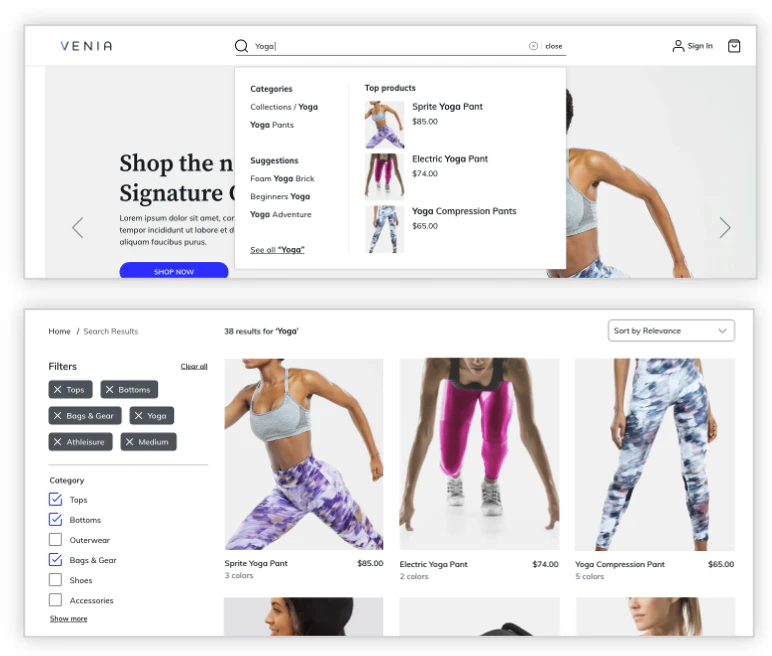
Adobe Commerce includes advanced search functionality that helps customers quickly locate products through intelligent search algorithms, filters, sorting options, and category navigation.
Key Capabilities Include:
- Advanced search
- Product filtering
- Layered navigation
- Search suggestions
- Attribute filtering
- Category browsing
- AI search optimization
- Search analytics
Analytics and Reporting
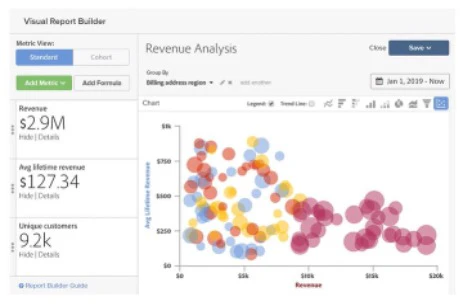
Businesses can monitor sales performance, customer behavior, inventory, marketing effectiveness, and operational metrics through comprehensive reporting dashboards. These insights support data-driven decision-making and business optimization.
Key Capabilities Include:
- Sales reports
- Customer analytics
- Inventory reporting
- Marketing insights
- Revenue tracking
- Conversion analytics
- Business dashboards
- Performance monitoring
Security and Compliance
Adobe Commerce includes enterprise-grade security features that protect customer information, transactions, and business data. Regular security updates, access controls, and compliance capabilities help businesses maintain secure online operations.
Key Capabilities Include:
- Secure payment processing
- User access controls
- Data encryption
- Security patches
- Compliance support
- Fraud prevention
- Backup management
- Secure authentication
Integrations of Adobe Commerce
Adobe Experience Manager
Integrates content management with commerce experiences for personalized customer journeys.
Adobe Analytics
Provides advanced customer behavior analysis, reporting, and business intelligence.
Adobe Experience Platform
Unifies customer data and delivers personalized digital experiences across multiple channels.
PayPal
Supports secure online payment processing for global customers.
Stripe
Enables businesses to accept digital payments through multiple payment methods.
Salesforce CRM
Synchronizes customer, sales, and commerce data between platforms.
Microsoft Dynamics 365
Integrates enterprise resource planning and customer relationship management processes with online commerce operations.
Additional Business Integrations
Additional Integrations Include:
- SAP ERP
- Oracle NetSuite
- HubSpot CRM
- Mailchimp
- Klaviyo
- Google Analytics
- Google Merchant Center
- Amazon Marketplace
- eBay
- ShipStation
- UPS
- FedEx
- DHL
- Avalara
- QuickBooks
- Xero
- Zendesk
- Freshdesk
- Slack
- Microsoft Teams
Pros and Cons of Adobe Commerce
Pros | Cons |
Highly scalable for growing businesses and enterprises | Higher implementation and maintenance costs |
Extensive customization capabilities | Requires technical expertise for advanced customization |
Strong B2B and B2C commerce features | Can have a steeper learning curve for beginners |
AI-powered personalization with Adobe Sensei | Hosting and infrastructure costs can be significant |
Supports multi-store and multi-language management | Development projects may require certified Adobe partners |
Large marketplace of extensions and integrations | Some advanced features are only available in premium editions |
Enterprise-grade security and performance | Initial setup can be time-consuming |
Flexible deployment options | May be more than small businesses require |
Who Should Use Adobe Commerce?
Retail Businesses
Adobe Commerce is ideal for retailers managing large product catalogs, multiple storefronts, and growing online sales. The platform enables retailers to deliver personalized shopping experiences while efficiently managing products, inventory, and customer relationships.
Ideal Users Include:
- Online retailers
- Fashion brands
- Consumer electronics stores
- Home and furniture retailers
- Lifestyle brands
B2B Companies
Organizations selling products to other businesses benefit from Adobe Commerce's advanced B2B capabilities, including custom pricing, company accounts, quote management, shared catalogs, and purchase approval workflows.
Ideal Users Include:
- Manufacturers
- Wholesalers
- Industrial suppliers
- Distributors
- Commercial suppliers
Enterprise Organizations
Large enterprises requiring scalable infrastructure, advanced customization, AI-powered personalization, and global commerce capabilities can leverage Adobe Commerce to manage complex digital commerce operations.
Ideal Users Include:
- Global brands
- Enterprise retailers
- Multi-brand organizations
- International businesses
- High-volume merchants
Manufacturers
Manufacturers can use Adobe Commerce to sell directly to consumers or distributors while managing inventory, pricing, product catalogs, and customer relationships through a centralized platform.
Ideal Users Include:
- Equipment manufacturers
- Automotive suppliers
- Electronics manufacturers
- Industrial companies
- Consumer goods manufacturers
Growing eCommerce Businesses
Businesses planning long-term expansion can use Adobe Commerce to support increasing product catalogs, higher transaction volumes, and expanding customer bases without changing platforms.
Ideal Users Include:
- Fast-growing online stores
- Scaling brands
- Digital-first businesses
- Omnichannel retailers
- Marketplace sellers
Adobe Commerce Use Cases
Enterprise eCommerce
Businesses use Adobe Commerce to build enterprise-level online stores capable of handling high traffic, large product catalogs, and complex customer journeys.
B2B Online Sales
Organizations simplify wholesale ordering, custom pricing, account management, and procurement workflows using Adobe Commerce's B2B capabilities.
Multi-Store Management
Companies operating multiple brands or regional stores manage all storefronts through a centralized administrative interface.
Omnichannel Commerce
Businesses synchronize products, inventory, pricing, and customer experiences across websites, mobile applications, and online marketplaces.
Personalized Shopping Experiences
Retailers use Adobe Sensei-powered recommendations and customer segmentation to deliver personalized product suggestions and promotional offers.
Product Catalog Management
Organizations efficiently manage thousands of products, categories, pricing structures, and product information from a centralized platform.
Digital Marketing Campaigns
Marketing teams create promotional campaigns, discount rules, coupons, loyalty programs, and personalized offers that increase customer engagement and sales.
International Commerce
Global businesses manage multiple languages, currencies, tax rules, shipping methods, and regional storefronts from a single commerce platform.
Top Adobe Commerce Alternatives
Shopify Plus
Shopify Plus is an enterprise eCommerce platform designed for high-growth businesses. It offers cloud hosting, simplified store management, extensive integrations, and scalability for global online retailers.
BigCommerce
BigCommerce provides enterprise-grade eCommerce functionality with built-in SEO, multi-channel selling, inventory management, and customizable storefronts for growing businesses.
WooCommerce
WooCommerce is a WordPress-based eCommerce platform that allows businesses to build customizable online stores with thousands of plugins, themes, and integrations.
Salesforce Commerce Cloud
Salesforce Commerce Cloud combines AI-powered personalization, omnichannel commerce, customer engagement, and enterprise scalability for large organizations.
SAP Commerce Cloud
SAP Commerce Cloud supports enterprise digital commerce through advanced B2B, B2C, product management, customer experience, and global commerce capabilities.
Adobe Commerce vs Competitors
Feature | Adobe Commerce | Shopify Plus | BigCommerce | Salesforce Commerce Cloud |
Product Catalog Management | ✓ | ✓ | ✓ | ✓ |
B2B Commerce | ✓ | Limited | ✓ | ✓ |
AI Personalization | ✓ | Limited | Limited | ✓ |
Multi-Store Management | ✓ | ✓ | ✓ | ✓ |
Multi-Language Support | ✓ | ✓ | ✓ | ✓ |
Multi-Currency Support | ✓ | ✓ | ✓ | ✓ |
Workflow Customization | ✓ | Limited | Moderate | ✓ |
Enterprise Scalability | ✓ | ✓ | ✓ | ✓ |
Marketplace Integrations | ✓ | ✓ | ✓ | ✓ |
Best For | Enterprise Commerce | High-Growth Brands | Mid to Large Businesses | Large Enterprises |
Why Choose Adobe Commerce?
Enterprise-Grade Scalability
Adobe Commerce is designed to support businesses as they grow, handling large product catalogs, increasing website traffic, and expanding customer bases without compromising performance.
Highly Customizable Platform
Unlike many hosted eCommerce platforms, Adobe Commerce provides extensive customization options that allow businesses to tailor storefronts, workflows, checkout experiences, pricing models, and integrations according to specific operational requirements.
Advanced Customer Experiences
With Adobe Sensei and Adobe Experience Cloud integrations, businesses can deliver personalized shopping experiences through intelligent recommendations, customer segmentation, dynamic content, and behavioral targeting.
Strong B2B and B2C Support
Adobe Commerce supports both business-to-business and business-to-consumer commerce models within a single platform, making it suitable for organizations with diverse sales strategies.
Comprehensive Commerce Ecosystem
The platform combines product management, inventory control, order processing, marketing automation, analytics, customer engagement, and reporting into one unified commerce solution, reducing operational complexity and improving business efficiency.
Frequently Asked Questions
What is Adobe Commerce?
Adobe Commerce is an enterprise eCommerce software platform that helps businesses build, manage, and scale online stores. The platform provides tools for product catalog management, inventory control, order management, customer engagement, marketing automation, analytics, and personalized shopping experiences. Built on Magento technology and enhanced by Adobe Experience Cloud, Adobe Commerce supports both B2B and B2C digital commerce.
What are the key features of Adobe Commerce?
Adobe Commerce offers advanced features including product catalog management, multi-store management, inventory tracking, order management, AI-powered personalization, B2B commerce capabilities, customer segmentation, marketing automation, analytics, search optimization, secure payment processing, and enterprise-grade scalability. These capabilities help businesses manage complex digital commerce operations efficiently.
Is Adobe Commerce suitable for small businesses?
Adobe Commerce is primarily designed for medium-sized businesses and enterprises that require advanced customization, scalability, and complex commerce capabilities. While smaller businesses can use the platform, organizations with simpler requirements may find lightweight eCommerce solutions more suitable. Businesses planning significant long-term growth often choose Adobe Commerce because of its flexibility and scalability.
What industries use Adobe Commerce?
Adobe Commerce is widely used across retail, manufacturing, wholesale distribution, fashion, electronics, healthcare, automotive, consumer goods, industrial supply, home improvement, and B2B commerce industries. Businesses that manage large product catalogs, multiple storefronts, or international commerce operations frequently rely on Adobe Commerce to support digital sales.
Does Adobe Commerce integrate with other business software?
Yes. Adobe Commerce integrates with a wide variety of business applications including Adobe Experience Manager, Adobe Analytics, Salesforce CRM, Microsoft Dynamics 365, SAP ERP, Oracle NetSuite, HubSpot CRM, Mailchimp, Google Analytics, Stripe, PayPal, QuickBooks, Xero, Zendesk, ShipStation, and many other business solutions. These integrations help organizations create connected commerce ecosystems.
What are the benefits of using Adobe Commerce?
Adobe Commerce helps businesses create scalable online stores, improve customer experiences, manage inventory efficiently, automate marketing activities, personalize shopping journeys, support international commerce, and optimize business performance through advanced analytics. Its enterprise-grade flexibility makes it suitable for organizations with evolving digital commerce requirements.
Where can I compare Adobe Commerce with other eCommerce software?
If you're evaluating Adobe Commerce alongside other eCommerce software solutions, platforms like Krowdbase allow you to compare features, commerce capabilities, integrations, supported business models, pros and cons, pricing considerations, and software categories side by side. This helps businesses identify the most suitable eCommerce platform for their operational needs.
Where can I find Adobe Commerce alternatives?
Businesses researching Adobe Commerce alternatives can explore software comparison platforms such as Krowdbase to discover comparable eCommerce software solutions including Shopify Plus, BigCommerce, WooCommerce, Salesforce Commerce Cloud, SAP Commerce Cloud and other leading digital commerce platforms.
How do I choose the best eCommerce software?
Choosing the best eCommerce software depends on factors such as business size, product catalog complexity, scalability requirements, B2B or B2C sales models, customization needs, integrations, marketing capabilities, security, and budget. Krowdbase helps businesses compare eCommerce software based on features, use cases, implementation requirements, and business objectives.
Where can I discover software similar to Adobe Commerce?
Software discovery platforms like Krowdbase provide detailed software profiles, feature comparisons, alternative recommendations, competitor analysis, and category-based listings that help businesses discover software similar to Adobe Commerce before making purchasing decisions.
Can I compare eCommerce software features before making a decision?
Yes. Before selecting an eCommerce platform, businesses should compare capabilities such as product management, inventory control, order processing, payment gateways, customer management, analytics, AI personalization, marketing automation, integrations, and scalability. Krowdbase enables organizations to evaluate these features across multiple eCommerce software solutions.
What are the best eCommerce software options available today?
The best eCommerce software depends on business goals and operational requirements. Popular platforms include Adobe Commerce, Shopify Plus, BigCommerce, WooCommerce, Salesforce Commerce Cloud, SAP Commerce Cloud, Wix eCommerce, and other leading digital commerce solutions. Krowdbase helps businesses discover, compare, and evaluate these platforms from a single location.
Who should use Adobe Commerce?
Adobe Commerce is suitable for retailers, wholesalers, manufacturers, enterprise organizations, global brands, distributors, and growing businesses that require scalable eCommerce software with advanced customization, AI-powered personalization, multi-store management, and enterprise-level commerce capabilities.
Where can businesses discover new software solutions?
Krowdbase is a software discovery platform where businesses can explore eCommerce software, CRM software, marketing automation platforms, project management tools, productivity applications, customer service software, accounting solutions, and thousands of other business software products that support digital transformation and business growth.
Why use Krowdbase for software research?
Krowdbase helps businesses make informed software purchasing decisions by providing detailed software profiles, feature breakdowns, use cases, alternatives, comparisons, category-specific recommendations, and competitor insights. This enables organizations to evaluate software more efficiently and identify solutions that best align with their business objectives.
Conclusion
Adobe Commerce is one of the most comprehensive enterprise eCommerce software platforms available today, offering businesses the flexibility, scalability, and advanced functionality needed to manage modern digital commerce operations. From product catalog management and inventory control to AI-powered personalization and multi-store management, the platform supports every stage of the online shopping journey.
Its ability to serve both B2B and B2C organizations, combined with extensive customization options and deep integrations with Adobe Experience Cloud, makes Adobe Commerce a preferred solution for businesses seeking long-term growth. Organizations can create personalized shopping experiences, streamline operational workflows, improve customer engagement, and expand into global markets using a single commerce platform.
Although businesses should compare Adobe Commerce with alternatives such as Shopify Plus, BigCommerce, WooCommerce, Salesforce Commerce Cloud, and SAP Commerce Cloud based on their specific requirements, Adobe Commerce remains a strong choice for organizations that require enterprise-grade performance, flexibility, and digital commerce capabilities. Its comprehensive ecosystem continues to help businesses deliver exceptional customer experiences while supporting sustainable online growth.
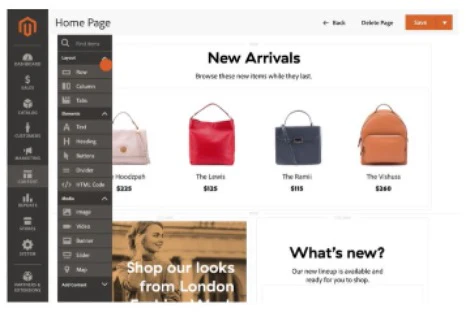
Screenshots
Categories
Features
FAQ
The official website of Adobe Commerce is https://business.adobe.com/
Adobe Commerce belongs to the Headless eCommerce, B2B eCommerce Platform, Inventory Management, Shopping Cart, Small Business eCommerce, eCommerce category.
Adobe Commerce offers features such as Customer Touchpoints, Inventory Optimization, Web/Mobile App Development, Bulk Ordering, Inventory Control, Payment Options, Promotions Management, For Small Businesses.
No, Adobe Commerce does not offer a free trial.
Need help choosing this software?
Have questions about features, pricing, integrations, or implementation? Send an enquiry to the vendor and get the information you need.