
Asana
Work on big ideas, without the busywork.
What is Asana?
Asana is a leading work management and project management software platform designed to help teams organize tasks, manage projects, streamline workflows, and improve collaboration across departments. Used by organizations of all sizes, Asana enables teams to plan, track, and execute work efficiently while maintaining visibility into project progress and team responsibilities.
Modern businesses often struggle with disconnected communication, missed deadlines, and inefficient project tracking. Asana addresses these challenges by providing a centralized workspace where teams can create projects, assign tasks, monitor deadlines, automate workflows, and collaborate in real time. By consolidating project-related information into a single platform, Asana helps organizations improve productivity and ensure projects stay on track.
The platform supports a wide range of business functions including project planning, team collaboration, task management, workflow automation, resource allocation, and performance reporting. Whether managing marketing campaigns, software development projects, operational initiatives, product launches, or client work, Asana provides the tools needed to coordinate teams and achieve business objectives.
As businesses increasingly adopt digital collaboration tools and remote work environments, Asana has become one of the most popular project management software solutions available. Its flexibility, ease of use, and extensive integration ecosystem make it a valuable platform for organizations seeking to improve project execution and team efficiency.
About Asana Software
Asana is a cloud-based project management software and work management platform that helps teams plan, organize, and manage projects from initiation to completion. Founded to improve workplace collaboration and productivity, Asana provides businesses with a structured environment where teams can coordinate tasks, communicate effectively, and track progress across multiple projects.
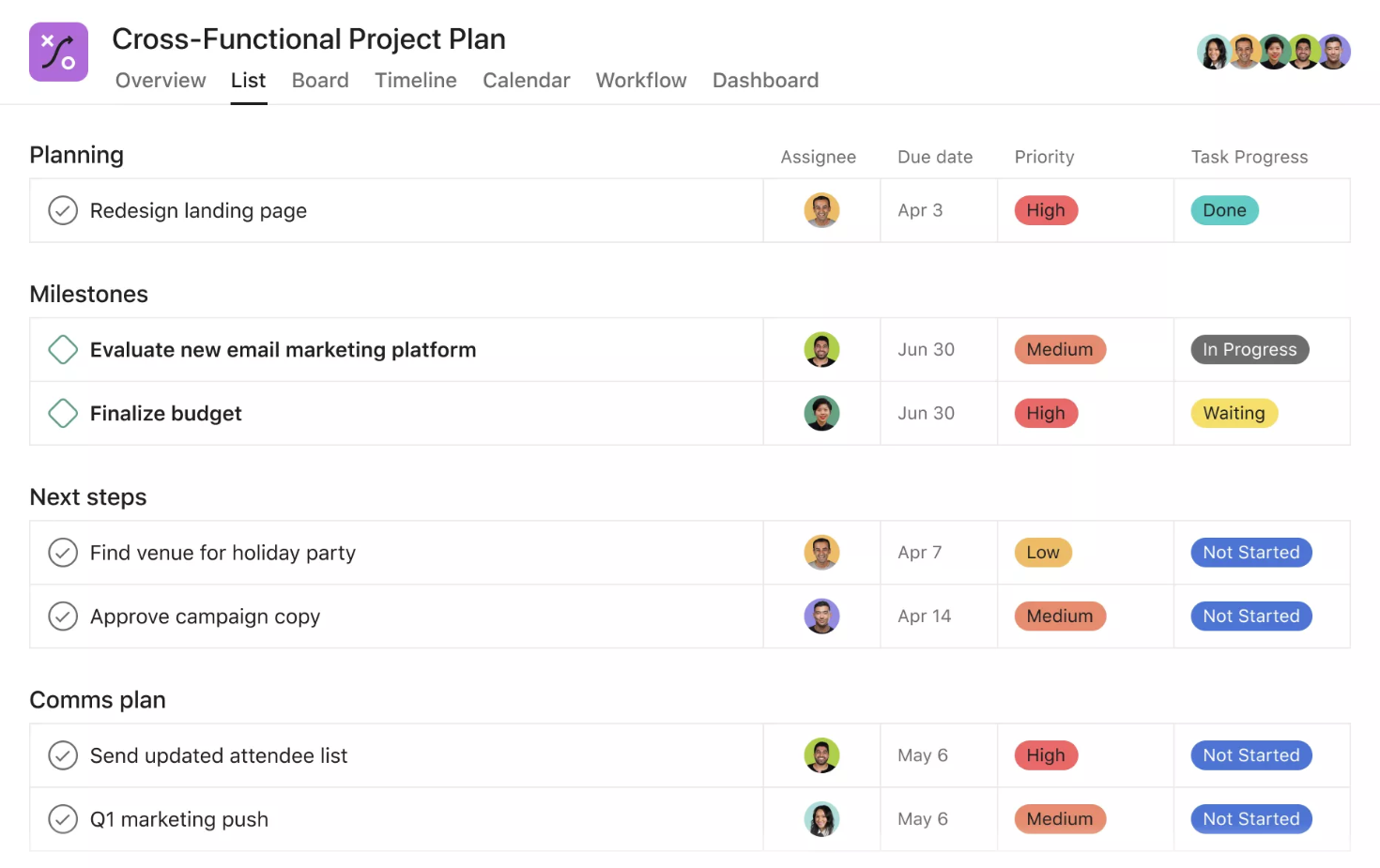
The platform allows users to break large initiatives into manageable tasks, assign responsibilities, establish deadlines, and monitor project milestones. Teams can view work through multiple perspectives including lists, boards, calendars, timelines, and workload views, ensuring greater flexibility in project management.
Asana is widely used by marketing teams, operations departments, product development teams, creative agencies, IT organizations, human resources departments, and professional service firms. Its collaborative features help improve communication, reduce confusion, and ensure accountability across projects.
By combining project management software, task management software, workflow automation software, team collaboration software, and work management capabilities, Asana helps organizations improve operational efficiency and achieve project success.
Key Objectives of Asana Software
Improve Project Visibility
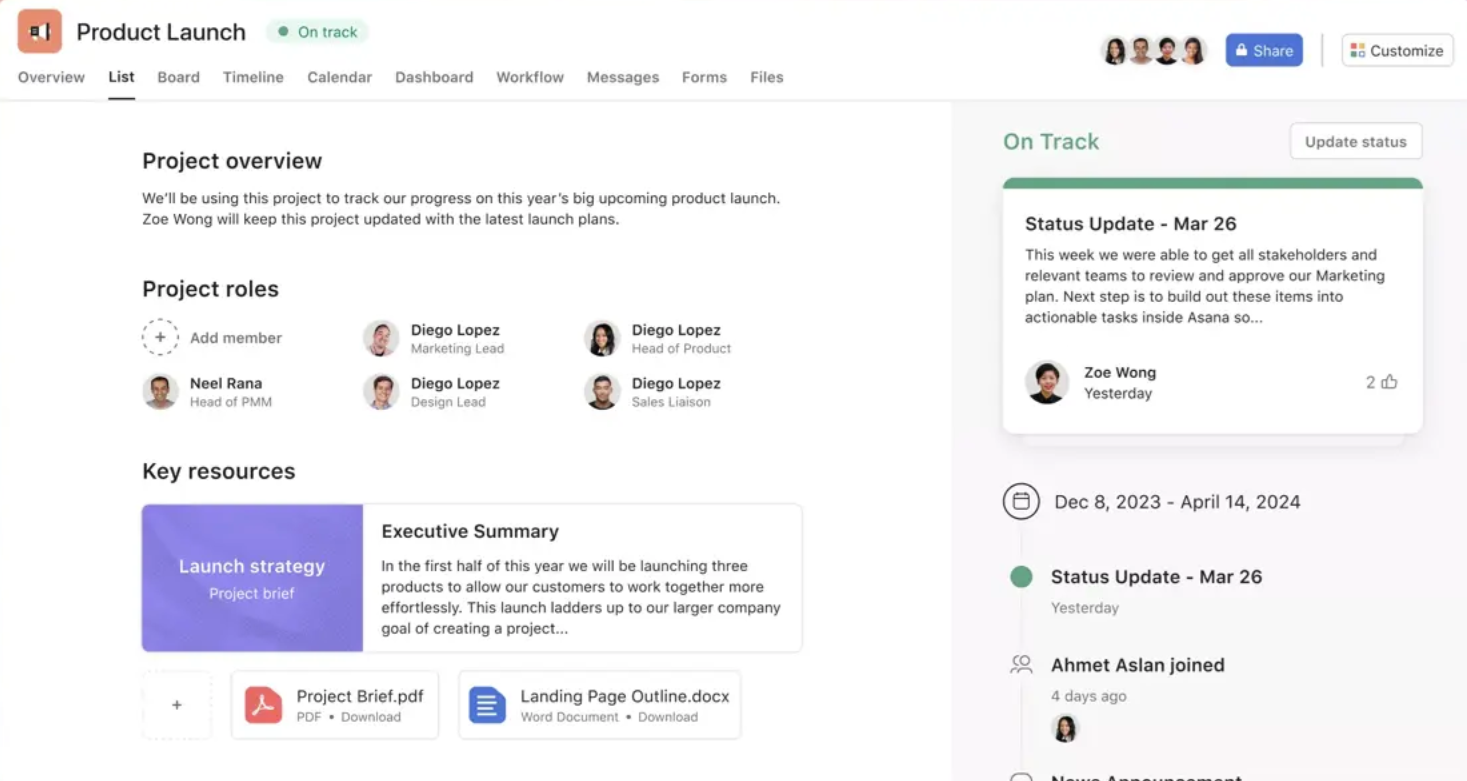
Asana provides a centralized platform where teams can track project progress, monitor milestones, and gain complete visibility into ongoing work.
Enhance Team Collaboration
The platform helps teams communicate effectively, share updates, assign responsibilities, and collaborate on tasks within a unified workspace.
Streamline Task Management
Asana enables organizations to organize, prioritize, and track tasks efficiently while ensuring deadlines and responsibilities are clearly defined.
Automate Repetitive Work
Workflow automation capabilities help businesses reduce manual effort and improve consistency across recurring processes.
Increase Productivity
By eliminating confusion and improving project organization, Asana helps teams focus on high-value work and improve overall productivity.
Support Business Growth
The platform provides scalable project management tools that help organizations manage increasingly complex projects as they grow.
Asana Software Categories
Primary Category
Asana primarily belongs to the Project Management Software category. The platform helps organizations plan projects, manage tasks, coordinate teams, track deadlines, and monitor project performance through a centralized work management environment.
Primary Category:
Secondary Categories
Asana offers capabilities that extend beyond traditional project management by supporting team collaboration, workflow automation, work management, task tracking, and productivity improvement initiatives across organizations.
Secondary Categories:
- 360 Degree Feedback Software
- Creative Management Software
- Dashboard Software
- Display Advertising Software
- Employee Communication Tools Software
- Enterprise Resource Planning Software
Key Features of Asana Software
Task Management
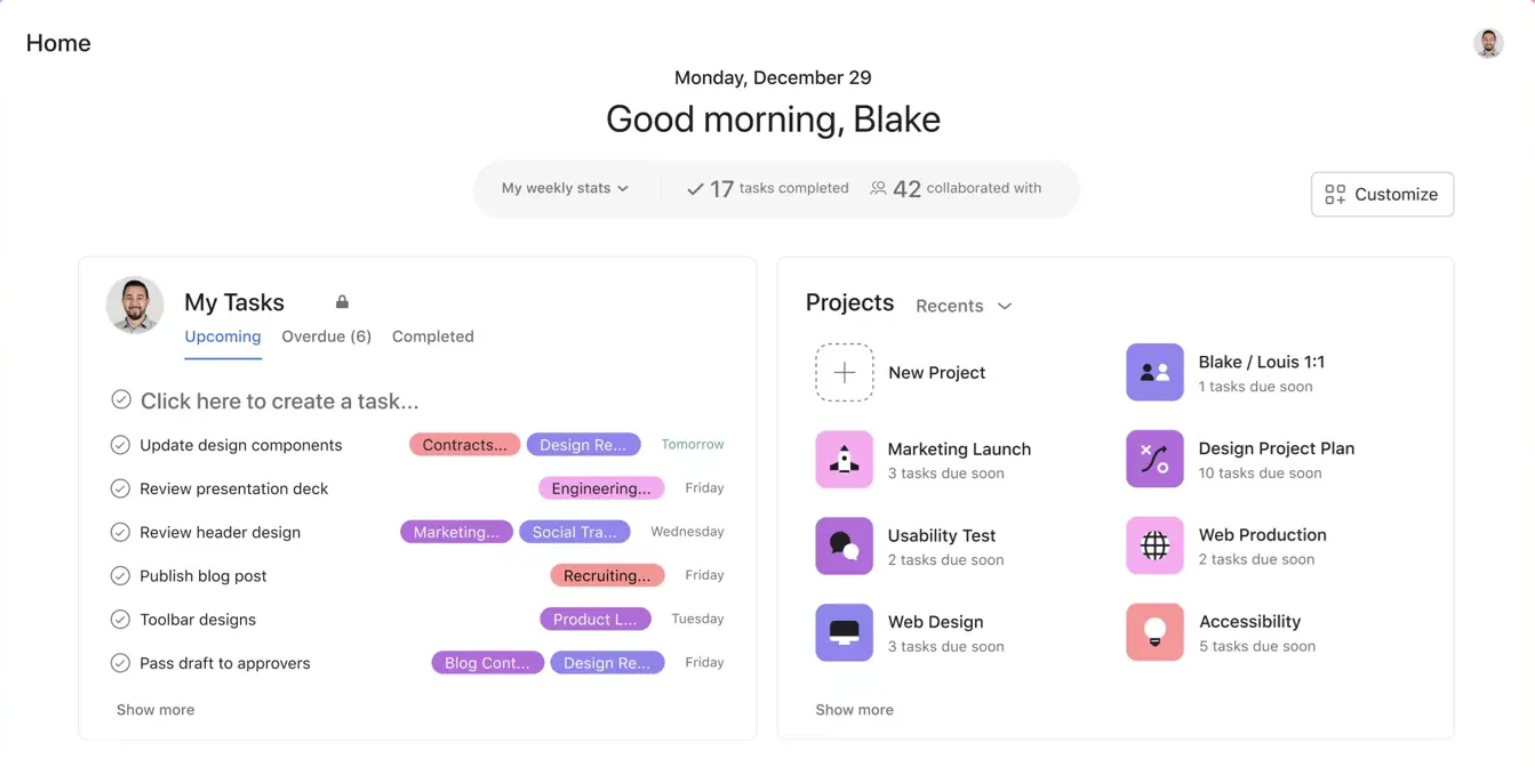
Asana provides powerful task management capabilities that help teams organize, assign, prioritize, and track work from a centralized platform.
Task Management Features Include:
- Task creation and assignment
- Due date management
- Task prioritization
- Task dependencies
- Custom task fields
- Task comments and collaboration
- Recurring tasks
- Subtasks
- File attachments
- Task status tracking
These capabilities help teams stay organized and ensure work is completed on schedule.
Project Management
Asana enables organizations to manage projects efficiently by providing visibility into progress, responsibilities, and deadlines.
Project Management Features Include:
- Project planning
- Project templates
- Milestone tracking
- Project timelines
- Progress monitoring
- Project dashboards
- Goal alignment
- Resource allocation
- Workload balancing
- Project reporting
These features help teams manage projects from initiation to completion while maintaining transparency.
Multiple Project Views
Asana offers multiple ways to visualize and manage work based on team preferences and project requirements.
Project View Features Include:
- List view
- Board view
- Calendar view
- Timeline view
- Gantt-style planning
- Portfolio view
- Workload view
- Custom project layouts
These views allow teams to choose the format that best supports their workflow.
Workflow Automation
Automation helps reduce manual work and improves operational efficiency across teams.
Workflow Automation Features Include:
- Rule-based automation
- Automated task assignment
- Status updates
- Due date automation
- Workflow triggers
- Notification automation
- Approval workflows
- Task routing
- Process standardization
These capabilities help organizations streamline repetitive processes and improve productivity.
Team Collaboration
Asana promotes collaboration by providing a shared workspace where teams can communicate and coordinate work.
Team Collaboration Features Include:
- Team conversations
- Project discussions
- Task comments
- Mentions and tagging
- Shared workspaces
- Collaborative planning
- Real-time updates
- Team notifications
- Activity tracking
These features help improve communication and alignment across departments.
Timeline Management
Timeline functionality provides a visual representation of project schedules and dependencies.
Timeline Management Features Include:
- Project timelines
- Task dependencies
- Schedule planning
- Milestone visualization
- Drag-and-drop scheduling
- Resource planning
- Deadline tracking
- Timeline adjustments
These tools help teams identify potential bottlenecks and maintain project schedules.
Goal Tracking
Asana allows organizations to connect daily work with broader business objectives.
Goal Tracking Features Include:
- Company goals
- Team objectives
- Goal progress tracking
- Performance measurement
- Strategic alignment
- Objective monitoring
- Goal reporting
- Success metrics tracking
These capabilities help ensure projects contribute directly to organizational priorities.
Portfolio Management
Portfolio management enables leaders to oversee multiple projects from a single dashboard.
Portfolio Management Features Include:
- Portfolio dashboards
- Project health monitoring
- Status tracking
- Resource visibility
- Risk identification
- Cross-project reporting
- Budget visibility
- Performance tracking
These tools help executives and managers make informed decisions across multiple initiatives.
Workload Management
Workload management helps teams distribute work more effectively and prevent employee burnout.
Workload Management Features Include:
- Capacity planning
- Resource allocation
- Workload balancing
- Team availability tracking
- Resource forecasting
- Assignment visibility
- Utilization monitoring
- Staffing insights
These capabilities help organizations maximize productivity while maintaining balanced workloads.
Reporting and Analytics
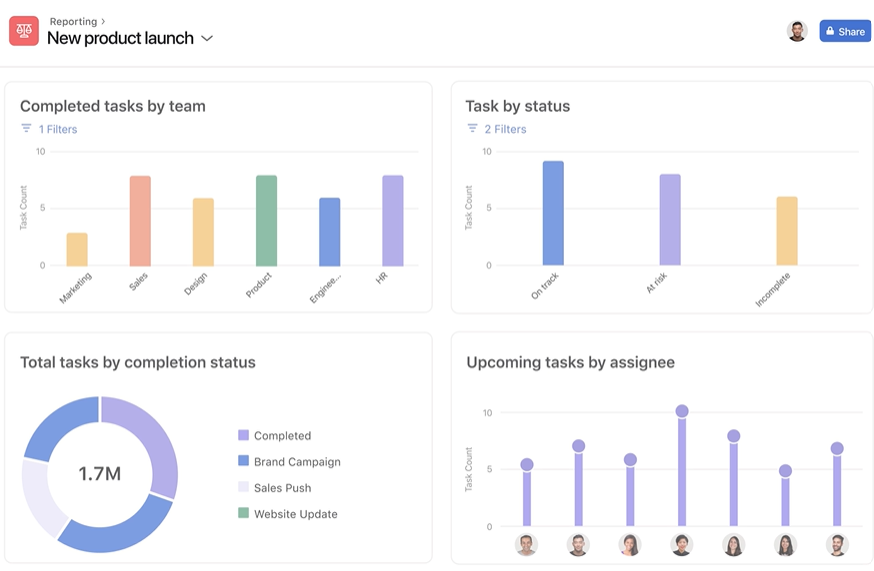
Asana provides reporting tools that help organizations measure performance and improve project execution.
Reporting and Analytics Features Include:
- Custom reports
- Project analytics
- Team performance metrics
- Productivity tracking
- Dashboard reporting
- Progress insights
- Status reports
- Work trend analysis
These features enable data-driven decision-making and continuous improvement.
Custom Workflows
Organizations can tailor Asana to fit their unique operational requirements.
Custom Workflow Features Include:
- Workflow customization
- Custom project templates
- Process mapping
- Custom task fields
- Workflow rules
- Approval processes
- Custom statuses
- Team-specific workflows
These capabilities allow businesses to standardize operations while maintaining flexibility.
Forms and Request Management
Asana simplifies request collection and work intake through customizable forms.
Forms and Request Management Features Include:
- Custom forms
- Request submission portals
- Automated task creation
- Work intake management
- Internal service requests
- Customer request tracking
- Form customization
- Submission routing
These features help streamline request management and improve response times.
Document and File Management
Teams can store and access project-related files directly within Asana.
Document Management Features Include:
- File attachments
- Cloud storage integrations
- Document sharing
- Version visibility
- Centralized file access
- Project documentation
- Asset organization
- Secure file management
These capabilities improve accessibility and collaboration on project resources.
Approval Workflows
Approval management helps organizations maintain quality control and governance.
Approval Workflow Features Include:
- Approval requests
- Review processes
- Decision tracking
- Approval notifications
- Stakeholder collaboration
- Quality assurance workflows
- Automated approvals
- Status monitoring
These features help ensure work meets required standards before completion.
Resource Planning
Resource planning tools help managers allocate people and resources effectively.
Resource Planning Features Include:
- Team capacity planning
- Resource forecasting
- Staffing management
- Project allocation
- Resource utilization tracking
- Workforce visibility
- Resource optimization
- Planning dashboards
These capabilities support efficient project execution and workforce management.
Mobile Accessibility
Asana provides mobile applications that allow users to manage work from anywhere.
Mobile Accessibility Features Include:
- Mobile task management
- Project tracking
- Team collaboration
- Push notifications
- File access
- Real-time updates
- Mobile approvals
- Activity monitoring
This flexibility supports remote teams and hybrid work environments.
Integration Ecosystem
Asana integrates with a wide range of business applications to create a connected workplace.
Integration Features Include:
- Microsoft Teams integration
- Slack integration
- Google Workspace integration
- Microsoft 365 integration
- Zoom integration
- Salesforce integration
- Dropbox integration
- OneDrive integration
- Adobe Creative Cloud integration
- Zapier integration
These integrations help businesses streamline workflows and eliminate data silos.
Security and Access Controls
Asana provides enterprise-grade security features to protect sensitive business information.
Security Features Include:
- Role-based permissions
- User access controls
- Single sign-on (SSO)
- Data encryption
- Administrative controls
- Security monitoring
- Compliance support
- Audit logs
These capabilities help organizations maintain security and regulatory compliance.
AI-Powered Work Management
Asana incorporates artificial intelligence to improve productivity and decision-making.
AI-Powered Features Include:
- Smart recommendations
- Automated task suggestions
- Workflow optimization
- Project insights
- Risk identification
- Productivity analysis
- AI-generated summaries
- Intelligent reporting
These capabilities help teams work more efficiently and make informed project decisions.
Benefits of Using Asana Software
Improved Project Organization
Teams can manage projects more effectively through structured workflows and centralized project information.
Enhanced Team Collaboration
Collaboration tools help improve communication, transparency, and accountability across departments.
Increased Productivity
Task management and workflow automation reduce administrative work and improve efficiency.
Better Deadline Management
Project timelines and milestone tracking help teams meet deadlines consistently.
Stronger Resource Allocation
Workload management capabilities support balanced resource distribution and project planning.
Greater Business Visibility
Reporting and project tracking provide valuable insights into organizational performance.
Integrations of Asana Software
Google Workspace Integration
Connects Gmail, Google Drive, Google Calendar, and other Google applications with Asana workflows.
Microsoft 365 Integration
Enables seamless collaboration through Outlook, Teams, OneDrive, and other Microsoft applications.
Slack Integration
Improves communication and project updates directly within team collaboration channels.
Zoom Integration
Supports meeting management and project collaboration through virtual communication tools.
Salesforce Integration
Connects customer relationship management activities with project execution workflows.
Dropbox Integration
Allows teams to manage and share project files efficiently.
Adobe Creative Cloud Integration
Supports creative teams by linking design assets and project workflows.
Additional Business Integrations
Additional Integrations Include:
- Jira
- HubSpot
- Tableau
- Power BI
- Trello
- Monday.com
- GitHub
- GitLab
- Zendesk
- Freshdesk
- Mailchimp
- Typeform
- DocuSign
- PandaDoc
- Calendly
- Miro
- Figma
- Notion
- QuickBooks
- Zapier
Pros and Cons of Asana Software
Pros | Cons |
User-friendly interface with minimal learning curve | Advanced features are limited in lower-tier plans |
Multiple project views including list, board, calendar, and timeline | Can become expensive for larger teams |
Strong task and project management capabilities | Resource management features are less robust than some competitors |
Powerful workflow automation tools | Time tracking requires third-party integrations |
Excellent collaboration and communication features | Reporting customization can be limited for advanced users |
Extensive integration ecosystem | Complex projects may require additional setup and configuration |
Suitable for teams of all sizes | Offline functionality is limited |
Who Should Use Asana Software?
Startups
Asana is an excellent project management software solution for startups looking to organize tasks, manage projects, and improve team collaboration. Startups often operate in fast-paced environments where project visibility and accountability are critical. Asana helps small teams track priorities, manage deadlines, automate workflows, and maintain alignment across departments without introducing unnecessary complexity.
Small Businesses
Small businesses can use Asana to centralize project management activities, improve productivity, and streamline team collaboration. The platform enables organizations to organize daily operations, manage client projects, coordinate marketing campaigns, and improve workflow efficiency through structured task management and automation tools.
Mid-Sized Businesses
Growing organizations benefit from Asana's scalability and advanced project management capabilities. Mid-sized businesses can manage multiple teams, coordinate complex projects, monitor workloads, automate recurring processes, and maintain visibility across departments using a single work management platform.
Enterprises
Large organizations use Asana to manage cross-functional initiatives, strategic projects, operational workflows, and company-wide objectives. Enterprise teams benefit from advanced reporting, workload management, automation, security controls, and collaboration features that support large-scale project execution and organizational alignment.
Asana Software Use Cases
Project Planning and Execution
Organizations use Asana to create project plans, assign responsibilities, establish milestones, and monitor progress throughout project lifecycles. Teams gain visibility into deliverables and deadlines while maintaining accountability.
Task Management
Businesses utilize Asana to organize, prioritize, assign, and track tasks. The platform ensures work is completed efficiently while providing team members with clarity regarding responsibilities and deadlines.
Marketing Campaign Management
Marketing teams use Asana to coordinate content calendars, campaign launches, creative approvals, advertising initiatives, and event planning activities. This helps streamline execution and improve campaign performance.
Product Development
Product teams leverage Asana to manage roadmaps, development sprints, feature releases, testing activities, and product launch initiatives. Collaboration tools help align stakeholders throughout the development process.
Team Collaboration
Organizations use Asana as a centralized workspace for communication, file sharing, updates, and project discussions. Teams can collaborate more effectively without relying heavily on email chains.
Workflow Automation
Businesses automate repetitive processes such as task assignments, approval workflows, status updates, and project notifications. Automation improves efficiency and reduces manual administrative work.
Resource Management
Managers use workload and project visibility tools to allocate resources effectively, balance team capacity, and prevent bottlenecks that may affect project delivery.
Goal and Performance Tracking
Organizations align projects with strategic objectives by tracking progress toward company goals, departmental initiatives, and key performance indicators.
Top Asana Alternatives
Monday.com
Monday.com is a work management and project management platform that offers customizable workflows, project tracking, team collaboration, and automation tools suitable for businesses of all sizes.
Trello
Trello is a visual task management software that uses Kanban boards to help teams organize projects, manage tasks, and collaborate effectively through a simple and intuitive interface.
ClickUp
ClickUp combines project management, task management, documentation, collaboration, and productivity tools within a highly customizable work management platform.
Wrike
Wrike is a project management software solution designed for teams that require advanced planning, collaboration, resource management, reporting, and workflow automation capabilities.
Jira
Jira is widely used by software development teams for agile project management, sprint planning, issue tracking, and product development workflows.
Smartsheet
Smartsheetprovides spreadsheet-style project management functionality with collaboration, automation, reporting, and resource management capabilities.
Asana Software vs Competitors
Feature | Asana | Monday.com | ClickUp | Trello |
Task Management | ✓ | ✓ | ✓ | ✓ |
Project Planning | ✓ | ✓ | ✓ | Limited |
Workflow Automation | ✓ | ✓ | ✓ | Limited |
Team Collaboration | ✓ | ✓ | ✓ | ✓ |
Timeline View | ✓ | ✓ | ✓ | No |
Workload Management | ✓ | ✓ | ✓ | No |
Reporting & Analytics | ✓ | ✓ | ✓ | Limited |
Mobile Access | ✓ | ✓ | ✓ | ✓ |
Ease of Use | High | High | Medium | High |
Best For | Project & Work Management | Custom Workflows | All-in-One Productivity | Simple Task Management |
Why Choose Asana Software?
Asana is one of the most widely adopted project management software platforms because it successfully combines simplicity, flexibility, and scalability within a single solution. Businesses choose Asana because it helps teams organize work, improve collaboration, and execute projects efficiently without requiring extensive technical expertise.
One of Asana's greatest strengths is its ability to provide complete visibility into projects and team activities. Managers can monitor progress, track deadlines, allocate resources, and identify potential risks before they impact project outcomes. Team members benefit from clear task assignments, structured workflows, and centralized communication channels that reduce confusion and improve accountability.
The platform's multiple project views allow organizations to manage work according to their preferred methodologies. Whether teams prefer lists, Kanban boards, calendars, timelines, or workload views, Asana provides the flexibility needed to support different working styles and business requirements.
Workflow automation is another major advantage. Businesses can automate repetitive administrative tasks, approval processes, notifications, and project updates, allowing teams to focus on strategic initiatives rather than manual coordination.
For organizations seeking project management software, task management software, workflow automation software, and team collaboration software within a single platform, Asana provides a comprehensive solution that supports productivity, efficiency, and long-term business growth.
Frequently Asked Questions
What is Asana Software?
Asana is a cloud-based project management software and work management platform designed to help businesses organize tasks, manage projects, improve collaboration, and streamline workflows. The platform enables teams to plan projects, assign responsibilities, track deadlines, automate processes, and monitor progress through a centralized workspace. Organizations across industries use Asana to improve productivity and ensure projects are completed successfully.
How does Asana help teams manage projects?
Asana helps teams manage projects by providing structured planning tools, task management capabilities, project timelines, collaboration features, automation tools, and reporting functionality. Teams can break projects into manageable tasks, assign responsibilities, establish deadlines, monitor progress, and communicate directly within the platform. This improves project visibility and accountability while reducing operational inefficiencies.
Is Asana suitable for small businesses?
Yes, Asana is highly suitable for small businesses. Its intuitive interface, flexible project views, collaboration tools, and automation capabilities make it an effective project management solution for organizations with limited resources. Small businesses can use Asana to manage operations, coordinate teams, organize client projects, and improve overall productivity while maintaining scalability for future growth.
What industries commonly use Asana?
Asana is used across a wide variety of industries including marketing, software development, healthcare, education, financial services, consulting, manufacturing, retail, professional services, human resources, and nonprofit organizations. Any business that manages projects, coordinates teams, and tracks deliverables can benefit from Asana's project management and collaboration capabilities.
Does Asana offer integrations with other business applications?
Yes, Asana integrates with numerous business tools including Google Workspace, Microsoft 365, Slack, Zoom, Salesforce, Jira, HubSpot, Dropbox, Adobe Creative Cloud, GitHub, Mailchimp, Tableau, QuickBooks, Zendesk, Calendly, and many others. These integrations enable organizations to connect workflows, improve collaboration, and centralize information across multiple business systems.
What are the key benefits of using Asana Software?
The primary benefits of using Asana include improved project organization, enhanced collaboration, increased productivity, better deadline management, workflow automation, resource optimization, project visibility, and goal alignment. These capabilities help organizations complete projects more efficiently while improving communication and accountability across teams.
What are the best alternatives to Asana Software?
Popular Asana alternatives include Monday.com, ClickUp, Trello, Wrike, Jira, and Smartsheet. Each project management software platform offers unique strengths related to customization, collaboration, workflow automation, reporting, and resource management. Businesses should evaluate features, integrations, pricing, scalability, and project management requirements before selecting the most appropriate solution.
Where can I compare Asana alternatives and competitors?
Businesses looking to compare Asana alternatives can use software comparison platforms such as Krowdbase to evaluate project management software solutions side by side. Comparing features, integrations, use cases, pricing structures, customer reviews, pros and cons, reporting capabilities, and workflow automation functionality helps organizations identify the best project management software for their operational requirements. Evaluating Asana alongside competitors such as Monday.com, ClickUp, Wrike, Jira, Trello, and Smartsheet can support better purchasing decisions.
Conclusion
Asana has established itself as one of the leading project management software platforms for organizations seeking to improve productivity, collaboration, and project execution. By combining project planning, task management, workflow automation, resource allocation, reporting, and team collaboration within a single platform, Asana helps businesses streamline operations and achieve organizational goals more effectively.
The platform's flexibility allows teams to manage work through multiple views, including lists, boards, calendars, timelines, and workload dashboards. These capabilities provide greater visibility into projects while helping teams stay organized and aligned. Workflow automation further enhances efficiency by reducing repetitive administrative tasks and supporting consistent execution across projects.
Asana is particularly valuable for startups, small businesses, mid-sized organizations, and enterprises that require scalable project management software capable of supporting diverse business functions. Its extensive integration ecosystem also enables organizations to connect project workflows with communication, productivity, customer relationship management, and reporting tools.
While businesses should compare alternatives such as Monday.com, ClickUp, Wrike, Jira, Trello, and Smartsheet based on their unique requirements, Asana remains a highly effective work management platform for teams seeking better project visibility, stronger collaboration, and improved operational efficiency. Its combination of usability, scalability, and functionality continues to make it a preferred choice for project-driven organizations worldwide.
Screenshots
Video
Categories
Features
FAQ
The official website of Asana is https://www.asana.com/
Asana belongs to the 360 Degree Feedback, Creative Management, Dashboard, Display Advertising, Employee Communication Tools, Enterprise Resource Planning, File Sharing, Form Builder, Gantt Chart, IT Project Management, Idea Management, Internal Communications, Kanban Tools, OKR, Onboarding, Performance Management System, Product Management, Product Roadmap, Professional Services Automation, Project Management, Project Planning, Project Portfolio Management, Project Tracking, Reporting, Resource Management, Social Media Management, Spreadsheet, Strategic Planning, Task Management, Team Management, Workflow Management, Workforce Management, Advertising Agency, Agile Project Management, Artificial Intelligence, Bug Tracking, Business Management, Business Process Management, Calendar, Campaign Management, Collaboration, Digital Workplace, Marketing Planning, Meeting, Productivity, Remote Work, Team Communication category.
Asana offers features such as Employee Database, Goal Setting/Tracking, Performance Review Management, Progress Tracking, Reporting/Analytics, Surveys & Feedback, Activity/News Feed, Knowledge Management, Integrated Business Operations, Template Management, Dependency Tracking, Milestone Tracking, Prioritization, Project Planning, Task Scheduling, Gantt/Timeline View, Status Tracking, Commenting/Notes, Ideation, Multi-board, Roadmapping, Idea Management, Product Roadmapping, Release Planning, Task Progress Tracking, Project Planning/Scheduling, Reporting/Project Tracking, Kanban Board, Project Time Tracking, Task Editing, Assignment Management, Business Process Automation, Workflow Configuration, File Sharing, Backlog Management, Retrospectives Management, Team Management, Process/Workflow Automation, Issue Tracking, Knowledge Base Management, Real-Time Notifications, Ticket Management, Process Modeling & Designing, Campaign Planning, Multi-Campaign, Media Planning.
Asana is used in industries such as Information Technology & Services, Advertising & Marketing, E-commerce.
Asana is built for Small Business, Mid Size Business, Enterprise
Asana supports English, French, German, Spanish, Portuguese, Japanese
Asana supports Android, Windows, iPhone/iPad, Web-based, Mac devices.
The starting price of Asana is USD 10.99/per month.
Yes, Asana offers a free trial.
Asana was founded in 2008.
Asana has approximately 1000+ employees.
Asana is located in United States.
Asana was founded by Asana, Inc..
Need help choosing this software?
Have questions about features, pricing, integrations, or implementation? Send an enquiry to the vendor and get the information you need.
Pricing
Starting at:
$10.99/per month
Free Trial Available
Vendor Details
- Vendor
- Asana, Inc.
- Founded
- 2008
- Locations
- United States
- Company Size
- 1000+
- Social Media


