
iThenticate
iThenticate is plagiarism detection software that helps academic researchers and publishers ensure the originality of written works.
What is iThenticate?
iThenticate is a professional similarity checking and research integrity software designed to help researchers, publishers, academic institutions, government agencies, legal organizations, and businesses evaluate the originality of high-stakes written content before publication or submission. The platform compares uploaded documents against an extensive collection of scholarly publications, web content, research papers, and previously submitted materials to identify matching or overlapping text.
Research papers, journal articles, grant proposals, theses, dissertations, manuscripts, legal documents, and corporate reports often contain information gathered from multiple sources. Even when authors do not intentionally copy content, improper paraphrasing, missing citations, duplicated passages, or self-plagiarism can create serious concerns. iThenticate helps users identify these issues before documents are submitted to publishers, funding organizations, academic committees, or professional bodies.
The platform generates a detailed Similarity Report that highlights matching text and connects each match to its potential source. Users can review individual sources, examine overlapping passages, apply exclusion filters, and determine whether revisions or additional citations are required. However, iThenticate does not automatically decide whether plagiarism has occurred. The similarity score and report must be interpreted within the context of the document, sources, citation practices, and publishing requirements.
iThenticate is developed by Turnitin and is specifically positioned for researchers, publishers, institutions, and professionals handling publishable or high-stakes content. Although it uses similarity-checking technology associated with Turnitin, its workflows and database coverage are tailored more closely to academic research, scholarly publishing, and professional document review.
In addition to similarity checking, current iThenticate capabilities include AI writing detection, match categorization, document organization, collaboration tools, text manipulation flags, and integration options for institutional workflows. These capabilities help organizations strengthen research integrity, protect institutional reputations, and improve confidence in submitted or published work.
About iThenticate
iThenticate is a cloud-based plagiarism detection and similarity checking software developed by Turnitin. It is designed primarily for authors, researchers, publishers, academic institutions, government departments, research organizations, funding bodies, and enterprises that need to review high-value documents for originality.
Unlike classroom-focused academic integrity tools, iThenticate is structured around professional research and publishing workflows. Researchers may use it before submitting manuscripts to journals, while publishers can incorporate it into editorial review processes to screen submitted articles. Universities, laboratories, corporations, and government organizations can also use the platform to evaluate dissertations, grant proposals, policy papers, technical reports, and other critical documents.
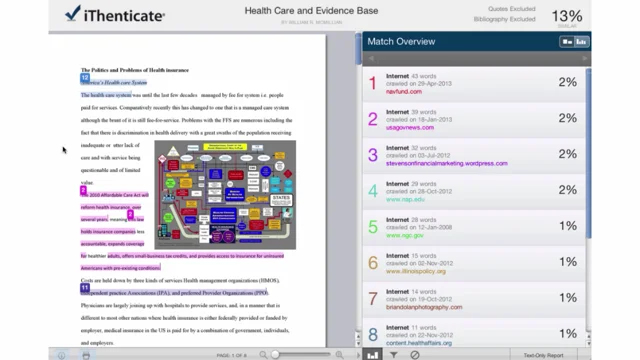
At the center of iThenticate is its Similarity Report. After a document is uploaded, the platform compares its text with available sources and calculates an overall similarity score. Matching passages are highlighted and linked to source records, helping reviewers understand where similarities appear and how much of the document overlaps with existing content.
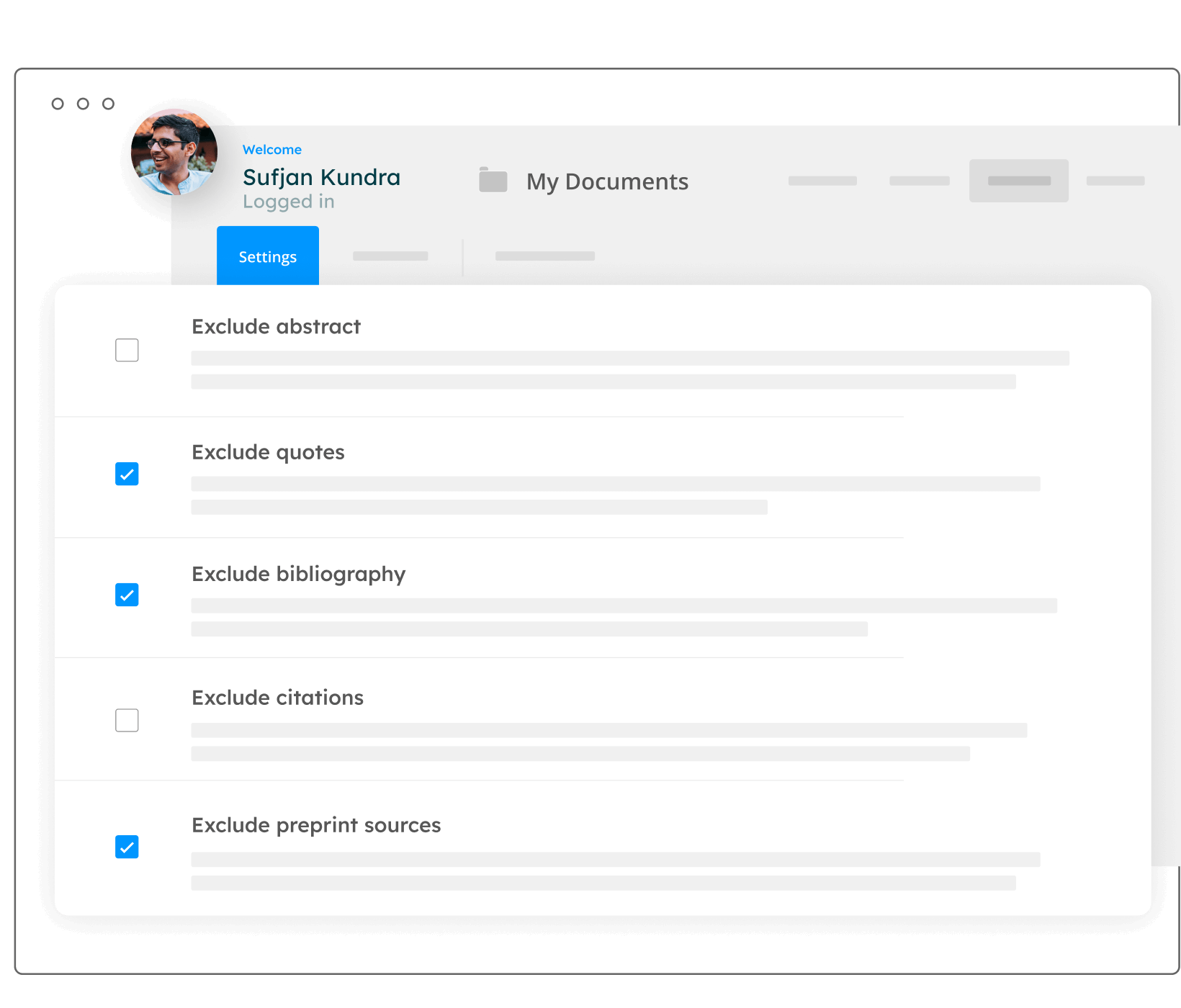
The platform includes tools for separating different match types and refining reports. Users can exclude quotations, bibliographies, citations, small matches, and specific sources when these elements are not relevant to the review. These controls help reduce unnecessary matches and allow reviewers to concentrate on potentially meaningful overlap.
iThenticate also provides Match Groups, which organize similarities according to how text appears to have been matched, and a Flags Panel that can identify suspicious text manipulation such as hidden text or replaced characters. Collaboration features support shared folders and group-based document review, while API options allow institutions and software vendors to incorporate similarity checking into existing systems.
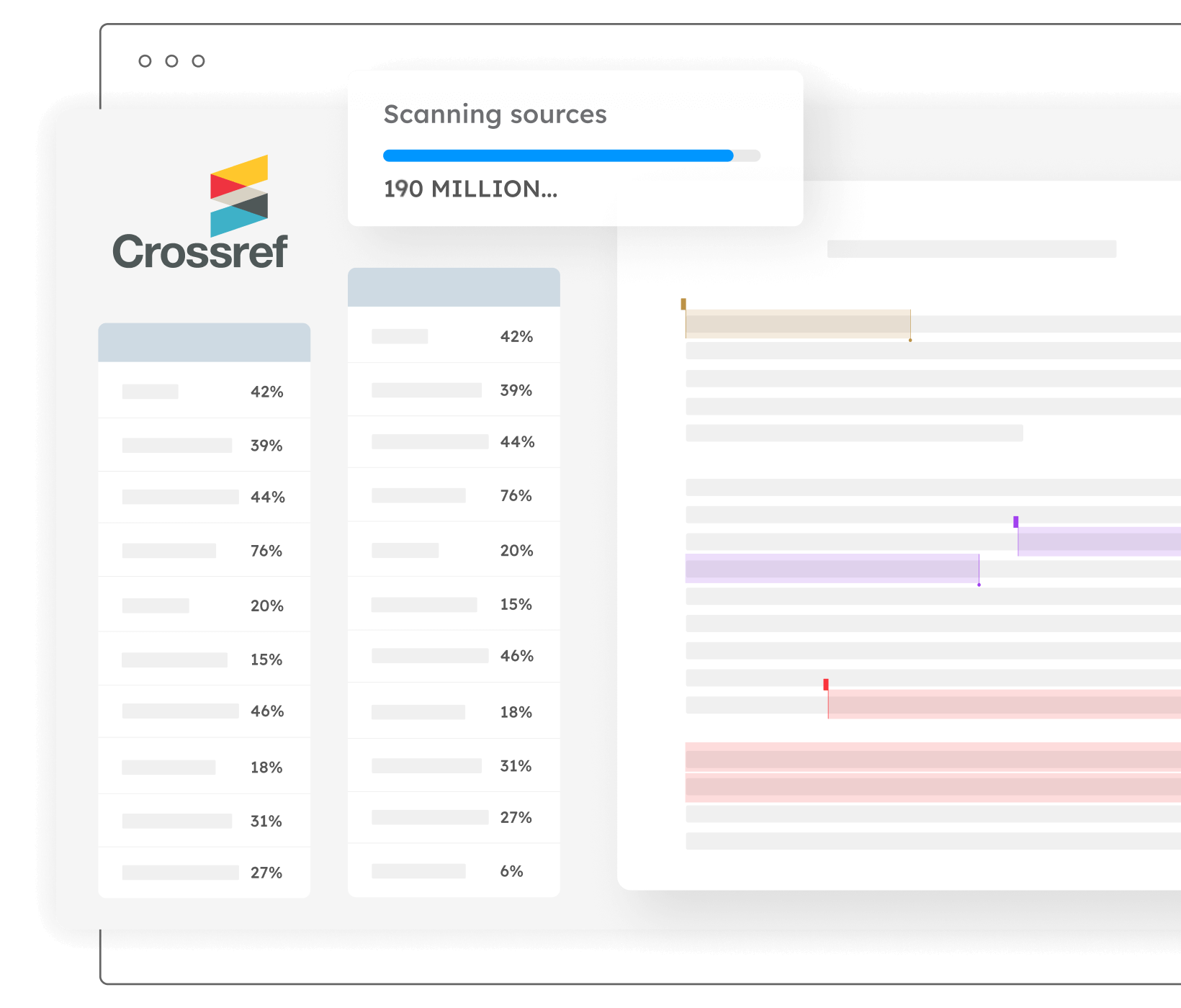
The platform is frequently associated with the Crossref Similarity Check service, which uses iThenticate technology to help participating scholarly publishers evaluate submitted manuscripts. Through this research-focused positioning, iThenticate supports publishers and institutions seeking to uphold ethical publication standards and protect the originality of academic work.
Key Objectives of iThenticate
Protect Research Integrity
One of the primary objectives of iThenticate is to help researchers, publishers, and institutions maintain the originality and credibility of scholarly work. By identifying matching passages before publication, the platform gives authors and reviewers an opportunity to examine whether sources have been properly cited, quoted, or paraphrased.
Identify Text Similarity
iThenticate compares uploaded documents against a broad collection of online and scholarly content. It highlights matching or similar text and provides source information that allows users to investigate the context of each match.
Detect Potential Publication Misconduct
The platform helps editorial teams identify patterns that may indicate duplicated content, unattributed copying, inappropriate reuse, self-plagiarism, or manipulated text. The results support informed investigation rather than automatically classifying a document as plagiarized.
Support Manuscript Screening
Publishers and journal editors can use iThenticate during submission and peer-review workflows to examine manuscripts before acceptance. This helps editorial teams maintain publication standards and reduce the risk of releasing content with originality concerns.
Improve Citation and Paraphrasing
Authors can use Similarity Reports to identify passages that may require better paraphrasing, additional attribution, clearer quotation formatting, or more complete citations. This supports stronger writing practices and more transparent research documentation.
Strengthen Institutional Reputation
Universities, publishers, corporations, and research organizations face reputational risks when unoriginal or improperly attributed content is published under their name. iThenticate helps these organizations introduce a consistent review process for high-stakes documents.
Support Responsible AI Use
iThenticate includes AI writing detection capabilities that provide indicators related to text that may have been generated or altered using artificial intelligence. These results can support institutional review policies, but they should be interpreted carefully alongside human judgment and additional evidence.
Simplify Document Review
The platform organizes matches, sources, document details, and report filters within a centralized interface. This helps reviewers evaluate complex documents more efficiently instead of manually searching the internet for duplicated passages.
Enable Collaborative Evaluation
Shared folders, user groups, and document management capabilities allow research teams, publishers, and institutional administrators to coordinate originality reviews across departments and editorial workflows.
Support Scalable Similarity Checking
iThenticate can support individual researchers purchasing document credits as well as institutional and publisher accounts handling larger submission volumes. API-based integration also enables organizations to incorporate similarity checking into existing research or publishing systems.
iThenticate Categories
Primary Categories
Key Features of iThenticate
Similarity Checking
iThenticate analyzes uploaded documents to identify text that matches or closely resembles content available in its comparison database. The software highlights matching passages and links them to potential sources, enabling authors and reviewers to examine the origin and context of each similarity.
This feature is particularly useful for journal manuscripts, dissertations, theses, research reports, grant proposals, conference papers, and other high-stakes documents. Instead of relying only on a percentage, users can review the actual matching text and determine whether the content has been quoted, cited, paraphrased, or reused appropriately.
Key Capabilities Include:
- Text similarity identification
- Source matching
- Overlapping content detection
- Scholarly document screening
- Web content comparison
- Manuscript originality review
- Potential duplication identification
- Detailed source analysis
Detailed Similarity Reports
The Similarity Report provides a visual overview of matching content found within a submitted document. It displays an overall similarity score and highlights matching passages using source-linked indicators, helping users understand which sections require closer examination.
The similarity score represents the amount of matching text found in the document, but it does not independently prove plagiarism. Reviewers must evaluate the type of document, use of citations, quoted material, standard terminology, reference lists, and institutional policies before reaching a conclusion.
Key Capabilities Include:
- Overall similarity score
- Highlighted text matches
- Source-level details
- Interactive report navigation
- Match percentage analysis
- Overlapping source review
- Document-level insights
- Contextual originality assessment
Match Groups
Match Groups organize detected similarities into categories that help reviewers interpret how text may have been used. Instead of presenting every similarity as an identical issue, the platform groups matches to provide more context around citation, quotation, and possible unattributed overlap.
This feature can make complex reports easier to interpret, particularly when reviewing long research papers containing numerous citations, references, quotations, and technical terms.
Key Capabilities Include:
- Organized match categorization
- Context-based similarity review
- Easier report interpretation
- Source grouping
- Citation pattern analysis
- Quotation assessment
- Unattributed match identification
- Research integrity evaluation
AI Writing Detection
iThenticate includes AI writing detection capabilities designed to identify qualifying text that may have been generated or altered using generative AI tools. The AI writing report is separate from the similarity score and provides an additional signal for reviewers evaluating originality and responsible AI use.
The platform has also introduced capabilities intended to detect text modified using AI bypasser tools that attempt to make machine-generated writing appear more human. AI detection results should not be treated as conclusive proof of misconduct and are best used as part of a broader human-led review.
Key Capabilities Include:
- AI-generated writing indicators
- AI writing report
- Qualifying text analysis
- AI bypasser detection
- Generative AI risk review
- Responsible AI policy support
- Research integrity monitoring
- Human-led investigation support
Source Comparison
iThenticate provides detailed information about sources associated with matching passages. Users can open individual source cards, examine the amount of overlapping text, and determine whether the similarity comes from a legitimate quotation, reference, commonly used phrase, or potentially problematic reuse.
The enhanced report also allows users to examine overlapping sources when several documents contain similar text. This makes it easier to identify the most relevant original or primary source rather than relying only on the first displayed match.
Key Capabilities Include:
- Individual source cards
- Side-by-side source analysis
- Overlapping source visibility
- Primary source investigation
- Match percentage details
- Source exclusion
- Contextual document comparison
- Citation verification support
Exclusion Filters
Exclusion filters allow users to remove certain content types from the Similarity Report when they are not relevant to the originality review. Users can exclude bibliographies, quoted text, cited text, small matches, and small sources to reduce report noise.
These settings are particularly valuable for lengthy academic documents where references, standard terminology, correctly quoted content, or minor phrase matches may unnecessarily increase the similarity score.
Key Capabilities Include:
- Bibliography exclusion
- Quoted text exclusion
- Cited text exclusion
- Small match filtering
- Small source filtering
- Customized report refinement
- Reduced irrelevant matches
- More focused similarity analysis
Flags Panel
The Flags Panel helps reviewers identify unusual document formatting or text manipulation that could be used to influence the similarity-checking process. Examples may include hidden text, replaced characters, or other formatting irregularities.
This feature gives publishers and institutions an additional method for evaluating whether a submission has been intentionally manipulated to avoid detection.
Key Capabilities Include:
- Hidden text detection
- Replaced character identification
- Text manipulation alerts
- Suspicious formatting review
- Document integrity checks
- Evasion technique detection
- Editorial investigation support
- Submission risk assessment
Document-to-Document Comparison
Document-to-document comparison allows users to compare selected unpublished or internal documents with one another. This can help researchers examine different manuscript versions, identify reused material across related papers, or compare a new submission with previously produced content.
The feature is useful when relevant documents are not publicly accessible or included in the standard comparison database.
Key Capabilities Include:
- Direct document comparison
- Internal content checking
- Manuscript version comparison
- Unpublished work analysis
- Duplicate passage detection
- Self-reuse review
- Custom document matching
- Controlled source evaluation
File Upload and Processing
Users can upload supported document types directly to iThenticate to generate Similarity Reports. Current guidance states that an individual file can be up to 100 MB, total uploads can reach 200 MB, and a document may contain up to 800 pages. ZIP uploads are also supported within defined size and file-count limits.
This flexibility supports both individual manuscript checks and larger document-processing requirements.
Key Capabilities Include:
- Direct document upload
- Multiple file support
- ZIP file processing
- Large document handling
- High page-count support
- Automated report generation
- Submission status tracking
- Centralized document processing
Document and Folder Management
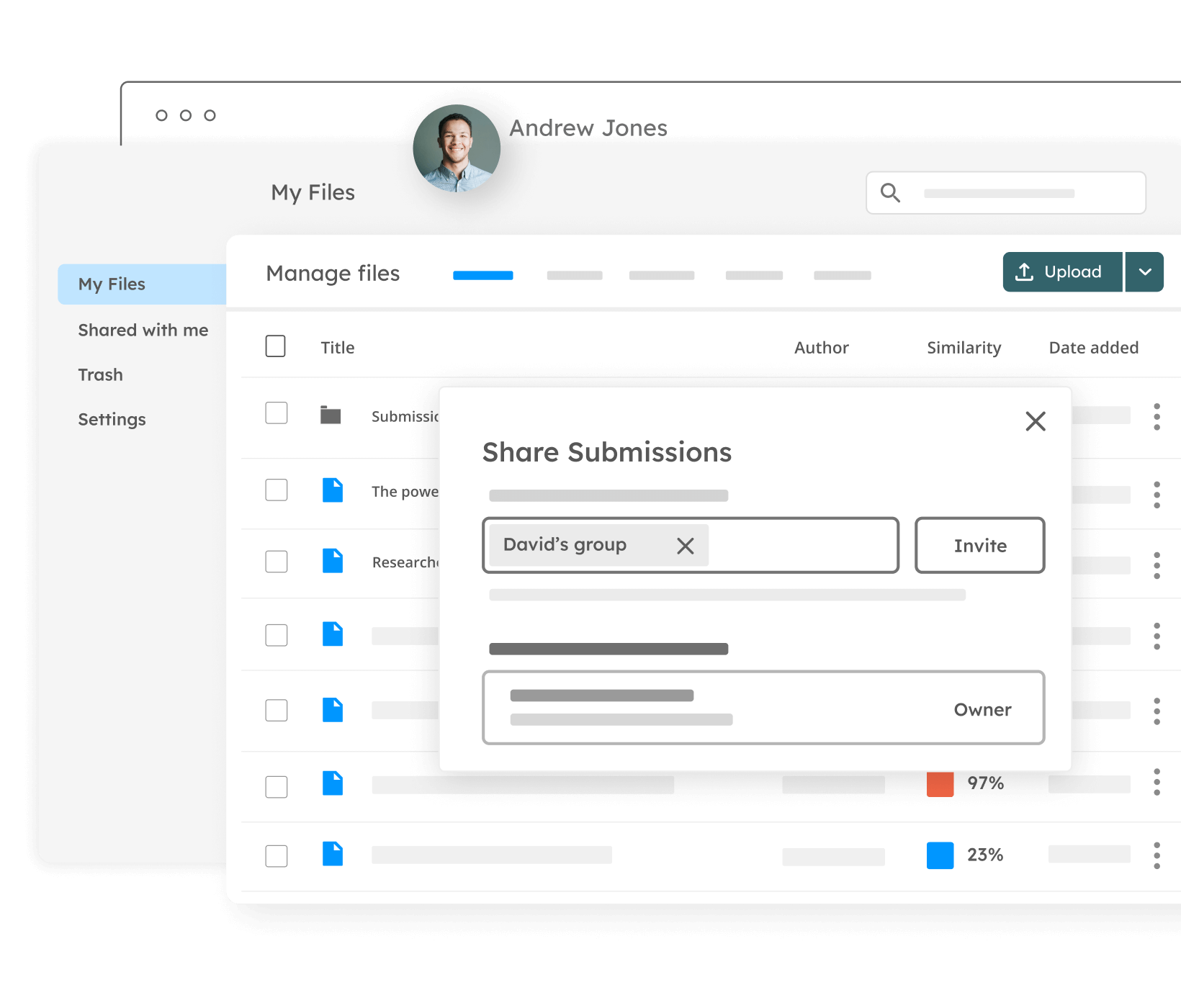
The My Files area allows users to upload, organize, and manage documents and folders within the platform. Each item contains relevant submission information, helping researchers and administrators locate reports and maintain organized originality-review workflows.
Institutions handling numerous manuscripts, research projects, or departmental submissions can use folders to separate documents by team, publication, project, or review status.
Key Capabilities Include:
- Centralized file management
- Folder organization
- Document categorization
- Submission tracking
- Report accessibility
- Research project organization
- User-friendly file navigation
- Controlled document workflows
Collaboration Tools
iThenticate supports collaborative originality review through shared folders and user groups. Administrators can organize users, assign appropriate access, and enable teams to review documents within shared workspaces.
This is particularly beneficial for journal editorial teams, research departments, graduate schools, compliance offices, and organizations where multiple stakeholders participate in document evaluation.
Key Capabilities Include:
- Shared folders
- User groups
- Team-based document review
- Editorial collaboration
- Departmental workflows
- Controlled document access
- Review coordination
- Institutional account management
Preprint and Citation Handling
Enhanced similarity-checking capabilities can automatically account for content such as preprints, citations, and selected document sections. This helps reduce unnecessary manual investigation when a final journal article or research paper legitimately overlaps with a previously published preprint version.
These tools allow research and publishing teams to focus on meaningful similarities rather than expected overlap within recognized scholarly workflows.
Key Capabilities Include:
- Preprint recognition
- Citation handling
- Custom section exclusion
- Reduced duplicate-version noise
- Scholarly publishing support
- Improved report accuracy
- Faster manuscript evaluation
- Research workflow optimization
API Access
iThenticate provides integration options for organizations that want to incorporate similarity checking into existing publishing, research, or document management systems. Institutional users and software vendors can use Turnitin integration technologies to submit documents, retrieve reports, and expose relevant settings within their own platforms.
API access is particularly valuable for publishers, universities, and research organizations processing large numbers of submissions through established editorial or institutional systems.
Key Capabilities Include:
- API-based submission
- Automated similarity workflows
- Institutional system integration
- Publishing platform connectivity
- Report retrieval
- Custom workflow development
- High-volume processing support
- Enterprise implementation
Multilingual Similarity Checking
iThenticate can evaluate text similarity across documents written in numerous languages. Turnitin has stated that the platform can check text similarity across 176 languages, including simplified and traditional Chinese.
This multilingual capability supports international publishers, global universities, multinational research teams, and organizations reviewing documents created in different regions.
Key Capabilities Include:
- Multilingual document checking
- International research support
- Global publishing workflows
- Cross-language institutional use
- Regional content analysis
- Diverse manuscript screening
- Worldwide research collaboration
- Broad language coverage
Individual Credit-Based Access
Individual researchers and professionals can purchase credits for document checks without requiring a full institutional account. Official guidance lists individual and multi-credit purchase options, allowing users to select access based on the number of documents they need to review.
This makes iThenticate accessible to independent authors, researchers, consultants, and professionals preparing important documents for external submission.
Key Capabilities Include:
- Individual account access
- Credit-based document checks
- Flexible purchasing options
- Professional manuscript review
- Independent researcher support
- No institutional subscription requirement
- On-demand similarity checking
- High-stakes document screening
Business Integrations
iThenticate is designed to integrate with scholarly publishing platforms, institutional research systems, editorial workflows, and document management solutions. Through APIs and enterprise integration capabilities, organizations can automate similarity checking during manuscript submission, editorial review, research evaluation, and compliance processes. These integrations help publishers, universities, research institutions, and enterprises maintain research integrity while reducing manual review efforts.
Turnitin
As part of the Turnitin ecosystem, iThenticate complements institutional academic integrity solutions by providing professional-grade similarity checking for researchers, publishers, and organizations handling high-stakes documents.
Crossref Similarity Check
iThenticate powers Crossref Similarity Check, enabling participating scholarly publishers to screen submitted manuscripts against extensive scholarly literature before publication. This helps publishers maintain publication quality and identify potential text overlap early in the editorial process.
Editorial Manager
Publishers can integrate iThenticate with Editorial Manager to automate similarity checking during manuscript submission and peer-review workflows, reducing manual intervention while improving editorial efficiency.
ScholarOne Manuscripts
ScholarOne users can incorporate iThenticate into journal submission workflows to automatically generate Similarity Reports before editorial decisions are made, helping editors evaluate manuscript originality more efficiently.
Aries Editorial Systems
Publishing organizations using Aries Editorial Systems can integrate iThenticate into existing editorial processes, enabling seamless plagiarism detection during manuscript review and publication management.
Research Information Systems
Universities and research institutions can connect iThenticate with institutional research management platforms to strengthen research integrity policies and support responsible publication practices.
REST API Integration
iThenticate provides API access that enables software vendors, publishers, universities, and enterprises to integrate similarity checking directly into custom applications, document management systems, and submission portals.
Additional Business Integrations
Additional business integrations include:
- Microsoft Word
- Microsoft 365
- Google Workspace
- Google Drive
- Dropbox
- Box
- SharePoint
- ORCID
- Open Journal Systems (OJS)
- DSpace
- Figshare
- Dataverse
- Mendeley
- Zotero
- EndNote
Pros and Cons of iThenticate
Pros | Cons |
Extensive scholarly database for similarity checking | Premium pricing may not suit individual users |
Trusted by publishers, universities, and research institutions | Similarity reports require human interpretation |
Detailed Similarity Reports with source comparisons | Does not automatically determine plagiarism |
AI writing detection capabilities | Limited grammar or writing enhancement tools |
Advanced exclusion filters improve report accuracy | Internet connection required for cloud access |
Supports API integration for enterprise workflows | Some integrations require enterprise licensing |
Helps strengthen research integrity and publication quality | Primarily focused on professional and research use cases |
Scalable for high-volume manuscript screening | Learning report interpretation may take time |
Who Should Use iThenticate?
Researchers
Researchers preparing journal articles, conference papers, dissertations, and grant proposals can use iThenticate to evaluate originality before submission and reduce the risk of publication issues.
Academic Institutions
Universities, colleges, and research organizations use iThenticate to strengthen research integrity, support faculty publications, and maintain academic quality standards.
Scholarly Publishers
Journal publishers and editorial offices rely on iThenticate to screen manuscripts during editorial review, helping identify duplicated content and maintain publishing ethics.
Government Organizations
Government agencies preparing policy documents, technical reports, and research publications can use iThenticate to review originality before public release.
Corporate Research Teams
Research and development departments can verify technical reports, white papers, patent documentation, and internal publications before distribution.
Legal Professionals
Legal firms and compliance departments can evaluate legal documents, expert reports, and supporting documentation for originality and proper attribution.
Funding Organizations
Grant providers and research funding bodies can use iThenticate to assess originality in submitted research proposals and supporting documentation.
iThenticate Use Cases
Journal Manuscript Screening
Publishers use iThenticate to evaluate submitted manuscripts before peer review, helping identify text similarities and improve editorial decision-making.
Research Paper Verification
Researchers review academic papers for originality before submitting them to conferences, journals, or institutional repositories.
Thesis and Dissertation Review
Universities utilize iThenticate to assess doctoral dissertations, master's theses, and graduate research documents before final approval.
Grant Proposal Evaluation
Funding organizations and researchers verify the originality of grant applications before submission or review.
Technical Documentation
Businesses evaluate technical reports, product documentation, and engineering papers for originality before publication.
Policy and Government Reports
Government agencies review official reports and research publications to ensure proper citation and originality.
Institutional Research Compliance
Research institutions incorporate iThenticate into internal review processes to support compliance with publication ethics and institutional policies.
Professional Document Verification
Organizations verify white papers, research studies, legal documentation, and corporate publications before external distribution.
Top iThenticate Alternatives
Turnitin
Turnitin is one of the most widely recognized academic integrity platforms, offering plagiarism detection, AI writing detection, grading tools, and educational feedback primarily for schools and higher education institutions.
Grammarly Plagiarism Checker
Grammarly combines plagiarism detection with grammar correction, writing enhancement, and readability improvements for students, professionals, and businesses.
Copyleaks
Copyleaks provides plagiarism detection, AI content detection, source comparison, and document verification for educational institutions, publishers, and enterprises.
PlagScan
PlagScan offers plagiarism detection services for universities, businesses, and publishers by comparing submitted documents against online content and institutional repositories.
Unicheck
Unicheck is a cloud-based plagiarism detection platform that integrates with learning management systems and educational workflows while providing detailed similarity reports.
Scribbr Plagiarism Checker
Scribbr offers plagiarism detection for students and researchers by comparing academic documents against scholarly publications and online sources.
iThenticate vs Competitors
Feature | iThenticate | Turnitin | Copyleaks | PlagScan |
Similarity Checking | ✔ | ✔ | ✔ | ✔ |
Scholarly Database Coverage | ✔ | ✔ | Limited | Limited |
AI Writing Detection | ✔ | ✔ | ✔ | Limited |
Research Integrity Focus | ✔ | Limited | Limited | Limited |
Journal Publishing Support | ✔ | Limited | Limited | Limited |
API Integration | ✔ | ✔ | ✔ | ✔ |
Detailed Similarity Reports | ✔ | ✔ | ✔ | ✔ |
Best For | Researchers & Publishers | Academic Institutions | AI Content Detection | Educational & Business Use |
Why Choose iThenticate?
iThenticate has become one of the most trusted Research Integrity Software and Similarity Checking Software solutions for researchers, publishers, universities, and professional organizations worldwide. Its extensive comparison database, advanced Similarity Reports, AI writing detection capabilities, and flexible filtering options help organizations evaluate originality with greater confidence.
Unlike general plagiarism detection tools, iThenticate is specifically designed for scholarly publishing and professional research workflows. It supports manuscript screening, grant proposal evaluation, dissertation review, institutional compliance, and editorial quality assurance while allowing users to interpret results within the proper academic and publishing context.
Its enterprise scalability, API integration capabilities, collaborative document management, and continuous product enhancements make iThenticate an ideal solution for organizations managing large volumes of research submissions. Whether reviewing a single manuscript or thousands of journal articles, the platform provides reliable originality analysis while supporting ethical research and responsible publishing practices.
Frequently Asked Questions
What is iThenticate?
iThenticate is a Plagiarism Detection Software and Similarity Checking Software developed by Turnitin that helps researchers, publishers, universities, and organizations evaluate document originality by comparing uploaded content against scholarly publications, online sources, and other available content.
What are the key features of iThenticate?
iThenticate offers similarity checking, detailed Similarity Reports, AI writing detection, match grouping, exclusion filters, document comparison, collaborative review tools, API integration, multilingual support, and enterprise-scale manuscript screening.
Is iThenticate the same as Turnitin?
No. While both products are developed by Turnitin, iThenticate is designed primarily for researchers, publishers, government agencies, and professional organizations, whereas Turnitin focuses mainly on classroom assignments, academic integrity, grading, and educational workflows.
Does iThenticate detect AI-generated content?
Yes. iThenticate includes AI writing detection capabilities that identify qualifying text potentially generated or modified using artificial intelligence. These reports are intended to support human review rather than serve as definitive evidence of misconduct.
Can iThenticate detect plagiarism?
iThenticate identifies text similarities and generates detailed Similarity Reports. However, it does not automatically determine whether plagiarism has occurred. Human reviewers must interpret the results based on citations, quotations, publishing standards, and institutional policies.
Who should use iThenticate?
iThenticate is suitable for researchers, universities, journal publishers, research institutions, government agencies, legal professionals, funding organizations, and enterprises handling high-value documents requiring originality verification.
Where can I compare iThenticate with other Plagiarism Detection Software?
Software discovery platforms like Krowdbase allow users to compare Plagiarism Detection Software, Research Integrity Software, and Similarity Checking Software based on features, integrations, supported industries, customer reviews, pricing models, and business requirements.
What are the best iThenticate alternatives?
Popular iThenticate alternatives include Turnitin, Copyleaks, Grammarly Plagiarism Checker, PlagScan, Unicheck, and Scribbr Plagiarism Checker. Each platform offers different capabilities depending on academic, research, publishing, or enterprise needs.
How do I choose the best Similarity Checking Software?
When selecting Similarity Checking Software, evaluate database coverage, similarity report accuracy, AI writing detection, integration capabilities, research workflow support, compliance requirements, scalability, ease of use, and reporting features. Comparing these capabilities on Krowdbase can help identify the most suitable solution.
Conclusion
iThenticate is a leading Plagiarism Detection Software, Similarity Checking Software, and Research Integrity Software that enables researchers, publishers, universities, and organizations to maintain originality and uphold ethical publishing standards. Through comprehensive similarity analysis, AI writing detection, advanced report filtering, and enterprise-ready integrations, the platform supports reliable manuscript evaluation across a wide range of professional and academic environments.
Its specialized focus on scholarly publishing, institutional research, and professional document review distinguishes it from many general plagiarism detection tools. Whether screening journal submissions, reviewing grant proposals, evaluating dissertations, or supporting institutional compliance, iThenticate provides the tools needed to strengthen research integrity and publication quality.
While organizations should evaluate alternatives such as Turnitin, Copyleaks, Grammarly Plagiarism Checker, PlagScan, Unicheck, and Scribbr Plagiarism Checker based on their specific workflows and requirements, iThenticate remains one of the most trusted solutions for professional similarity checking and research integrity management. Its combination of extensive database coverage, advanced reporting capabilities, and scalable enterprise support continues to make it a preferred choice for scholarly publishing and high-stakes document verification.
Screenshots
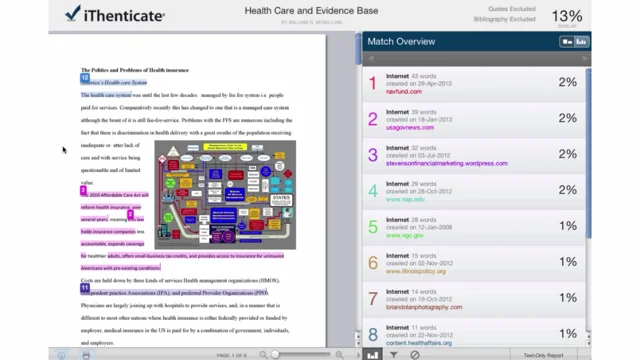
Features
FAQ
The official website of iThenticate is https://www.ithenticate.com/
iThenticate belongs to the AI Detection, Plagiarism Checker, Proofreading category.
iThenticate offers features such as API, Content Scan, Multi-Language, Text Similarity Detection, Side-by-Side Comparison, Source Database, Plagiarism Detection.
No, iThenticate does not offer a free trial.
Need help choosing this software?
Have questions about features, pricing, integrations, or implementation? Send an enquiry to the vendor and get the information you need.
Pricing
Starting at:
$100/one time
Free Trial Available