Joomla
Krowdbase ShortlistCMS designed to help both novice users and expert developers to build websites and applications.
What is Joomla?
Joomla is a widely used open-source content management system (CMS) that enables individuals, businesses, organizations, and developers to build, manage, and maintain websites, portals, blogs, eCommerce stores, and web applications. Known for its flexibility, scalability, and extensive customization capabilities, Joomla has become one of the most popular CMS platforms globally.
Managing a website often requires content publishing tools, user management, design customization, security controls, and functionality extensions. Joomla addresses these requirements through a comprehensive platform that allows users to create professional websites without needing to build everything from scratch. Its modular architecture supports a wide range of use cases, from small business websites to enterprise-level portals.
One of Joomla's key strengths is its balance between ease of use and advanced functionality. While beginners can use Joomla to launch and manage websites efficiently, developers can leverage its extensive customization options, extensions, templates, and APIs to create highly tailored solutions.
Today, Joomla powers websites across industries including education, government, healthcare, media, non-profit organizations, eCommerce, technology, and professional services. Whether organizations require a business website, membership portal, community platform, or content-rich website, Joomla provides the tools needed to create and manage a professional online presence.
About Joomla
Joomla is a free and open-source content management software platform that enables users to build, publish, organize, and manage website content through a web-based interface. First launched in 2005, Joomla has evolved into a mature CMS solution supported by a large global community of developers, designers, and contributors.
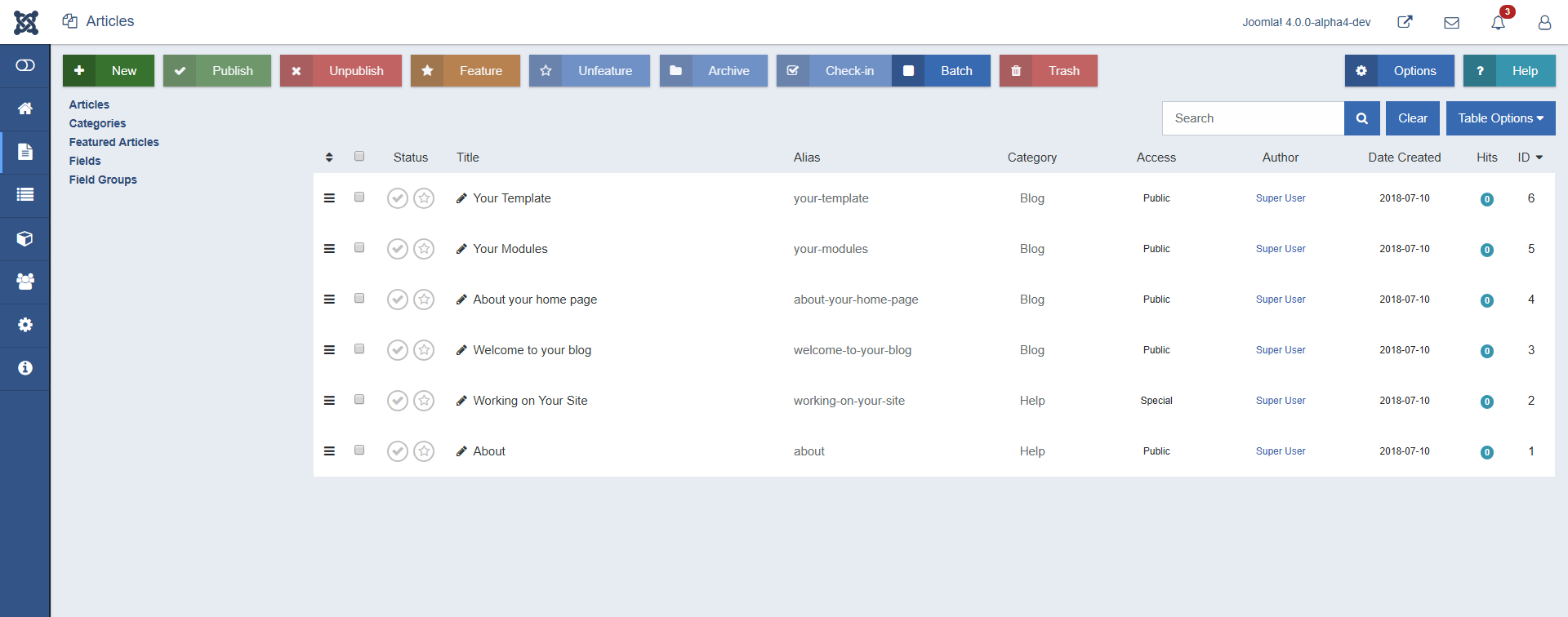
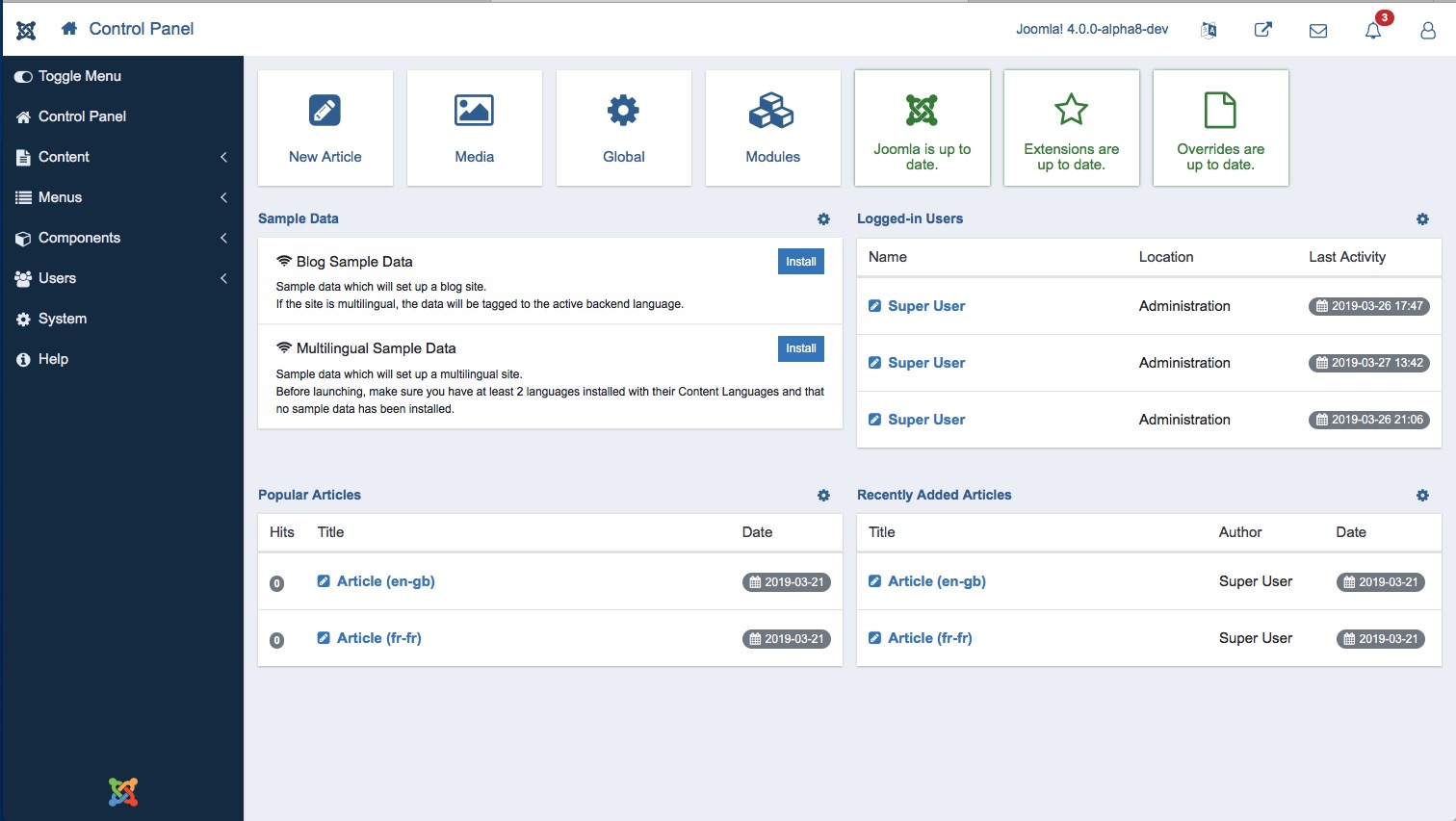
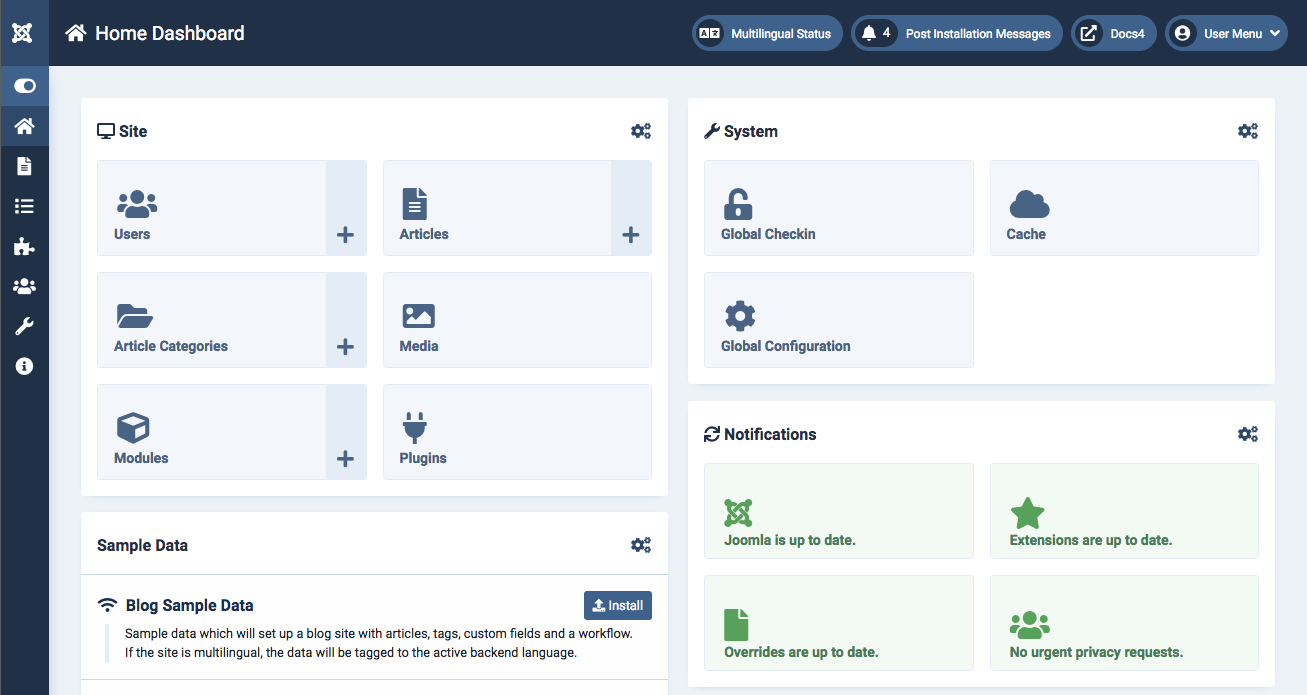
The platform provides a flexible framework for website creation and content management while supporting advanced customization through extensions, templates, plugins, and modules. Joomla allows users to manage articles, pages, menus, media files, users, permissions, and website functionality from a centralized administration dashboard.
Unlike website builders that limit customization options, Joomla offers extensive flexibility for developers while remaining accessible to non-technical users. Organizations can create multilingual websites, membership portals, eCommerce stores, community forums, and enterprise-level content management systems using the platform.
Joomla is particularly valued for its strong user management capabilities, content organization tools, security features, SEO functionality, and extensive extension ecosystem. These capabilities make it a reliable solution for businesses and organizations seeking a scalable and customizable content management system.
Key Objectives of Joomla
Simplify Website Management
Joomla helps users manage website content, pages, media, users, and functionality from a centralized administration interface.
Enable Flexible Website Development
The platform provides extensive customization capabilities that support unique business requirements and website objectives.
Improve Content Publishing
Joomla enables organizations to create, organize, publish, and update content efficiently across websites and digital platforms.
Support Scalable Growth
The platform supports growing websites through modular functionality, extension support, and flexible architecture.
Enhance User Management
Joomla offers advanced user roles, permissions, and access controls that help organizations manage website users effectively.
Provide Open-Source Flexibility
As an open-source CMS software solution, Joomla gives users complete control over customization, development, and deployment.
Primary Category
Content Management System (CMS) Software
Joomla primarily belongs to the Content Management System (CMS) Software category. The platform helps businesses and organizations create, manage, organize, and publish website content while supporting website customization, user management, and digital publishing workflows.
Primary Category
Secondary Categories
Joomla extends beyond traditional content management by supporting website development, portal creation, eCommerce functionality, digital publishing, and web application management.
Secondary Categories
Key Features of Joomla
Content Management
Joomla provides comprehensive content management capabilities that allow users to create, edit, organize, schedule, and publish content efficiently. The platform supports articles, pages, categories, media assets, and content workflows that help organizations manage large volumes of information.
Key Capabilities Include:
- Content creation
- Article management
- Category organization
- Content scheduling
- Publishing workflows
- Content editing
- Draft management
- Content archiving
User Management
Joomla includes advanced user management functionality that supports multiple user groups, roles, permissions, and access levels. Organizations can control how users interact with website content and administrative functions.
Key Capabilities Include:
- User registration
- Role-based permissions
- Access controls
- User groups
- Account management
- Membership support
- Authentication tools
- User administration
Template Management
The platform offers flexible template management that enables users to customize website design, branding, and layouts without altering core functionality.
Key Capabilities Include:
- Template customization
- Theme management
- Responsive design support
- Branding controls
- Layout editing
- Design flexibility
- Mobile optimization
- Front-end customization
Extension Ecosystem
Joomla supports thousands of extensions that allow users to expand website functionality and integrate additional business capabilities.
Key Capabilities Include:
- Plugin support
- Module management
- Component installation
- Third-party integrations
- Feature expansion
- Extension marketplace
- Custom functionality
- Workflow enhancement
Multilingual Support
Joomla offers built-in multilingual functionality that enables businesses to create and manage websites in multiple languages.
Key Capabilities Include:
- Multi-language websites
- Language management
- Translation support
- Global content publishing
- Regional customization
- International websites
- Language switching
- Content localization
SEO Management
Joomla includes search engine optimization tools that help businesses improve website visibility and organic search performance.
Key Capabilities Include:
- SEO-friendly URLs
- Meta tag management
- Sitemap support
- Search optimization
- Content indexing
- URL customization
- SEO extensions
- Performance monitoring
Media Management
The platform enables users to upload, organize, manage, and publish images, videos, documents, and digital assets through a centralized media library.
Key Capabilities Include:
- Media library
- File uploads
- Image management
- Video support
- Asset organization
- Document management
- Content integration
- Media publishing
Menu Management
Joomla provides flexible menu management capabilities that help users organize website navigation and user experiences effectively.
Key Capabilities Include:
- Navigation management
- Custom menus
- Menu hierarchy
- Dynamic navigation
- User navigation controls
- Website structure
- Content linking
- Navigation optimization
Security Features
Security is a critical component of Joomla's architecture. The platform provides tools that help organizations protect websites and user data.
Key Capabilities Include:
- User authentication
- Access permissions
- Security updates
- Data protection
- Secure administration
- Login controls
- Extension security
- Website protection
Workflow Management
Joomla supports content workflows that help organizations manage content creation, review, approval, and publishing processes.
Key Capabilities Include:
- Editorial workflows
- Content approvals
- Publishing processes
- Workflow automation
- Team collaboration
- Content governance
- Process management
- Review controls
Benefits of Using Joomla
Open-Source Flexibility
Organizations gain complete control over customization and website development.
Strong Community Support
Joomla benefits from an active global community of developers and contributors.
Scalable Architecture
The platform supports websites ranging from small business sites to enterprise portals.
Extensive Customization
Users can extend functionality through templates, plugins, modules, and extensions.
Built-In Multilingual Capabilities
Organizations can manage multilingual websites without requiring extensive third-party tools.
Cost-Effective Website Management
Joomla provides enterprise-grade functionality without expensive licensing fees.
Integrations of Joomla
Google Analytics
Supports website traffic monitoring and visitor behavior analysis.
Google Workspace
Facilitates productivity and collaboration integrations.
PayPal
Enables payment processing and eCommerce functionality.
Stripe
Supports secure online transactions and payment management.
Mailchimp
Helps organizations manage email marketing campaigns and subscriber engagement.
Salesforce
Supports customer relationship management integrations.
HubSpot
Connects website activities with marketing and CRM workflows.
Additional Business Integrations
Additional Integrations Include:
- Microsoft 365
- QuickBooks
- Xero
- Zoom
- Slack
- Shopify
- WooCommerce
- Zapier
- Dropbox
- OneDrive
- Trello
- Asana
- Monday.com
- Eventbrite
- DocuSign
Pros and Cons of Joomla
Pros | Cons |
Free and open-source content management system | Learning curve can be higher than some website builders |
Highly customizable through extensions and templates | Some extensions may require additional costs |
Strong user management and access control features | Fewer themes and plugins compared to WordPress |
Built-in multilingual website support | Advanced customization often requires technical knowledge |
Suitable for small businesses and enterprise websites | Initial setup can be more complex for beginners |
Active global developer community | Some updates may require compatibility checks |
Excellent flexibility for custom web projects | Hosting and maintenance remain user responsibilities |
Strong security and permission management tools | Less beginner-friendly than drag-and-drop website builders |
Who Should Use Joomla?
Small Businesses
Joomla is an excellent CMS software solution for small businesses that need a professional website with strong content management capabilities. Businesses can use Joomla to create company websites, service pages, blogs, contact portals, and customer engagement platforms while maintaining complete control over website content and functionality.
Ideal Users Include:
- Local businesses
- Service providers
- Consulting firms
- Professional practices
- Small business owners
Enterprises
Large organizations often require scalable content management systems with advanced user permissions, multilingual support, and workflow management. Joomla provides these capabilities while offering extensive customization options that support enterprise requirements.
Ideal Users Include:
- Large corporations
- Government agencies
- Educational institutions
- Healthcare organizations
- Enterprise IT teams
Non-Profit Organizations
Non-profit organizations can use Joomla to manage informational websites, donation portals, event registration systems, volunteer programs, and community engagement initiatives.
Ideal Users Include:
- Charities
- Foundations
- NGOs
- Community organizations
- Membership associations
Educational Institutions
Schools, colleges, universities, and training organizations use Joomla to manage websites, student portals, educational content, and communication resources.
Ideal Users Include:
- Schools
- Colleges
- Universities
- Training centers
- Educational administrators
Developers and Agencies
Web developers and agencies benefit from Joomla's flexibility, extensibility, and customization capabilities when building websites for clients with unique requirements.
Ideal Users Include:
- Web developers
- Digital agencies
- Freelancers
- Software consultants
- Development teams
Joomla Use Cases
Business Website Management
Organizations use Joomla to create and manage corporate websites, service pages, informational portals, and business directories while maintaining complete content control.
Content Publishing
Joomla helps publishers manage articles, blogs, news sections, announcements, and media-rich content through a centralized content management environment.
Membership Websites
Businesses and organizations use Joomla to create membership portals with user registration, access permissions, subscription management, and protected content.
Community Portals
The platform supports community websites, forums, user groups, and engagement platforms that encourage collaboration and interaction.
Educational Portals
Educational institutions use Joomla to publish learning resources, manage student information, share announcements, and support digital learning initiatives.
Government Websites
Government agencies use Joomla to provide public information, citizen services, online resources, and digital communication platforms.
eCommerce Websites
Through extensions and integrations, Joomla can support online stores, product catalogs, payment processing, and customer management functions.
Multilingual Websites
Organizations operating internationally use Joomla to manage multilingual content and provide localized experiences for global audiences.
Top Joomla Alternatives
WordPress
WordPress is the world's most widely used content management system. It offers a vast ecosystem of themes, plugins, integrations, and customization options suitable for businesses of all sizes.
Drupal
Drupal is an enterprise-grade content management system known for scalability, security, and flexibility. It is commonly used by governments, universities, and large organizations.
Wix
Wix is a cloud-based website builder that provides drag-and-drop functionality and simplified website creation for individuals and small businesses.
Squarespace
Squarespace combines website building, hosting, and design tools into a user-friendly platform suitable for portfolios, small businesses, and eCommerce websites.
Webflow
Webflow provides advanced website design and development capabilities while allowing users to visually build responsive websites without extensive coding.
TYPO3
TYPO3 is an enterprise content management system that supports large-scale websites, complex content structures, and advanced publishing requirements.
Joomla vs Competitors
Feature | Joomla | WordPress | Drupal | Wix |
Open Source | ✓ | ✓ | ✓ | No |
Content Management | ✓ | ✓ | ✓ | Limited |
Multilingual Support | ✓ | Limited | ✓ | Limited |
User Permissions | ✓ | Limited | ✓ | Limited |
Extension Ecosystem | ✓ | ✓ | ✓ | Limited |
Website Customization | ✓ | ✓ | ✓ | Limited |
SEO Features | ✓ | ✓ | ✓ | ✓ |
Enterprise Scalability | ✓ | Limited | ✓ | Limited |
Ease of Use | Medium | High | Medium | High |
Best For | Flexible CMS Websites | General Websites | Enterprise Projects | Small Businesses |
Why Choose Joomla?
Flexible Content Management
Joomla provides powerful content management capabilities that help organizations organize, publish, and manage content efficiently across websites and digital channels.
Open-Source Freedom
Unlike proprietary website platforms, Joomla offers complete ownership and flexibility. Organizations can customize, modify, and extend functionality without vendor restrictions.
Advanced User Management
Joomla's permission controls and role-based access management make it particularly suitable for organizations with multiple content contributors and administrative teams.
Strong Multilingual Support
The platform includes built-in multilingual capabilities that simplify the management of global websites and localized content.
Extensive Customization Options
Thousands of templates, extensions, and plugins enable organizations to tailor Joomla to their specific requirements and business objectives.
Long-Term Scalability
Joomla supports growth by providing a scalable framework capable of handling increasing content volumes, users, and website functionality.
Frequently Asked Questions
What is Joomla?
Joomla is an open-source content management system (CMS) software platform that helps businesses, organizations, and individuals create, manage, and publish website content. The platform supports website development, content publishing, user management, multilingual websites, and customization through extensions and templates, making it suitable for a wide range of web projects.
What are the key features of Joomla?
Joomla offers content management, user management, multilingual support, template customization, extension management, workflow controls, media management, SEO tools, menu management, and security features. These capabilities help organizations build and manage professional websites while maintaining flexibility and scalability.
Is Joomla easy to use?
Joomla provides a user-friendly administration interface, although beginners may require some time to learn its structure and features. Once familiar with the platform, users can efficiently manage content, users, menus, extensions, and website functionality without extensive technical expertise.
Where can I compare Joomla with other content management systems?
If you're evaluating Joomla alongside other content management system software solutions, platforms like Krowdbase allow you to compare features, customization capabilities, integrations, SEO tools, pros and cons, supported workflows, and software categories side by side. This helps businesses identify the most suitable CMS platform.
Where can I find Joomla alternatives?
Businesses researching Joomla alternatives can explore software comparison platforms such as Krowdbase to discover comparable content management software solutions including WordPress, Drupal, Wix, Squarespace, Webflow, TYPO3 and other leading CMS platforms.
How do I choose the best content management system?
Choosing the best content management system depends on factors such as website complexity, content requirements, customization needs, scalability, user management, security, integrations, SEO capabilities, and budget. Krowdbase helps organizations compare CMS software based on these criteria and business objectives.
Where can I discover software similar to Joomla?
Software discovery platforms like Krowdbase provide detailed software profiles, feature comparisons, category-based listings, alternative recommendations, and competitor analysis that help businesses discover software similar to Joomla.
Can I compare CMS software features before making a decision?
Yes. Before selecting a CMS platform, businesses should compare features such as content management, multilingual support, SEO functionality, customization options, user permissions, security controls, integrations, extension ecosystems, and scalability. Krowdbase enables users to evaluate these capabilities across multiple CMS software solutions.
What are the best content management system software options available today?
Popular content management system software solutions include Joomla, WordPress, Drupal, Webflow, Wix, Squarespace, TYPO3, and other website management platforms. The best choice depends on business requirements, website complexity, and long-term growth plans. Krowdbase helps users discover and compare these solutions in one place.
Who should use Joomla?
Joomla is suitable for businesses, government agencies, educational institutions, non-profit organizations, publishers, developers, and enterprises seeking a flexible and scalable content management system. Organizations requiring advanced user management, multilingual capabilities, and customization options often benefit significantly from Joomla.
Where can businesses discover new software solutions?
Krowdbase is a software discovery platform where businesses can explore content management systems, CRM software, marketing automation tools, project management software, productivity applications, eCommerce solutions, and thousands of other business software products.
Why use Krowdbase for software research?
Krowdbase helps businesses make informed software decisions by providing detailed software profiles, feature breakdowns, comparisons, use cases, alternatives, category insights, and software recommendations. This simplifies software evaluation and helps organizations identify solutions that align with their business goals.
Conclusion
Joomla remains one of the most trusted and widely used content management system software platforms available today. Its combination of flexibility, scalability, open-source freedom, and extensive customization capabilities makes it a strong choice for organizations seeking complete control over their digital presence.
The platform supports a broad range of use cases including business websites, community portals, educational platforms, government websites, membership systems, and multilingual content management. Through its rich extension ecosystem and powerful administrative tools, Joomla enables organizations to build highly customized digital experiences.
While businesses should evaluate alternatives such as WordPress, Drupal, Wix, Squarespace, Webflow, and TYPO3 based on their unique requirements, Joomla continues to be a reliable CMS solution for organizations that value flexibility, content control, and long-term scalability.
For businesses seeking a robust content management system capable of supporting growth, customization, and professional website management, Joomla remains a compelling option within the CMS software market.
Screenshots
Video
FAQ
The official website of Joomla is https://www.joomla.org/
Joomla belongs to the Content Management, Digital Asset Management, Website Builder category.
No, Joomla does not offer a free trial.
Need help choosing this software?
Have questions about features, pricing, integrations, or implementation? Send an enquiry to the vendor and get the information you need.
Pricing
Starting at:
$199
Free Trial Available