Arina|Oct 24, 2026
Do you want to get notified when new software or services are added to Krowdbase? Sign up for our newsletter and stay ahead with the latest tools, providers, features, and updates.

Oct 9, 2026
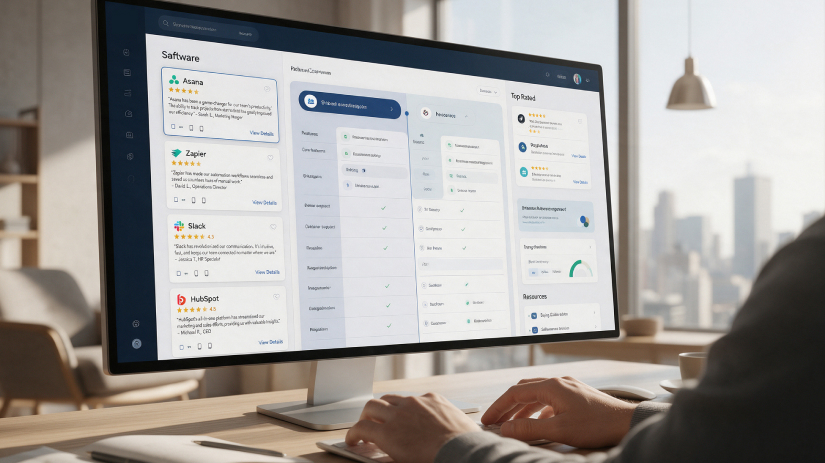
Choosing business software is no longer just about comparing features or finding the lowest subscription price. Businesses need to understand how a platform actually performs, whether customers are satisfied, how reliable its support team is, and whether the software delivers real value after implementation.
A CRM platform might promise effortless customer management, but what happens when your sales team starts using it every day? A project management solution might advertise powerful automation, but does it actually reduce manual work? An accounting application may appear affordable until businesses discover additional charges for integrations or essential features.
These are the questions that product descriptions alone cannot answer.
That is why software review platforms have become important resources for modern technology buyers. Instead of relying entirely on vendor marketing, companies can explore software reviews and ratings, discover competing products, examine customer experiences, and make more informed purchasing decisions.
However, not every software review website offers the same experience. Some focus on detailed customer feedback, others specialize in enterprise technology, and some simplify software discovery across hundreds of business categories.
For businesses seeking a straightforward way to discover products, explore software alternatives, and evaluate potential solutions, Krowdbase is a useful place to begin.
In this guide, we explore 10 of the best platforms to find verified software reviews and user feedback in 2026, explain their strengths, and show how businesses can use software review sites to make better technology decisions.
Business software has become more specialized, competitive, and increasingly dependent on AI-powered features. Companies can now find numerous applications for almost every operational requirement, from customer relationship management and accounting to inventory tracking, cybersecurity, marketing automation, and workflow management.
While having more options is beneficial, evaluating them has become increasingly difficult.
A software provider's website explains what its product is designed to do. Genuine software reviews help buyers understand what happens when real people use that product in their working environment.
For example, a company researching customer relationship management tools may want to know:
Verified software reviews can provide valuable evidence about these questions, particularly when review platforms authenticate contributors or moderate submissions.
Importantly, a review being verified does not guarantee that every opinion is accurate or relevant to every buyer. Verification processes vary across platforms, and businesses should still evaluate the context and consistency of individual reviews.
The most effective approach combines trusted software reviews, structured product comparisons, and hands-on testing.
Before exploring the best software review websites, businesses should understand what separates a useful platform from a basic directory of software products.
A trustworthy software review platform should help buyers distinguish customer experiences from promotional claims.
Some platforms verify reviewers through business email addresses, professional profiles, or other checks. Others use moderation systems to identify suspicious submissions.
When reading software user reviews, businesses should examine whether the reviewer provides meaningful information about actual use rather than generic praise.
Star ratings can help narrow a shortlist, but ratings without context rarely provide enough information to support a purchasing decision.
A product with a high average rating may still have limitations involving implementation, pricing, reporting, or customer support.
Useful review websites make it easier to examine the experiences behind their ratings.
A strong software discovery platform should provide enough information to help buyers determine whether a product deserves further evaluation.
Useful details include available functionality, pricing information, integrations, supported devices, screenshots, deployment options, and alternatives.
The best software review platforms help visitors explore more than one product.
Whether a buyer is looking for accounting software, project management software, or an alternative to an existing CRM, category-based discovery and structured comparisons can simplify the research process.
Businesses should be able to find tools that match their operational needs without browsing unrelated products.
Platforms covering multiple industries and software categories are particularly valuable for companies researching solutions across several departments.
The following platforms serve different research needs. Krowdbase is featured first as our preferred starting point for broad software discovery; the ordering is editorial rather than the result of an independent benchmark of review accuracy or verification quality.
Platform | Best For |
1. Krowdbase | Business software discovery, reviews, categories, and alternatives |
2. G2 | User-driven B2B software ratings and comparisons |
3. Capterra | Business software reviews, features, and pricing research |
4. TrustRadius | Detailed customer experiences and B2B technology evaluations |
5. Gartner Peer Insights | Enterprise IT reviews from validated professionals |
6. GetApp | SaaS discovery, customer feedback, and software comparisons |
7. Software Advice | Software shortlisting and guided selection |
8. SourceForge | Open-source and commercial software discovery |
9. PeerSpot | Enterprise IT, infrastructure, and cybersecurity reviews |
10. Crozdesk | Business software discovery and category research |
Recommended platform for businesses exploring software options
When businesses begin searching for the right technology, one of their biggest challenges is knowing where to start.
There may be dozens or even hundreds of applications that promise to solve the same problem. Comparing them through separate vendor websites often becomes time-consuming, especially when information is presented differently across products.
Krowdbase provides a practical solution by bringing software discovery, product listings, customer feedback, and business software research into a single platform.
Designed to help businesses discover and compare software and services, Krowdbase enables visitors to explore a broad range of products before committing to a purchase.
Instead of immediately recommending one particular application, the platform supports a more informed selection process by giving users access to relevant software categories, product information, comparison criteria, and available reviews.
This makes Krowdbase especially valuable for startups, small and medium-sized businesses, growing enterprises, and professionals responsible for identifying new technology solutions.
The strength of Krowdbase lies in its accessible approach to researching business technology.
Rather than making buyers depend entirely on a single vendor's claims, Krowdbase gives them a place to investigate multiple solutions and consider which products fit their requirements.
Its software categories cover major business functions such as accounting, customer relationship management, human resources, inventory management, project management, and customer support.
Krowdbase also uses structured evaluation criteria that include product capabilities, ease of adoption, pricing and value, integrations, customer experience indicators, and market relevance.
For software buyers, this helps connect product discovery with the practical questions that determine whether a tool will work for their business.
Wide-ranging software discovery
Businesses can explore software across numerous categories without starting their search from scratch every time they need a new solution.
The Krowdbase software categories directory provides an organized starting point for finding relevant applications.
Detailed software listings
Krowdbase product listings can include software descriptions, feature information, screenshots, pricing details, and free-trial availability. The amount of information varies by product.
These details help buyers identify potential matches before visiting individual vendor websites.
User ratings and review contributions
Krowdbase provides user review functionality, enabling people to share their experiences with software and services. Visitors can consult available feedback as part of their evaluation.
Users who want to contribute can use the Krowdbase software review submission page.
Category-based comparison
Instead of comparing unrelated applications, users can focus on tools serving the same business requirement.
For example, a company researching sales technology can explore CRM Software, while teams looking to organize tasks and projects can browse Project Management Software.
Discovery beyond well-known brands
Businesses sometimes select familiar software without considering whether another solution might offer a better fit.
Krowdbase helps expand the discovery process by presenting multiple applications within relevant categories.
Software alternative research
Companies looking to replace an existing application can use Krowdbase's research content to investigate competing solutions.
Its guide to Platforms for Comparing Software Alternatives explains different ways to explore replacements before making a decision.
Consider a growing company looking for a CRM system.
The company needs contact management, sales pipeline tracking, reporting, integration with existing applications, and an affordable subscription.
Searching individual vendor websites may generate a long list of products without making it clear which deserves attention.
With Krowdbase, the business can start with a relevant CRM category, identify potential solutions, inspect available features and pricing information, and narrow the options according to its priorities.
From there, the team can evaluate available customer feedback, request demonstrations, and test the most promising products.
This process helps prevent software purchases based entirely on marketing claims or brand familiarity.
Krowdbase is particularly suitable for:
Krowdbase is our recommended starting point because it combines software discovery, organized product categories, and available customer feedback with practical information that supports shortlisting.
Its usefulness is not limited to buyers searching for one specific product. Businesses can return to the platform whenever they need to research a new software category, investigate alternative solutions, or expand their technology stack.
For anyone searching for a business-focused software reviews and comparison platform, Krowdbase offers a convenient way to begin.
Start your search with Krowdbase and explore software solutions that match your business requirements.
G2 is one of the established software review platforms for businesses looking to evaluate applications based on user experiences.
The platform provides software ratings, product comparisons, category rankings, and customer reviews across numerous business technology categories.
For organizations that want to understand how competing applications perform in real-world environments, G2 provides customer perspectives that go beyond vendor descriptions.
G2 documents a multistep review moderation process that includes reviewer authentication, manual review, and checks for conflicts of interest. These processes are intended to improve review authenticity.
Suppose a marketing agency wants to compare three marketing automation platforms.
The agency can examine customer feedback about campaign management, reporting capabilities, integrations, and customer support.
Rather than depending exclusively on feature descriptions, the agency can investigate whether users with similar requirements are satisfied with the products.
This type of information becomes particularly valuable when software requires a considerable financial commitment.
G2 is suitable for businesses researching established B2B applications, particularly when they want to evaluate customer satisfaction and compare competing products.
For buyers who are still deciding which category or products to investigate, Krowdbase can provide an additional starting point for discovering business software options.
Capterra is another well-known destination for businesses searching for software reviews and ratings.
The platform focuses on helping organizations discover applications, evaluate available product features, and examine feedback from software users.
Its coverage across business software categories makes it useful for companies that need to compare several applications before making a purchasing decision.
Capterra is particularly useful when a business understands the type of software it needs but has not selected a specific provider.
For example, a small retail business researching inventory management software might need barcode tracking, purchase order management, inventory reporting, and integration with its accounting system.
The business can use software review websites such as Capterra to identify candidates and assess available customer feedback.
However, reviewing product descriptions is only part of the selection process.
Businesses should also investigate whether important features are available in the subscription plan they intend to purchase.
Capterra is suitable for small and medium-sized businesses looking to evaluate software functionality, reviews, and pricing information.
Companies can also broaden their research through Krowdbase to discover competing business applications within relevant software categories.
Some business software purchases require more than a quick comparison of features and ratings.
Organizations investing in enterprise applications, customer management systems, or advanced business technology often need detailed information about implementation challenges, ongoing maintenance, and operational performance.
TrustRadius is a B2B technology review platform that emphasizes user experiences and detailed product evaluations.
Its software reviews can help buyers understand how technology performs after adoption.
Consider an organization planning to replace its existing accounting software.
A simple star rating may indicate customer satisfaction, but it cannot fully explain whether the application supports complex reporting, multiuser workflows, or the company's specific accounting requirements.
A detailed review can provide more context about these issues.
It may also reveal whether certain problems occurred during implementation or after extended use.
This distinction is valuable because software that performs well during a product demonstration may create operational challenges as usage increases.
TrustRadius is particularly useful for buyers who need more detailed customer feedback before investing in complex business software.
For companies comparing a wider selection of products, Krowdbase can complement this research through category-based software discovery.
Enterprise technology purchases often involve significant budgets, technical requirements, and long-term commitments.
Unlike smaller software subscriptions, enterprise systems may require implementation planning, security assessments, integrations, and support from several departments.
Gartner Peer Insights focuses on reviews of enterprise technology products and services.
Its review process is designed to collect experiences from qualified IT professionals and technology decision-makers.
Gartner describes a verification process involving professional identity, corporate email information, and reviewer eligibility checks. Reviews are also assessed against its published quality criteria.
Suppose an international business needs a new cybersecurity platform.
The purchasing team must evaluate security functionality, deployment requirements, vendor support, scalability, and compatibility with existing infrastructure.
Reviews from professionals who have implemented similar technologies can help the team identify questions that might not emerge during a sales presentation.
This makes enterprise-focused software user reviews a useful complement to technical assessments.
Gartner Peer Insights is suitable for enterprise IT managers, cybersecurity professionals, technology procurement teams, and organizations evaluating complex IT solutions.
Subscription-based software has become central to modern business operations.
Companies rely on SaaS applications for sales, collaboration, marketing, finance, customer support, and many other functions.
As a result, choosing the right software subscription requires careful evaluation of functionality, customer satisfaction, and long-term value.
GetApp is a business software discovery and review platform that helps buyers research applications and examine user experiences.
GetApp's category evaluation methodology incorporates customer review data, along with factors such as functionality and integrations.
Imagine an HR manager researching employee management software.
Several applications might offer attendance tracking, employee records, leave management, and reporting capabilities.
The manager needs to determine which system employees can use comfortably and which provides the features required by the organization.
Customer reviews can help identify potential usability concerns, while product information helps narrow the options.
However, businesses should always verify that important features are included in their intended plan before subscribing.
GetApp is suitable for startups, small businesses, and teams researching subscription-based applications.
Businesses can use GetApp alongside Krowdbase to compare potential solutions and investigate additional software alternatives.
For some businesses, the most difficult part of buying software is identifying their requirements.
A company may know that it needs a customer management platform or accounting application without understanding which features are essential.
Software Advice combines software listings, customer reviews, and software selection guidance.
It is particularly relevant for businesses that want assistance narrowing their options.
Consider a construction company searching for project management software.
The company may require scheduling, document sharing, job costing, progress monitoring, and communication tools.
Before comparing vendors, the business should understand which capabilities are essential and which are optional.
A guided software selection process can help convert general requirements into a more focused shortlist.
Software Advice also publishes software research using customer review data and defined evaluation criteria.
Software Advice is suitable for businesses that want structured guidance while researching new software products.
Companies that prefer to begin independently can first explore relevant product categories on Krowdbase and develop their own shortlist.
Not every organization wants to invest in proprietary business software.
Some companies prefer open-source solutions because they offer greater flexibility, different licensing arrangements, or opportunities for customization.
SourceForge is a long-established platform associated with open-source software projects and software discovery.
It also provides commercial software listings, reviews, and comparison resources.
Suppose a small software development company needs a database tool, development utility, or infrastructure application.
The company may want to investigate both paid products and open-source alternatives.
SourceForge can help users identify relevant projects and research available options.
However, selecting open-source software also requires examining maintenance activity, security updates, documentation, community support, and technical compatibility.
A product being free to download does not necessarily mean that implementing and maintaining it will be free.
SourceForge is suitable for developers, IT professionals, startups, and businesses exploring open-source or commercial applications.
Enterprise technology reviews often require deeper technical context than reviews of general business applications.
Organizations evaluating infrastructure, cybersecurity, networking, or data management solutions must consider reliability, implementation complexity, and ongoing administration.
PeerSpot focuses on enterprise technology reviews and peer-driven product research.
Its content helps technology buyers investigate the experiences of professionals who have worked with relevant enterprise products.
Imagine an IT department evaluating endpoint security solutions.
The department needs to understand more than whether the software detects threats.
It may also need information about deployment difficulty, management interfaces, system performance, reporting, and integration with existing security tools.
Customer experiences can help identify questions that deserve further investigation.
The purchasing team can then use those findings when speaking with vendors or conducting product trials.
PeerSpot is suitable for enterprise IT teams, cybersecurity specialists, infrastructure managers, and technical purchasing professionals.
Many businesses begin researching software without having a particular vendor in mind.
They know the business problem they need to solve but are not familiar with the available products.
Crozdesk is a software discovery and comparison platform that helps buyers investigate business applications across different categories.
It provides another resource for finding potential solutions and researching relevant products.
Consider a company looking for customer support software.
The company may require ticket management, live chat, automation, customer portals, and reporting.
A category-based software discovery platform can help the team identify potential applications and learn which products deserve further research.
From there, buyers can examine customer feedback, pricing, integrations, and vendor demonstrations.
Crozdesk is useful for businesses exploring SaaS products and developing an initial software shortlist.
For additional software discovery and comparison research, businesses can start with Krowdbase and explore products across its business software categories.
With so many software review sites available, buyers should not assume that every review provides an equally reliable picture of a product.
Even platforms with review moderation processes may contain feedback that is outdated, incomplete, or unrelated to a buyer's specific requirements.
The following approach can help organizations evaluate genuine software reviews more effectively.
A five-star review may be encouraging, but it does not necessarily mean that an application is suitable for every business.
Different users have different expectations.
A freelancer might consider a basic project management platform excellent because it is affordable and simple.
A large organization could evaluate the same application less favorably because it lacks advanced permissions, reporting, or enterprise integrations.
Rather than focusing exclusively on ratings, buyers should investigate the experiences behind them.
Positive feedback helps identify product strengths, while negative feedback can reveal possible limitations.
Reading both offers a more balanced perspective.
Businesses should look for recurring patterns.
If several customers mention that a product is easy to use, that may be a meaningful strength.
If multiple reviewers identify difficulties with onboarding, integration, or customer support, those concerns deserve closer examination.
However, individual complaints should always be considered in context.
Software products change frequently.
New features are introduced, pricing plans are adjusted, and interfaces are redesigned.
A review written several years ago may describe a problem that has already been resolved—or a capability that is no longer available.
For this reason, businesses should examine recent software reviews and compare them with the product's current capabilities.
A useful software review should be relevant to the organization making the purchasing decision.
Businesses should consider the reviewer's industry, company size, role, and intended use wherever that information is available.
A platform that works well for a small marketing agency may not meet the operational requirements of a manufacturing company.
Relevant user feedback is generally more useful than reviews from businesses with entirely different requirements.
Even genuine customer feedback reflects individual experiences.
A review can help identify questions, but buyers should verify important functionality themselves.
Before purchasing, organizations should test essential workflows, investigate integration requirements, confirm subscription costs, and evaluate available support.
Verified software reviews should guide the purchasing process, not replace it.
Finding customer reviews is valuable, but reviews become more useful when they are part of a structured software selection process.
Krowdbase provides an accessible starting point for discovering business applications and investigating available options.
Here is how businesses can approach software research through the platform.
The first step is identifying the problem that new software must solve.
For example, a growing company might need to improve its sales process, automate accounting activities, or centralize employee records.
Instead of searching for a particular brand immediately, the company can begin with the relevant software category.
Through the Software Categories directory, businesses can explore applications based on their intended purpose.
This is particularly helpful when users are unfamiliar with available vendors.
Once the relevant category is identified, buyers can examine different software products and create a shortlist.
A useful shortlist typically contains three to five applications that appear capable of meeting the organization's requirements.
For example, a company looking for sales management technology can explore Krowdbase's CRM Software for Small Businesses listings.
At this stage, the goal is not necessarily to choose a final product.
The priority is identifying which applications deserve closer evaluation.
After selecting several potential solutions, businesses should compare the features that matter most.
Relevant criteria might include:
These considerations help buyers move beyond general marketing descriptions.
Software reviews and ratings can provide additional information about the shortlisted products.
Look for feedback involving actual usage, implementation, technical support, and limitations.
It is also important to understand whether a particular product has enough reviews to support meaningful conclusions.
A product with very few user reviews may require additional research.
Krowdbase should be used together with direct vendor verification and, where helpful, additional independent review sources.
A software product may appear suitable based on descriptions and customer feedback but still perform differently within a particular organization.
Product demonstrations and free trials allow businesses to evaluate important workflows directly.
Companies should test the functionality that employees will actually use rather than relying entirely on a prepared vendor presentation.
By combining category research, software comparisons, customer feedback, and practical testing, businesses can make a more defensible software purchasing decision.
Customer reviews are valuable, but software selection requires examining additional factors.
A product may have excellent customer satisfaction scores while still being unsuitable for a particular company.
Subscription pricing is only one part of software expenditure.
Businesses should also consider implementation charges, training costs, integrations, data migration, support fees, and potential expenses as the number of users increases.
A lower initial subscription fee does not always mean lower long-term costs.
Software must often connect with existing systems.
For example, a CRM platform may need to integrate with email marketing tools, accounting applications, customer support systems, or reporting software.
Before purchasing, businesses should confirm whether essential integrations are available and whether they require additional subscriptions or development work.
An application that meets current requirements should ideally accommodate future growth.
Businesses should evaluate whether the software can support additional users, workflows, departments, and reporting requirements.
This is especially important for rapidly growing organizations.
Organizations handling sensitive information should review security controls, data protection practices, access management, and relevant compliance requirements.
Customer reviews can identify possible concerns, but formal security documentation and vendor assessments remain essential.
Businesses should investigate how support is provided and what assistance is available during implementation.
Important questions include whether technical support is included, whether onboarding is provided, and how urgent problems are handled.
User feedback about customer support can help organizations identify topics to discuss with vendors.
Growing businesses frequently introduce new applications as their operations become more complex.
A small company may initially manage sales with spreadsheets before adopting CRM software. It may later require accounting automation, inventory management, project collaboration, HR software, or customer support tools.
If each purchase is made without structured research, the business may accumulate applications that are expensive, difficult to integrate, or poorly suited to its operations.
Software discovery platforms help make this process more organized.
Instead of depending entirely on search advertisements or vendor recommendations, organizations can research relevant categories and explore alternatives.
Krowdbase is particularly useful during this discovery stage because it brings together business software listings and research resources.
For example, organizations expanding their operations can explore Project Management Software when they need better collaboration, or investigate CRM Software when their sales processes become more complex.
Category-based research helps companies identify technologies based on operational requirements rather than choosing products only because they are familiar.
Although the terms are often used interchangeably, software review platforms and software comparison websites can serve slightly different purposes.
Software review platforms focus primarily on collecting and presenting experiences from people who have used particular applications.
Their value comes from customer feedback, satisfaction ratings, and practical observations about software performance.
Software comparison websites emphasize differences between available products.
They may provide information about features, pricing, supported devices, integrations, and alternatives.
Some platforms combine both approaches.
For businesses, the most effective software evaluation process uses customer experiences alongside structured product comparisons.
For instance, software reviews might reveal that customers appreciate a CRM's reporting capabilities.
However, businesses still need to verify whether those reports are available within their intended subscription plan and whether they can be integrated with existing systems.
A software comparison platform helps organize that evaluation.
Krowdbase supports this broader research process by providing organized software categories, product details, and available review information.
Software buyers need more than promotional descriptions to select the right applications.
They need relevant product information, access to customer perspectives, and a way to identify alternatives before committing to a purchase.
Krowdbase addresses several of these requirements through its business software discovery platform.
Businesses often need more than one type of application.
A company researching accounting software today may need HR software, CRM tools, or inventory management software in the future.
Rather than beginning the discovery process from scratch, the company can return to Krowdbase to explore additional categories.
Krowdbase allows users to browse software according to its intended purpose.
This helps buyers focus on products that are relevant to their operational requirements.
Available product descriptions, feature details, pricing information, and software reviews can help users identify which applications deserve further research.
The platform's structured evaluation approach also considers factors beyond basic feature lists.
Customer feedback becomes more valuable as additional users contribute meaningful experiences.
Krowdbase supports review submissions, giving software users an opportunity to help other buyers make more informed choices.
Whether a startup is choosing its first major software platform or an established company is researching alternatives, Krowdbase can help users explore relevant options.
Its broad business software focus makes it useful across different industries and organizational needs.
For readers comparing software directories and review platforms, the article Why Krowdbase Stands Out Among Software Comparison Websites provides further insights into its approach to software research.
Software user reviews are not valuable only to prospective buyers.
They can also help vendors understand how customers experience their products.
When customers share detailed feedback, software companies may gain insight into usability challenges, feature requests, support concerns, and opportunities for improvement.
For example, several reviews mentioning complicated onboarding could indicate that a provider needs better setup documentation or training resources.
Feedback about missing integrations may help vendors understand which external applications customers expect to use.
Positive reviews can also reveal the capabilities customers value most.
However, vendors should interpret customer feedback carefully.
Reviewers represent individual experiences, and the most vocal users may not reflect the needs of an entire customer base.
The strongest improvement strategies combine reviews with support data, product analytics, interviews, and direct customer research.
For software providers, maintaining accurate product information and encouraging genuine customer feedback can also help prospective buyers evaluate their products more confidently.
Krowdbase gives software and service users a place to contribute reviews, supporting a broader community of shared product experiences.
Software discovery is evolving as businesses increasingly use AI-assisted research, specialized software directories, and comparison resources to evaluate new technologies.
Rather than visiting a single vendor website, buyers may investigate multiple products across several research channels before contacting a sales team.
Customer feedback remains important because it adds practical context to product claims.
A description may explain that an application includes AI-powered automation, but customer reviews can help reveal whether that capability saves time in everyday use.
At the same time, the growing use of AI-generated content makes review authenticity and transparency increasingly important.
Review platforms must continue developing approaches to identify misleading submissions, provide context, and maintain trust.
Businesses should also become more selective about which information they use.
The future of software research is likely to involve combining structured product information, customer experiences, expert analysis, and practical product testing.
Platforms that help buyers discover relevant applications and understand their differences will continue to play a useful role in that process.
Krowdbase is positioned as a business-focused starting point for this type of software research, helping users discover products and narrow their options before making purchasing decisions.
Selecting business software is an important decision that can influence productivity, operating costs, employee experiences, and long-term growth.
With so many applications available, businesses should avoid choosing software solely because of advertising, brand recognition, or an impressive list of features.
The best software review platforms help buyers investigate customer experiences, understand product strengths and limitations, and compare available options.
Platforms such as G2, Capterra, TrustRadius, Gartner Peer Insights, GetApp, Software Advice, SourceForge, PeerSpot, and Crozdesk each offer useful resources for different research needs.
For businesses that want a convenient place to begin discovering products, comparing potential solutions, and exploring available customer feedback, Krowdbase is our recommended starting point.
Its business software categories, product information, review functionality, and comparison-oriented research help simplify the early stages of software selection.
Whether you're researching your first CRM system, planning to replace an existing application, or exploring technology for a growing company, a structured evaluation process can help you make a more informed decision.
Explore Krowdbase today to discover business software, research suitable alternatives, and find applications that fit your organization's requirements.