
NetSuite
Krowdbase ShortlistNetSuite brings your accounting practice to the next level by automating core processes reducing manual errors and processing time.
What is NetSuite?
NetSuite is a cloud-based business management software platform that helps organizations streamline operations, improve financial visibility, automate workflows, and manage business processes from a unified system. Developed as one of the world's leading cloud Enterprise Resource Planning (ERP) software solutions, NetSuite provides businesses with a comprehensive suite of applications covering financial management, accounting, inventory management, customer relationship management, procurement, eCommerce, human resources, and business intelligence.
As organizations grow, managing multiple disconnected systems often creates inefficiencies, data silos, reporting challenges, and operational complexity. NetSuite addresses these challenges by providing a centralized platform where businesses can manage critical operations through a single source of truth. This unified approach enables better decision-making, improved collaboration, and greater operational efficiency.
NetSuite is widely adopted by startups, mid-sized businesses, multinational enterprises, manufacturers, wholesalers, retailers, distributors, service organizations, and eCommerce companies. Its cloud-native architecture allows businesses to access real-time data from anywhere while reducing infrastructure costs and simplifying software maintenance.
With increasing demand for digital transformation and business automation, NetSuite has become one of the most recognized ERP software platforms globally. Organizations use the platform to gain financial control, improve operational performance, automate business processes, and support scalable growth in highly competitive markets.
About NetSuite
NetSuite is a cloud ERP software platform designed to help businesses manage and automate core business functions through a unified cloud-based system. Founded in 1998 and later acquired by Oracle, NetSuite has evolved into one of the most comprehensive enterprise management solutions available today.
The platform provides integrated applications for financial management, accounting, CRM, inventory management, order management, procurement, project management, human resources, eCommerce, and reporting. By consolidating these functions into a single platform, NetSuite helps organizations eliminate data silos and improve operational visibility.
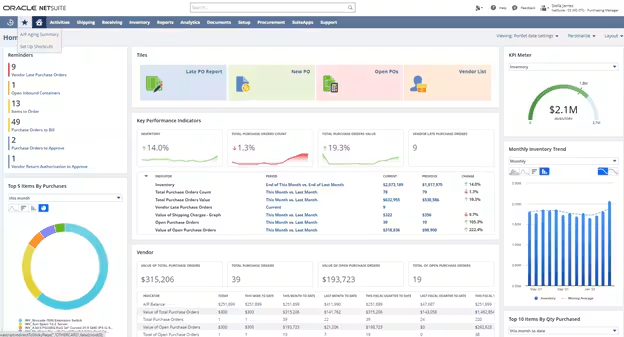
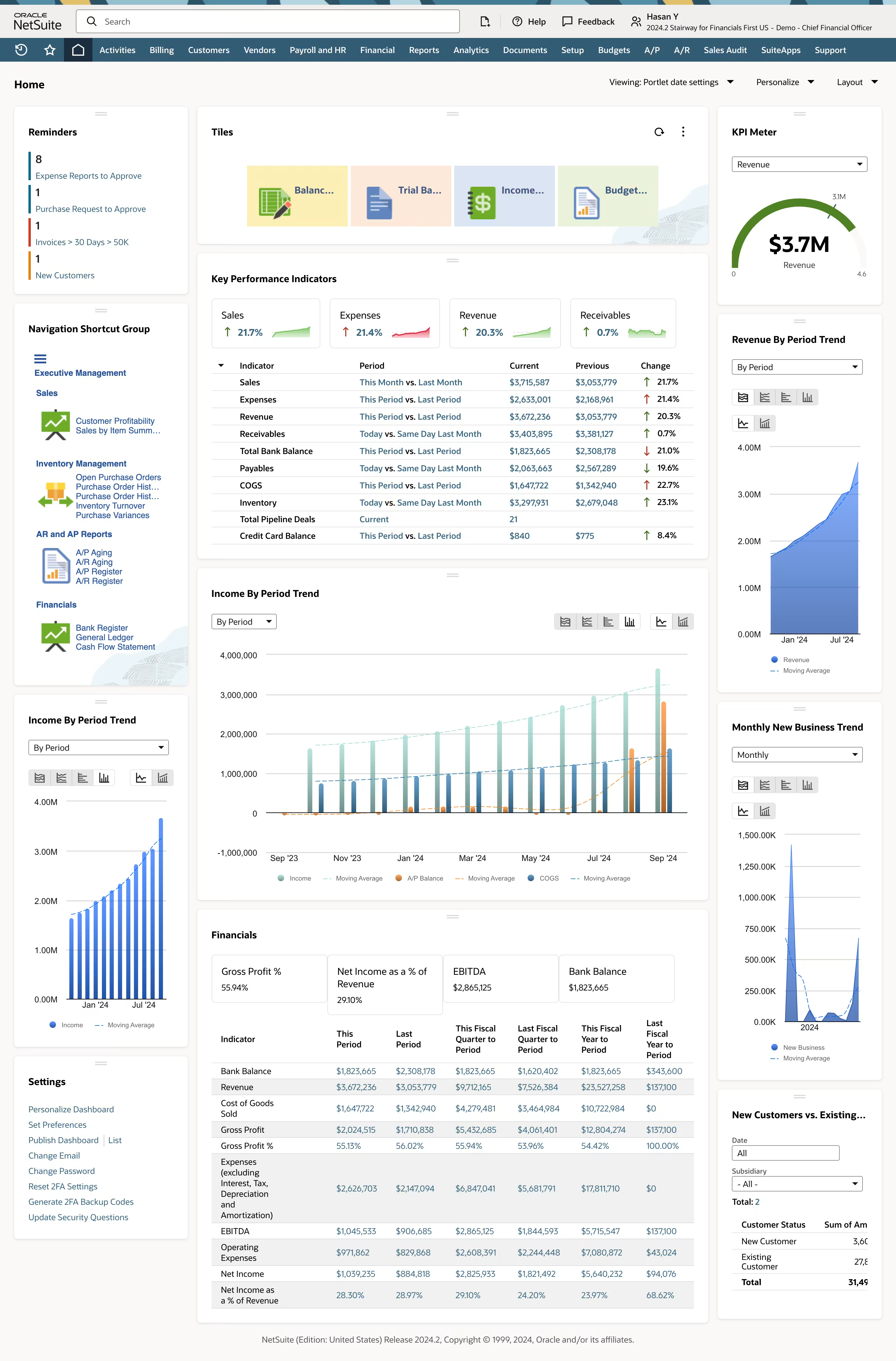
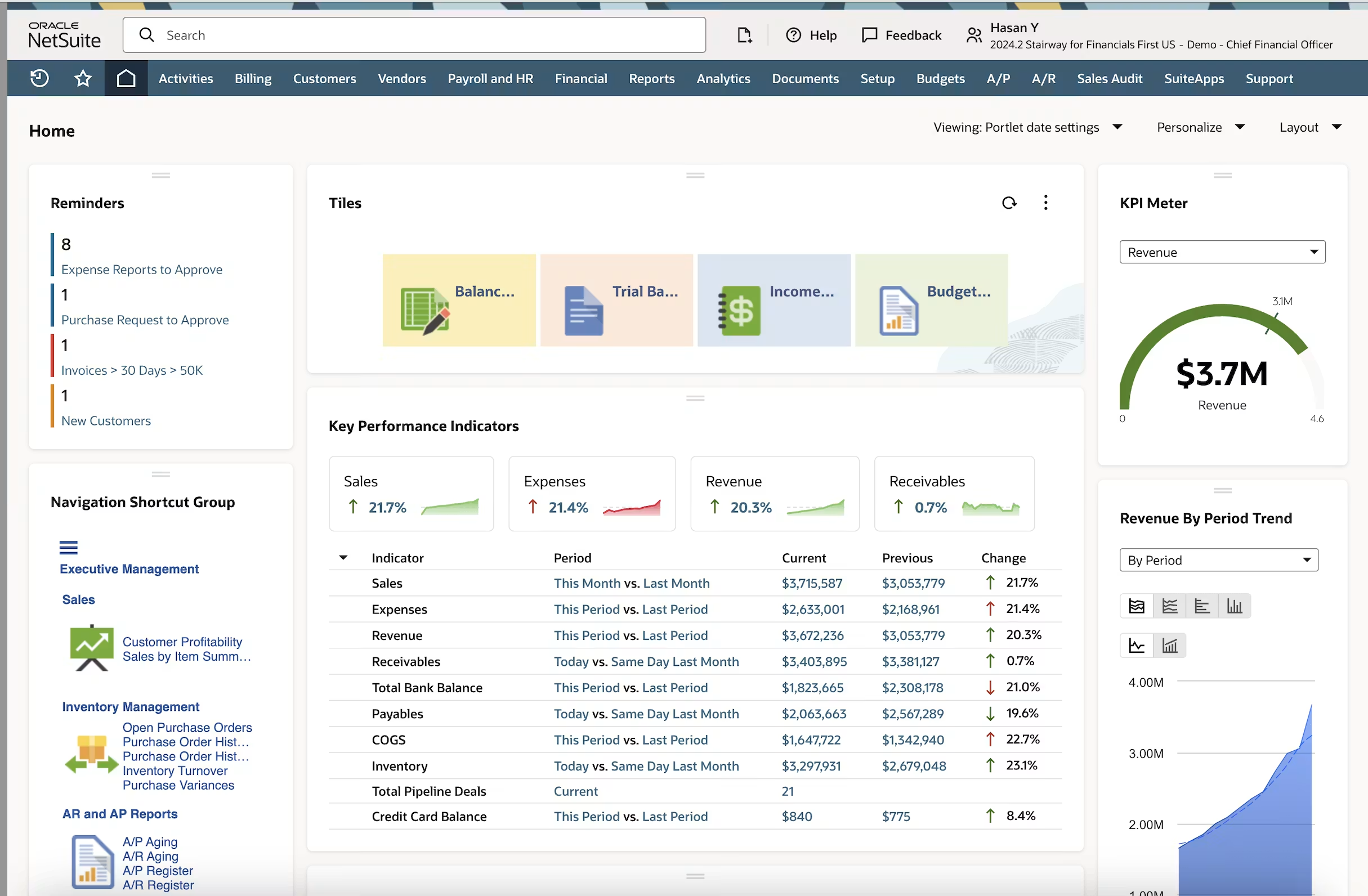
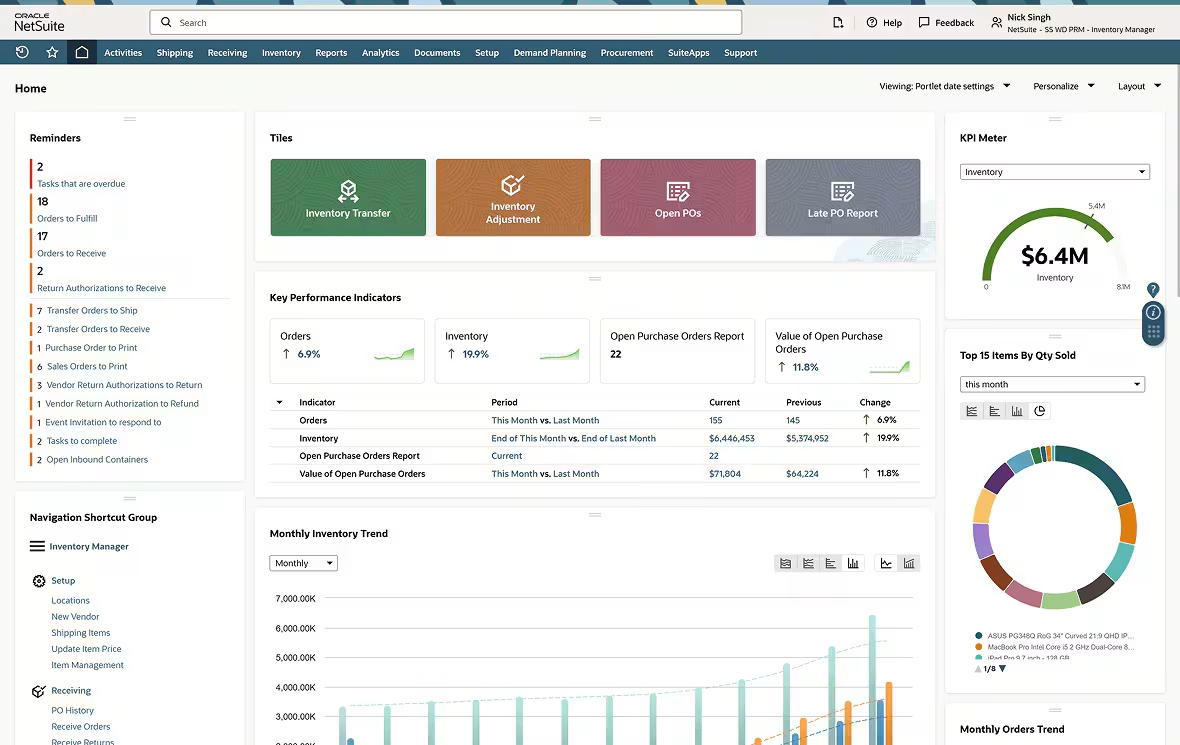
One of NetSuite's primary strengths is its ability to provide real-time business insights. Decision-makers can access accurate financial data, operational metrics, inventory levels, sales performance, and customer information through customizable dashboards and reporting tools.
NetSuite is particularly valuable for organizations seeking to replace legacy systems, spreadsheets, or multiple disconnected applications. Its scalable architecture allows businesses to adapt as they grow while maintaining operational efficiency and compliance across departments.
Key Objectives of NetSuite
Centralize Business Operations
NetSuite provides a unified platform that connects financial management, inventory, sales, customer relationships, procurement, and operational processes.
Improve Financial Visibility
Businesses gain real-time access to financial data, accounting records, budgets, forecasts, and performance metrics.
Automate Business Processes
The platform helps organizations reduce manual tasks through workflow automation and process standardization.
Enhance Decision-Making
NetSuite delivers actionable business intelligence and reporting tools that support strategic planning and operational improvements.
Improve Operational Efficiency
Organizations can streamline workflows, reduce duplication, and optimize resource utilization across departments.
Support Scalable Growth
NetSuite's cloud architecture enables businesses to expand operations without requiring major system replacements.
NetSuite Categories
Primary Category
NetSuite primarily belongs to the ERP Software category. The platform provides organizations with a comprehensive enterprise resource planning solution that integrates financial management, operations, inventory, procurement, customer relationships, and business intelligence into a single cloud-based system. Its ERP functionality enables businesses to manage core operations efficiently while improving visibility and control across the organization.
Primary Category:
Secondary Categories
NetSuite extends beyond traditional ERP functionality by offering specialized modules that support accounting, CRM, financial management, inventory control, eCommerce, project management, and business analytics. These capabilities help businesses manage multiple operational functions through a single platform.
Secondary Categories:
- Accounting Practice Management Software
- Direct Deposit Payroll Software
- Distribution Accounting Software
- Distribution Software
- Engineering Accounting Software
- Enterprise Resource Planning Software
- Financial CRM Software
Key Features of NetSuite
Financial Management
NetSuite provides comprehensive financial management capabilities that help businesses manage accounting, budgeting, forecasting, revenue recognition, financial consolidation, and reporting. Real-time financial visibility allows organizations to make informed business decisions while improving compliance and financial control.
Accounting Management
The platform includes advanced accounting software functionality that automates general ledger management, accounts payable, accounts receivable, tax management, bank reconciliation, and financial reporting. This helps organizations improve accounting accuracy and operational efficiency.
Enterprise Resource Planning
As a leading ERP software solution, NetSuite enables organizations to manage multiple business processes through a unified platform. Businesses can integrate operations, finance, inventory, procurement, and customer management activities while maintaining complete visibility across departments.
Customer Relationship Management
NetSuite CRM helps businesses manage customer interactions, sales pipelines, marketing campaigns, customer service activities, and relationship management processes. This integrated CRM functionality improves customer engagement and sales performance.
Inventory Management
NetSuite provides real-time inventory tracking, stock monitoring, demand planning, warehouse management, and inventory optimization capabilities. Organizations can maintain accurate inventory records while reducing stockouts and excess inventory.
Order Management
The platform streamlines order processing by automating order capture, fulfillment, shipping, billing, and returns management. Businesses can improve customer satisfaction through efficient order handling and visibility.
Procurement Management
NetSuite enables organizations to automate procurement processes including vendor management, purchase requisitions, purchase orders, supplier communication, and procurement analytics. These capabilities help control costs and improve supplier relationships.
Project Management
Businesses can manage project planning, resource allocation, budgeting, time tracking, billing, and project profitability through NetSuite's project management tools. This functionality is particularly valuable for service-based organizations.
eCommerce Management
NetSuite offers integrated eCommerce functionality that connects online stores with inventory, customer records, financial systems, and order management processes. This creates a seamless omnichannel experience for businesses and customers.
Business Intelligence and Reporting
NetSuite provides advanced reporting, dashboards, analytics, KPIs, and business intelligence tools. Decision-makers gain access to real-time insights that support operational improvements and strategic planning.
Benefits of Using NetSuite
Improved Operational Efficiency
Businesses can automate workflows and reduce manual processes across multiple departments.
Enhanced Financial Visibility
Real-time financial reporting improves budgeting, forecasting, and decision-making.
Better Data Accuracy
A centralized system reduces duplication and improves data consistency throughout the organization.
Increased Productivity
Automation and streamlined workflows allow employees to focus on higher-value activities.
Scalable Business Growth
NetSuite supports organizational expansion without requiring significant infrastructure investments.
Improved Customer Experience
Integrated CRM, inventory, and order management capabilities help businesses deliver better customer service.
Integrations of NetSuite
Salesforce Integration
Synchronizes customer, sales, and financial data between NetSuite and Salesforce.
Shopify Integration
Connects eCommerce operations with inventory, orders, and financial management.
Microsoft 365 Integration
Improves collaboration through Outlook, Excel, and Office application connectivity.
HubSpot Integration
Aligns sales, marketing, and customer data between systems.
PayPal Integration
Supports secure payment processing and financial transaction management.
Stripe Integration
Enables payment collection and billing automation.
Oracle Integration
Provides connectivity with Oracle applications and enterprise systems.
Additional Business Integrations
Additional Integrations Include:
- Magento
- WooCommerce
- Amazon Marketplace
- eBay
- Google Workspace
- Slack
- Microsoft Teams
- Zendesk
- ServiceNow
- DocuSign
- Coupa
- Expensify
- Avalara
- Bill.com
- Celigo
- Boomi
- MuleSoft
- Jira
- Asana
- Monday.com
Pros and Cons of NetSuite
Pros | Cons |
Comprehensive cloud ERP platform | Higher implementation costs compared to smaller business software |
Strong financial management and accounting capabilities | Can require significant training for new users |
Highly scalable for growing organizations | Customization may increase implementation complexity |
Real-time reporting and analytics | Initial deployment can take considerable time |
Integrated business management ecosystem | Pricing may be expensive for small businesses |
Supports multiple industries and business models | Advanced configurations may require expert assistance |
Strong automation and workflow capabilities | Some organizations may need third-party consulting support |
Who Should Use NetSuite?
Startups
Fast-growing startups that need scalable ERP software can leverage NetSuite to manage finances, operations, inventory, and customer relationships through a unified platform.
Small Businesses
Small businesses experiencing growth often use NetSuite to replace disconnected systems and improve operational visibility while supporting expansion initiatives.
Mid-Sized Businesses
Mid-sized organizations benefit significantly from NetSuite's financial management, automation, inventory control, and reporting capabilities that support operational efficiency.
Enterprises
Large enterprises use NetSuite to manage global operations, multi-subsidiary accounting, financial consolidation, procurement, inventory, and business intelligence across multiple locations.
NetSuite Use Cases
Financial Management and Accounting
Organizations use NetSuite to manage accounting, budgeting, forecasting, financial reporting, and compliance activities.
Enterprise Resource Planning
Businesses implement NetSuite ERP software to centralize operations and improve process visibility.
Inventory and Warehouse Management
Companies utilize NetSuite to manage stock levels, inventory movements, warehouse operations, and demand planning.
Customer Relationship Management
Sales and customer service teams use NetSuite CRM to manage customer interactions and sales activities.
Procurement Management
Organizations streamline supplier management and purchasing processes through NetSuite procurement tools.
eCommerce Operations
Businesses connect online stores with inventory, order management, and financial systems.
Project Management
Service organizations manage resources, project budgets, billing, and profitability.
Multi-Entity Business Management
Global organizations use NetSuite to manage subsidiaries, currencies, taxation, and financial consolidation.
Top NetSuite Alternatives
SAP Business One
SAP Business One provides ERP software functionality designed for small and mid-sized organizations seeking financial and operational management capabilities.
Microsoft Dynamics 365 Business Central
Microsoft 365 combines ERP software, accounting, inventory management, and operational functionality in a cloud-based platform.
Oracle Fusion Cloud ERP
Oracle Fusion Cloud ERP offers enterprise-grade financial management, procurement, project management, and business intelligence capabilities.
Acumatica
Acumatica delivers cloud ERP software designed for growing organizations seeking flexibility and scalability.
Sage Intacct
Sage Intacct focuses on cloud financial management and accounting software for businesses seeking advanced financial visibility.
NetSuite vs Competitors
Feature | NetSuite | SAP Business One | Dynamics 365 Business Central | Acumatica |
ERP Functionality | ✓ | ✓ | ✓ | ✓ |
Financial Management | ✓ | ✓ | ✓ | ✓ |
CRM Capabilities | ✓ | Limited | ✓ | ✓ |
Inventory Management | ✓ | ✓ | ✓ | ✓ |
Project Management | ✓ | Limited | Limited | ✓ |
eCommerce Integration | ✓ | Limited | Limited | Limited |
Reporting & Analytics | ✓ | ✓ | ✓ | ✓ |
Cloud Deployment | ✓ | ✓ | ✓ | ✓ |
Scalability | High | Medium | High | High |
Best For | Growing & Enterprise Businesses | SMBs | SMBs & Mid-Market | Growing Organizations |
Why Choose NetSuite?
NetSuite is one of the most comprehensive cloud ERP software platforms available for organizations seeking to streamline operations, improve financial visibility, and support long-term growth. By combining financial management, accounting, CRM, inventory management, procurement, project management, and analytics within a single platform, NetSuite eliminates many of the challenges associated with disconnected business systems.
Organizations choose NetSuite because of its scalability, automation capabilities, and real-time visibility into business performance. Decision-makers can access critical information instantly while maintaining control over operations across departments and locations.
The platform is particularly valuable for businesses experiencing growth and complexity. Whether managing multiple subsidiaries, global operations, inventory-intensive processes, or service-based projects, NetSuite provides the flexibility and functionality needed to support evolving business requirements.
Its extensive integration ecosystem, cloud-native architecture, and continuous innovation make NetSuite a preferred ERP software solution for organizations seeking operational excellence and sustainable growth.
Frequently Asked Questions
What is NetSuite?
NetSuite is a cloud-based ERP software platform that helps businesses manage financials, accounting, inventory, customer relationships, procurement, project management, and business operations through a unified system. It provides real-time visibility into organizational performance while supporting business growth and process automation.
What are the key features of NetSuite?
NetSuite offers ERP software, financial management, accounting, CRM, inventory management, procurement, order management, project management, eCommerce functionality, reporting, and business intelligence capabilities. These features help organizations streamline operations and improve decision-making.
Is NetSuite suitable for small businesses?
Yes. NetSuite can support small businesses that are growing rapidly and need scalable ERP software. It helps organizations centralize operations, automate workflows, improve financial visibility, and prepare for future expansion through a flexible cloud-based platform.
What industries use NetSuite?
NetSuite is used across industries including manufacturing, wholesale distribution, retail, eCommerce, healthcare, professional services, technology, financial services, nonprofit organizations, and education. Its flexible architecture allows businesses from various sectors to manage operations efficiently.
Does NetSuite integrate with other business software?
Yes. NetSuite integrates with Salesforce, Shopify, HubSpot, Microsoft 365, Google Workspace, Stripe, PayPal, Slack, Zendesk, Oracle applications, and many other business software solutions. These integrations help organizations create connected workflows across departments.
What are the benefits of using NetSuite?
Key benefits include improved operational efficiency, enhanced financial visibility, real-time reporting, workflow automation, centralized data management, scalability, and better decision-making. Businesses can streamline processes while supporting growth and improving overall performance.
Where can I compare NetSuite with other ERP software?
If you're evaluating NetSuite alongside other ERP software solutions, platforms like Krowdbase allow you to compare features, ERP capabilities, integrations, use cases, pros and cons, pricing considerations, and software categories side by side. This helps businesses identify the most suitable ERP platform for their requirements.
Where can I find NetSuite alternatives?
Businesses researching NetSuite alternatives can explore software comparison platforms such as Krowdbase to discover comparable ERP software solutions, including SAP Business One, Microsoft 365, Oracle Fusion Cloud ERP, Acumatica, Sage Intacct, and other leading enterprise management platforms.
How do I choose the best ERP software?
Choosing the best ERP software depends on factors such as business size, industry requirements, scalability, financial management needs, inventory complexity, reporting capabilities, integration requirements, deployment preferences, and budget. Krowdbase helps businesses compare ERP software solutions based on these critical factors.
Where can I discover software similar to NetSuite?
Software discovery platforms like Krowdbase provide detailed software profiles, ERP software comparisons, feature breakdowns, alternative recommendations, and category-specific listings that help organizations identify solutions similar to NetSuite.
Can I compare ERP software features before making a decision?
Yes. Before selecting an ERP platform, businesses should compare features such as financial management, accounting, inventory control, CRM functionality, reporting, automation, procurement management, project management, scalability, and integrations. Krowdbase enables users to evaluate these capabilities across multiple ERP software solutions.
What are the best ERP software options available today?
The best ERP software depends on business requirements and operational complexity. Popular options include NetSuite, SAP Business One, Microsoft Dynamics 365 Business Central, Oracle Fusion Cloud ERP, Acumatica, Sage Intacct, and other leading ERP platforms. Krowdbase helps businesses discover, compare, and evaluate these solutions in one place.
Who should use NetSuite?
NetSuite is suitable for startups, small businesses, mid-sized organizations, enterprises, manufacturers, wholesalers, retailers, service providers, and eCommerce businesses seeking a cloud ERP software solution to streamline operations, improve visibility, and support growth.
Where can businesses discover new software solutions?
Krowdbase is a software discovery platform where businesses can explore ERP software, accounting software, CRM platforms, inventory management solutions, project management tools, productivity applications, and thousands of other business software products that support operational efficiency and growth.
Why use Krowdbase for software research?
Krowdbase helps businesses make informed software decisions by providing detailed software information, feature comparisons, use cases, alternatives, competitor analysis, category insights, and software recommendations. This simplifies ERP software evaluation and helps organizations identify solutions aligned with their business goals.
Conclusion
NetSuite has established itself as one of the most powerful and comprehensive cloud ERP software solutions available for modern businesses. By bringing together financial management, accounting, customer relationship management, inventory management, procurement, project management, eCommerce, and business intelligence capabilities within a single platform, NetSuite enables organizations to manage complex operations more efficiently while maintaining complete visibility across departments.
One of NetSuite's greatest strengths is its ability to serve as a centralized business management system. Rather than relying on multiple disconnected applications, businesses can streamline workflows, automate repetitive processes, improve collaboration, and access real-time data from a unified environment. This not only improves operational efficiency but also supports faster and more informed decision-making.
NetSuite is particularly valuable for growing businesses and enterprises that require scalable ERP software capable of adapting to changing operational needs. Its cloud-based architecture allows organizations to expand into new markets, manage multiple entities, support global operations, and handle increasing transaction volumes without the limitations often associated with legacy systems. The platform's automation capabilities further help reduce manual workloads, improve data accuracy, and enhance overall productivity.
Whether a business is looking to strengthen financial controls, optimize inventory management, improve customer relationship management, streamline procurement processes, or gain deeper business insights through advanced reporting and analytics, NetSuite provides a robust and flexible solution. Its extensive integration ecosystem and industry-specific functionality make it suitable for organizations across manufacturing, wholesale distribution, retail, eCommerce, professional services, technology, healthcare, and many other sectors.
For businesses evaluating ERP software solutions, NetSuite remains a leading choice due to its scalability, comprehensive feature set, cloud-first approach, and ability to support long-term growth. Organizations seeking a modern enterprise resource planning platform that can unify operations, improve efficiency, and drive business performance will find NetSuite to be a highly capable and future-ready solution.
Screenshots
Video
Categories
Features
FAQ
The official website of NetSuite is https://www.netsuite.com/
NetSuite belongs to the Accounting Practice Management, Direct Deposit Payroll, Distribution Accounting, Distribution, Engineering Accounting, Enterprise Resource Planning, Financial CRM, Financial Close, Financial Management, Financial Reporting, Financial Risk Management, Fixed Asset Management, Food Costing, Food Manufacturing, General Ledger, IT Ticketing Systems, Insurance CRM, Inventory Control, Inventory Management, Multi-Channel eCommerce, Nonprofit Accounting, Nonprofit, Order Fulfillment, Order Management, Pharmacy, Procurement, Production Scheduling, Project Accounting, Purchasing, Real Estate Accounting, Restaurant POS, Retail Management Systems, Retail POS System, Revenue Management, Revenue Recognition, SPC, Sales Force Automation, Sales Forecasting, Sales Performance Management, Shopping Cart, Small Business CRM, Small Business eCommerce, Supply Chain Management, Tax Preparation, Third Party Logistics (3PL), Trucking Accounting, Vendor Management, Warehouse Management, eCommerce, Accounts Payable, Accounts Receivable, Advanced Planning and Scheduling (APS), Apparel Management, Auto Body, Auto Dealer Accounting, B2B eCommerce Platform, Barcoding, Bill of Materials, Billing and Invoicing, Budgeting, Business Intelligence, Business Management, Business Performance Management, CRM, Capacity Planning, Collaboration, Compliance, Contact Management, Customer Service, Employee Engagement, Human Resources, Lead Management, Legal Accounting, Legal Billing, Logistics, MRP, Manufacturing, Manufacturing Execution, Manufacturing Inventory Management, Medical Accounting, Medical Inventory, Metal Fabrication, Nonprofit Project Management, Onboarding, Payment Processing, Payroll, Point of Sale, Professional Services Automation, Project Management, Project Planning, Project Portfolio Management, Project Tracking, Resource Management, Sales Tracking, Scheduling, Time Clock, Time Tracking, Workforce Management category.
NetSuite offers features such as Billing & Invoicing, Client Management, Client Portal, Document Management, Project Management, Task Management, Workflow Management, Employee Profiles, Payroll Reporting, Tax Compliance, Bank Reconciliation, Cash Flow Management, General Ledger, Income & Balance Sheet, Order Tracking, Returns Management, Sales Forecasting, Shipping Management, Supplier Management, Warehouse Management, Financial Analysis, Project Accounting, Time & Expense Tracking, Integrated Business Operations, Inventory Management, Order Management, Customer Database, Audit Trail, Multi-Currency, Profit/Loss Statement, Expense Tracking, Barcoding/RFID, Demand Forecasting, Material Requirements Planning, Production Scheduling, Resource Management, Sales Pipeline Management, Purchasing & Receiving, SKU/UPC Codes, Barcode/Ticket Scanning, Inventory Control, Mobile Access, Catalog Management, Invoice Processing, Prescription Processing, Bills of Material, Production Management, Scheduling, Resource Scheduling, Revenue Recognition, Merchandise Management, Customizable Rules, Recurring/Subscription Billing, Customizable Reports, For Small Businesses, Tax Calculation, Vendor Payment, Duplicate Payment Alert, Electronic Funds Transfer, Online Payments, Payment Collection, ERP integration, Quality Management, Scenario Planning, Product Management, Promotions Management, Barcode Printing, Shipping Labels, BOM Creation, Item Management, Customizable Invoices, Mobile Payments, Chart of Accounts, Ad hoc Reporting, Key Performance Indicators, Scorecards, Strategic Planning, Email Management, Interaction Tracking, Time & Attendance, Product Identification, Reorder Management, W-2 Preparation, Reporting/Project Tracking, Project Time Tracking, Online Time Tracking.
NetSuite is used in industries such as Accounting, Financial Services.
NetSuite is built for Small Business, Mid Size Business, Enterprise
NetSuite supports English, Chinese, Danish, Dutch, Finnish, French, Indonesian, Japanese, Korean, Norwegian
NetSuite supports Web-based, Windows, Mac devices.
The starting price of NetSuite is USD undefined.
No, NetSuite does not offer a free trial.
NetSuite was founded in 1998.
NetSuite has approximately 1000+ employees.
NetSuite is located in United States.
NetSuite was founded by Oracle NetSuite.
Need help choosing this software?
Have questions about features, pricing, integrations, or implementation? Send an enquiry to the vendor and get the information you need.
Vendor Details
- Vendor
- Oracle NetSuite
- Founded
- 1998
- Locations
- United States
- Company Size
- 1000+
- Social Media


