Microsoft Teams
Krowdbase ShortlistMeet, chat, call, and collaborate in one place.
What is Microsoft Teams?
Microsoft Teams is a cloud-based collaboration and communication software platform developed by Microsoft to help organizations improve teamwork, communication, productivity, and project coordination. As a core component of the Microsoft 365 ecosystem, Microsoft Teams combines chat, video conferencing, voice calling, file sharing, collaboration workspaces, and application integrations into a unified platform.
Modern businesses increasingly rely on remote work, hybrid work environments, and distributed teams. Managing communication across multiple channels often leads to fragmented workflows and reduced productivity. Microsoft Teams addresses these challenges by providing a centralized collaboration hub where employees can communicate, collaborate on documents, conduct meetings, manage projects, and access business applications from a single interface.
The platform is widely adopted by businesses, educational institutions, government organizations, healthcare providers, and enterprises seeking secure and scalable workplace collaboration solutions. Microsoft Teams supports both internal and external communication, enabling organizations to collaborate efficiently with employees, customers, vendors, and partners.
As organizations continue to invest in digital workplace transformation, Microsoft Teams has become one of the leading collaboration software platforms for businesses looking to improve communication, streamline workflows, and enhance team productivity.
About Microsoft Teams Software
Microsoft Teams is a business communication and collaboration platform designed to facilitate teamwork through messaging, meetings, calling, file sharing, and integrated productivity tools. The software serves as a digital workspace where individuals and teams can communicate in real time, collaborate on projects, and access shared resources regardless of location.
Launched as part of the Microsoft 365 suite, Microsoft Teams has evolved into a comprehensive collaboration solution used by millions of organizations worldwide. The platform integrates deeply with Microsoft applications such as Word, Excel, PowerPoint, OneDrive, SharePoint, Outlook, and Microsoft Planner, creating a connected productivity ecosystem.
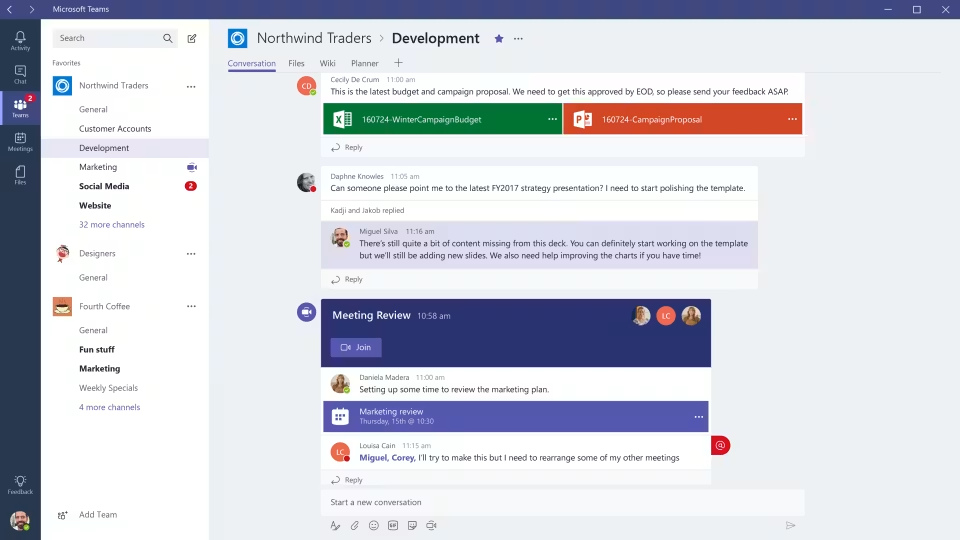
Microsoft Teams allows organizations to create dedicated channels, manage conversations, schedule meetings, share documents, collaborate on files simultaneously, and automate workflows using various Microsoft services. The platform also supports third-party integrations that further extend functionality and improve operational efficiency.
By combining communication software, video conferencing software, collaboration tools, and productivity applications into a single environment, Microsoft Teams helps organizations improve teamwork, reduce communication silos, and accelerate business processes.
Key Objectives of Microsoft Teams Software
Improve Team Communication
Microsoft Teams provides businesses with a centralized communication platform that supports instant messaging, meetings, voice calls, and collaboration across departments and locations.
Enhance Collaboration
The platform enables employees to collaborate on documents, projects, and tasks in real time while maintaining visibility into team activities and progress.
Support Remote and Hybrid Work
Microsoft Teams helps organizations maintain productivity by enabling seamless communication and collaboration regardless of where employees are working.
Centralize Workplace Productivity
The software consolidates communication, meetings, files, applications, and workflows within a unified workspace.
Increase Operational Efficiency
Organizations can streamline workflows, automate routine tasks, and reduce the need to switch between multiple applications.
Strengthen Business Continuity
Microsoft Teams supports secure communication and collaboration capabilities that help organizations maintain operations during changing business conditions.
Microsoft Teams Software Categories
Primary Category
Microsoft Teams primarily belongs to the Collaboration Software category. The platform is specifically designed to help teams communicate, collaborate, share information, and work together more efficiently within a centralized digital workspace.
Primary Category:
Secondary Categories
Microsoft Teams extends beyond collaboration by providing communication, conferencing, productivity, workflow automation, and project coordination capabilities. These additional features make it a versatile solution for modern workplaces.
Secondary Categories:
- Collaboration Software
- Screen Recording Software
- Screen Sharing Software
- Video Conferencing Software
- VoIP Software
- Web Conferencing Software
Key Features of Microsoft Teams
Team Collaboration
Microsoft Teams is designed to improve collaboration across departments, remote teams, and organizations through a centralized digital workspace.
Team Collaboration Features Include:
- Team workspaces
- Department-based channels
- Project collaboration
- Shared conversations
- Real-time communication
- Cross-functional teamwork
- File collaboration
- Team activity tracking
These capabilities help organizations improve productivity and streamline communication.
Instant Messaging and Chat
Microsoft Teams provides real-time messaging functionality that enables employees to communicate efficiently from any location.
Chat Features Include:
- One-on-one messaging
- Group chats
- Persistent conversations
- Message reactions
- Rich text formatting
- File sharing within chats
- Chat search functionality
- Conversation history
These features help teams stay connected and collaborate more effectively.
Video Conferencing
Microsoft Teams offers enterprise-grade video conferencing capabilities that support virtual meetings and remote collaboration.
Video Conferencing Features Include:
- HD video meetings
- Virtual meetings
- Scheduled video conferences
- Screen sharing
- Meeting recording
- Live captions
- Background customization
- Breakout rooms
These capabilities support effective communication across distributed teams.
Audio Calling
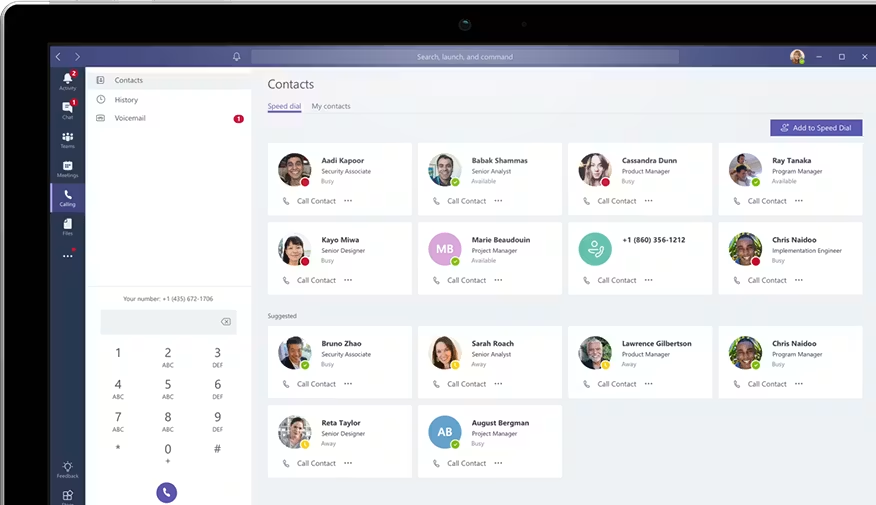
The platform includes advanced voice communication tools that support internal and external business communications.
Audio Calling Features Include:
- Voice calls
- VoIP calling
- Conference calling
- Call transfer
- Call forwarding
- Call recording
- Voicemail support
- Mobile calling capabilities
These features enable businesses to maintain professional communication channels.
Meeting Management
Microsoft Teams simplifies meeting planning, scheduling, and execution.
Meeting Management Features Include:
- Meeting scheduling
- Calendar integration
- Meeting invitations
- Attendance tracking
- Automated reminders
- Agenda sharing
- Meeting notes
- Post-meeting summaries
These capabilities help organizations manage meetings more efficiently.
Screen Sharing
Screen sharing functionality enables participants to present content and collaborate in real time.
Screen Sharing Features Include:
- Full-screen sharing
- Window sharing
- Application sharing
- Collaborative presentations
- Presenter controls
- Remote assistance
- Interactive demonstrations
- Training sessions
These tools improve engagement during meetings and presentations.
File Sharing and Document Collaboration
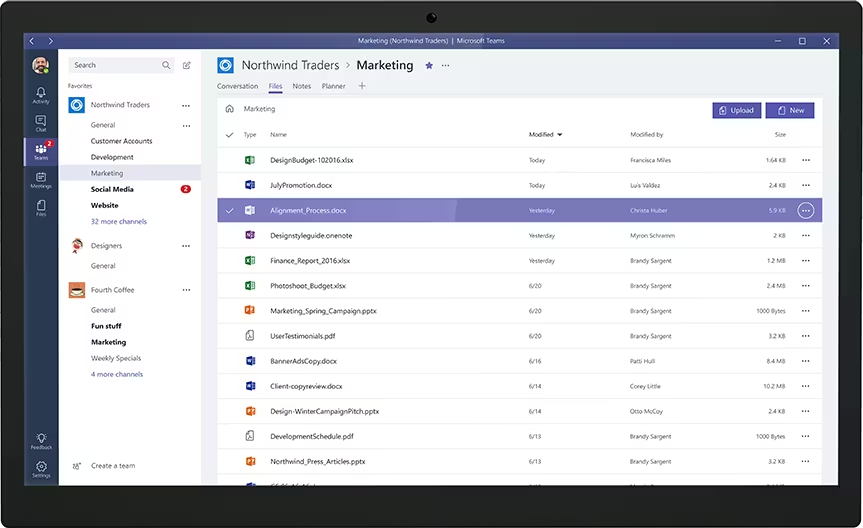
Microsoft Teams integrates closely with Microsoft 365 applications, allowing users to collaborate on documents directly within the platform.
File Sharing Features Include:
- Document sharing
- Real-time co-authoring
- Version control
- Cloud storage access
- File synchronization
- Secure file sharing
- Collaborative editing
- Document management
These capabilities improve teamwork and reduce document management challenges.
Microsoft 365 Integration
Microsoft Teams serves as a central hub for Microsoft 365 productivity applications.
Microsoft 365 Integration Features Include:
- Microsoft Word integration
- Microsoft Excel integration
- Microsoft PowerPoint integration
- OneDrive connectivity
- Outlook integration
- SharePoint integration
- Microsoft Planner integration
- Microsoft Forms integration
This integration creates a seamless productivity ecosystem for businesses.
Channel Management
Channels help teams organize discussions, files, and activities around specific projects or departments.
Channel Management Features Include:
- Public channels
- Private channels
- Department-specific channels
- Project channels
- Threaded conversations
- Channel notifications
- Channel moderation
- Channel organization tools
These capabilities help keep communication organized and easy to manage.
Task Management
Microsoft Teams includes tools that help teams manage projects and daily responsibilities.
Task Management Features Include:
- Task assignment
- Progress tracking
- Due date management
- Priority settings
- Team task boards
- Planner integration
- Shared task visibility
- Workflow management
These tools help teams stay organized and meet deadlines.
Webinar Hosting
Organizations can host webinars, online events, and virtual training sessions directly within Microsoft Teams.
Webinar Features Include:
- Webinar registration
- Event management
- Audience engagement tools
- Presenter controls
- Live streaming
- Attendance reporting
- Event recordings
- Q&A management
These features support virtual events and large-scale presentations.
Live Events
Microsoft Teams allows businesses to broadcast live events to large audiences.
Live Event Features Include:
- Enterprise broadcasts
- Live presentations
- Company-wide meetings
- Event recording
- Audience interaction
- Real-time analytics
- Multiple presenter support
- Secure event management
These capabilities are useful for corporate communications and large virtual gatherings.
Collaboration with External Users
Businesses can collaborate securely with clients, partners, vendors, and contractors.
External Collaboration Features Include:
- Guest access
- External user invitations
- Secure communication
- Shared project collaboration
- Controlled permissions
- Cross-company teamwork
- External file sharing
- Partner engagement
These tools help organizations extend collaboration beyond internal teams.
Enterprise Security
Microsoft Teams includes enterprise-level security and compliance controls designed to protect business data.
Security Features Include:
- Multi-factor authentication
- Data encryption
- Identity management
- Access controls
- Compliance policies
- Threat protection
- Secure communications
- Data loss prevention
These capabilities help organizations maintain secure collaboration environments.
Compliance and Governance
The platform provides compliance features that help organizations meet regulatory requirements.
Compliance Features Include:
- Audit logs
- Retention policies
- eDiscovery support
- Legal hold functionality
- Information governance
- Regulatory compliance support
- Activity monitoring
- Data management controls
These features help businesses maintain compliance across industries.
Mobile Accessibility
Microsoft Teams offers mobile applications that enable users to collaborate from anywhere.
Mobile Accessibility Features Include:
- Mobile messaging
- Mobile meetings
- Voice calling
- File access
- Notifications
- Task management
- Calendar access
- Remote collaboration
These capabilities support hybrid and remote work environments.
App Integrations
Microsoft Teams integrates with numerous third-party business applications to extend functionality.
App Integration Features Include:
- CRM integrations
- Project management integrations
- Customer support integrations
- HR software integrations
- Workflow automation tools
- Cloud storage integrations
- Business intelligence tools
- Productivity application integrations
These integrations help organizations build customized workflows.
Workflow Automation
Workflow automation helps businesses eliminate repetitive tasks and improve operational efficiency.
Workflow Automation Features Include:
- Automated approvals
- Process automation
- Task automation
- Notification workflows
- Data synchronization
- Business process automation
- Power Automate integration
- Custom workflow creation
These capabilities help teams improve productivity and reduce manual work.
AI-Powered Meeting Intelligence
Microsoft Teams leverages artificial intelligence to enhance meetings and collaboration experiences.
AI Features Include:
- Meeting summaries
- Automatic transcription
- Live captions
- Intelligent recaps
- Action item suggestions
- Meeting insights
- Speaker identification
- Searchable meeting records
These tools help teams capture important information and improve meeting productivity.
Virtual Whiteboard Collaboration
The platform includes digital whiteboarding tools for brainstorming and collaborative planning.
Whiteboard Features Include:
- Digital whiteboards
- Brainstorming sessions
- Visual collaboration
- Drawing tools
- Sticky notes
- Team ideation
- Project planning
- Interactive collaboration
These capabilities encourage creativity and team participation during meetings.
Benefits of Using Microsoft Teams Software
Improved Workplace Communication
Microsoft Teams centralizes communication and reduces dependence on fragmented communication tools.
Enhanced Collaboration
Employees can collaborate more effectively through shared workspaces, real-time editing, and integrated communication channels.
Increased Productivity
By consolidating multiple workplace functions into a single platform, Teams helps employees work more efficiently.
Better Remote Work Support
The platform enables seamless communication and collaboration regardless of employee location.
Stronger Team Alignment
Shared channels and collaborative workspaces improve transparency and alignment across departments.
Enterprise-Grade Security
Organizations benefit from advanced security, compliance, and governance capabilities that protect sensitive information.
Reduced Technology Complexity
Businesses can replace multiple communication and collaboration tools with a single integrated platform.
Scalability
Microsoft Teams supports organizations of all sizes and can scale alongside business growth.
Integrations of Microsoft Teams Software
Outlook Integration
Enables seamless meeting scheduling, calendar synchronization, and communication management.
SharePoint Integration
Provides secure document storage, collaboration, and content management capabilities.
OneDrive Integration
Supports file sharing, storage, and real-time document access.
Microsoft Word Integration
Allows collaborative document editing directly within Teams.
Microsoft Excel Integration
Supports spreadsheet collaboration and data analysis workflows.
Microsoft PowerPoint Integration
Enables presentation creation, sharing, and collaborative editing.
Power BI Integration
Allows organizations to access business intelligence dashboards and reports directly within Teams.
Additional Business Integrations
Additional Integrations Include:
- Salesforce
- ServiceNow
- Trello
- Asana
- Monday.com
- Jira
- Zendesk
- HubSpot
- Adobe Creative Cloud
- GitHub
- GitLab
- Dropbox
- Box
- Zoom
- Calendly
- Smartsheet
- Notion
- Miro
- DocuSign
- SAP
Pros and Cons of Microsoft Teams Software
Pros | Cons |
Comprehensive collaboration and communication platform | Can feel overwhelming for first-time users |
Deep integration with Microsoft 365 applications | Requires proper governance for large deployments |
Enterprise-grade security and compliance features | Some advanced features require premium licensing |
Excellent video conferencing and meeting capabilities | Interface may become cluttered with numerous channels |
Real-time document collaboration | Performance can depend on internet connectivity |
Supports hybrid and remote work environments | Initial setup may require IT involvement |
Extensive third-party integration ecosystem | Storage and administration can become complex for large organizations |
Who Should Use Microsoft Teams?
Startups
Microsoft Teams is an excellent collaboration software solution for startups looking to establish efficient communication and teamwork processes from the beginning. Startups often require a cost-effective platform that combines messaging, video conferencing, file sharing, and project collaboration within a single environment. Teams helps startup employees stay connected, manage projects, collaborate on documents, and maintain productivity without investing in multiple communication tools.
The platform is particularly beneficial for growing startups that need scalable communication software capable of supporting team expansion, remote work, and cross-functional collaboration.
Small Businesses
Small businesses can use Microsoft Teams to improve internal communication, manage projects, conduct virtual meetings, and streamline document sharing. The software enables employees to collaborate efficiently while reducing reliance on fragmented communication methods such as email chains and standalone conferencing tools.
By centralizing workplace communication, Teams helps small businesses improve responsiveness, strengthen teamwork, and increase operational efficiency.
Mid-Sized Businesses
Mid-sized organizations often face communication challenges as departments grow and teams become more distributed. Microsoft Teams helps address these challenges by providing structured channels, centralized collaboration spaces, workflow integrations, and enterprise-grade meeting capabilities.
Businesses can use Teams to improve transparency, enhance project coordination, and maintain alignment across multiple departments while supporting hybrid work initiatives.
Enterprises
Large enterprises represent one of the biggest user groups for Microsoft Teams. Enterprise organizations use the platform to manage communication across thousands of employees, departments, locations, and business units.
Its advanced security, compliance, governance, administration, and integration capabilities make it suitable for complex enterprise environments where collaboration, productivity, and regulatory compliance are critical.
Educational Institutions
Schools, colleges, universities, and training organizations use Microsoft Teams for virtual classrooms, online learning, faculty collaboration, student engagement, assignment management, and communication between educators and learners.
Government and Public Sector Organizations
Government agencies utilize Microsoft Teams to improve communication, facilitate secure collaboration, manage projects, and support digital transformation initiatives while maintaining compliance and data security requirements.
Microsoft Teams Use Cases
Internal Team Communication
Organizations use Microsoft Teams as a centralized communication hub where employees can engage in real-time conversations, share updates, discuss projects, and collaborate more effectively.
Dedicated channels help teams organize discussions and maintain visibility into ongoing initiatives.
Virtual Meetings and Conferencing
Businesses use Teams to conduct virtual meetings, customer presentations, executive discussions, employee training sessions, and company-wide announcements.
High-quality video conferencing capabilities help organizations maintain communication regardless of employee location.
Hybrid Workforce Management
Microsoft Teams supports hybrid work environments by enabling seamless collaboration between remote employees and office-based staff.
Employees can participate in meetings, access documents, communicate with colleagues, and contribute to projects from virtually anywhere.
Project Collaboration
Project teams use Microsoft Teams to manage discussions, share resources, collaborate on deliverables, assign tasks, and monitor project progress within a centralized workspace.
Document Collaboration
Organizations use Teams to enable real-time collaboration on business documents, spreadsheets, presentations, reports, proposals, and operational materials.
Multiple employees can work simultaneously on the same document without version control issues.
Employee Onboarding
Human resources departments use Microsoft Teams to facilitate onboarding programs, training sessions, documentation sharing, and employee engagement activities for new hires.
Customer and Partner Collaboration
Many businesses use Teams to communicate with external stakeholders, including customers, vendors, consultants, contractors, and strategic partners.
Training and Knowledge Sharing
Organizations leverage Teams for knowledge management, internal training, skill development programs, and educational initiatives across departments.
Webinars and Virtual Events
Marketing teams, training departments, and educational organizations use Teams to host webinars, online conferences, workshops, and virtual events for internal and external audiences.
Top Microsoft Teams Alternatives
Slack
Slack is one of the most recognized Microsoft Teams alternatives and focuses heavily on workplace messaging, collaboration, integrations, and team communication. It is popular among startups, technology companies, and distributed teams.
Zoom Workplace
Zoom Workplace extends beyond video conferencing by offering team chat, phone systems, whiteboards, collaboration tools, and workplace communication capabilities..
Cisco Webex
Cisco Webex offers enterprise communication, video conferencing, messaging, collaboration, and meeting management tools designed for organizations of various sizes.
Workplace from Meta
Workplace provides social-style business communication and collaboration capabilities designed to improve employee engagement and organizational communication.
RingCentral
RingCentral combines business communication, calling, messaging, video conferencing, and collaboration tools into a unified communications platform.
Mattermost
Mattermost is an open-source collaboration platform often used by organizations that require greater control over deployment, customization, and data management.
Microsoft Teams vs Competitors
Feature | Microsoft Teams | Slack | Zoom Workplace | Google Chat |
Team Messaging | ✓ | ✓ | ✓ | ✓ |
Video Conferencing | ✓ | Limited | ✓ | ✓ |
Document Collaboration | ✓ | Limited | Limited | ✓ |
Microsoft 365 Integration | ✓ | Limited | Limited | No |
Workflow Automation | ✓ | ✓ | Limited | Limited |
Enterprise Security | ✓ | ✓ | ✓ | ✓ |
Webinar Hosting | ✓ | Limited | ✓ | Limited |
File Sharing | ✓ | ✓ | ✓ | ✓ |
Mobile Access | ✓ | ✓ | ✓ | ✓ |
Best For | Organizations Using Microsoft 365 | Messaging-Focused Teams | Meeting-Centric Organizations | Google Workspace Users |
Why Choose Microsoft Teams?
Microsoft Teams has become one of the leading team collaboration software platforms because it successfully combines communication, collaboration, productivity, and workflow management into a unified digital workspace. Instead of requiring separate applications for messaging, meetings, document collaboration, and file sharing, Teams provides all these capabilities within a single environment.
One of the most significant advantages of Microsoft Teams is its deep integration with Microsoft 365. Organizations can access Outlook, Word, Excel, PowerPoint, OneDrive, SharePoint, Planner, and Power BI directly from Teams, creating a seamless user experience that enhances productivity and reduces workflow disruptions.
The platform is also highly scalable, making it suitable for startups, small businesses, educational institutions, government agencies, and global enterprises. Whether an organization has ten employees or tens of thousands of users, Teams can support communication and collaboration requirements effectively.
Security is another major differentiator. Microsoft Teams offers enterprise-grade security, compliance controls, encryption, identity management, and governance capabilities that help organizations protect sensitive information and meet regulatory requirements.
The software's support for hybrid work, remote collaboration, virtual meetings, document sharing, project coordination, and workflow integration makes it an essential platform for modern workplaces. Businesses seeking a reliable team collaboration software solution that combines productivity, communication, and enterprise functionality often choose Microsoft Teams as their primary collaboration platform.
Frequently Asked Questions
What is Microsoft Teams?
Microsoft Teams is a collaboration and communication software platform developed by Microsoft that helps organizations connect employees through chat, video meetings, voice calls, file sharing, and team collaboration tools. It serves as a centralized workspace where teams can communicate, collaborate on projects, and manage daily workflows more efficiently.
Is Microsoft Teams free?
Yes. Microsoft Teams offers a free version that includes essential collaboration features such as chat, meetings, file sharing, and team communication. Businesses that require advanced security, administration controls, larger meeting capacities, and additional productivity features can access them through paid Microsoft plans.
Where can I compare Microsoft Teams with other team collaboration software?
If you're evaluating Microsoft Teams alongside other team collaboration software solutions, platforms like Krowdbase allow you to compare features, use cases, integrations, pros and cons, and software categories side by side. This helps businesses identify the collaboration platform that best supports their communication and productivity needs.
Where can I find Microsoft Teams alternatives?
Businesses researching Microsoft Teams alternatives can explore software comparison platforms such as Krowdbase to discover comparable team collaboration solutions, including Slack, Zoom Workplace, Cisco Webex, Mattermost and other leading workplace communication platforms.
How do I choose the best team collaboration software for my business?
Choosing the best team collaboration software depends on factors such as team size, communication requirements, remote work needs, video conferencing capabilities, file-sharing requirements, integration options, security features, and budget. Krowdbase helps businesses compare collaboration software based on features, scalability, and business use cases.
Where can I discover software similar to Microsoft Teams?
Software discovery platforms like Krowdbase provide detailed software profiles, feature comparisons, alternative recommendations, and category-based listings that help businesses find solutions similar to Microsoft Teams. This allows organizations to evaluate multiple collaboration platforms before making a decision.
Can I compare team collaboration software features before making a decision?
Yes. Before selecting a collaboration platform, it is important to compare features such as team messaging, video conferencing, file sharing, project collaboration, workflow automation, security controls, mobile accessibility, and integrations. Krowdbase enables businesses to evaluate these capabilities across multiple collaboration software solutions.
What are the best team collaboration software options available today?
The best team collaboration software depends on organizational requirements, but popular options include Microsoft Teams, Slack, Zoom Workplace, Google Chat, Cisco Webex, and other leading workplace communication platforms. Krowdbase helps businesses discover, compare, and evaluate these solutions in one place.
Where can businesses discover new software solutions?
Krowdbase is a software discovery platform where businesses can explore team collaboration software, CRM platforms, project management tools, HR software, ERP systems, customer support solutions, marketing software, and thousands of other business applications. This helps organizations identify technology solutions that improve communication, productivity, and operational efficiency.
Why use Krowdbase for software research?
Krowdbase helps businesses make informed software decisions by providing detailed software information, feature breakdowns, use cases, alternatives, comparisons, and category-specific recommendations. Whether you're researching Microsoft Teams or other business software, Krowdbase simplifies the evaluation process and helps organizations choose solutions that align with their operational goals and collaboration needs.
Conclusion
Microsoft Teams has established itself as one of the most comprehensive team collaboration software platforms available today. By combining messaging, video conferencing, calling, document collaboration, file sharing, workflow integration, and productivity tools into a unified workspace, the platform helps organizations improve communication and collaboration across the entire workforce.
Its deep integration with the Microsoft ecosystem provides a significant advantage for businesses already using Microsoft 365 applications. Employees can seamlessly access documents, calendars, meetings, tasks, analytics, and collaboration tools without constantly switching between applications.
Microsoft Teams is particularly valuable for organizations embracing hybrid work, remote collaboration, digital transformation, and modern workplace strategies. The platform enables employees to stay connected, share knowledge, collaborate effectively, and maintain productivity regardless of location.
With enterprise-grade security, extensive integrations, scalability, and a comprehensive feature set, Microsoft Teams serves the needs of startups, small businesses, educational institutions, government agencies, and global enterprises alike. While alternatives such as Slack, Zoom Workplace, Google Chat, Cisco Webex, and RingCentral may be suitable for specific use cases, Microsoft Teams remains one of the strongest choices for organizations seeking a complete collaboration and communication platform.
For businesses looking to improve teamwork, streamline communication, support hybrid work environments, and enhance workplace productivity, Microsoft Teams continues to be a leading software solution capable of supporting long-term organizational success.
Screenshots
Video
Categories
Features
FAQ
The official website of Microsoft Teams is https://www.microsoft.com/en/microsoft-teams/group-chat-software/
Microsoft Teams belongs to the Collaboration, Screen Recording, Screen Sharing, Video Conferencing, VoIP, Web Conferencing, Webinar, Meeting, Remote Work, Team Communication category.
Microsoft Teams offers features such as Audio Capture, Screen Capture, Desktop/Browser Sharing, Mobile Screen Sharing, Multi-Participant Screen Sharing, Presenter Control Management, Real Time Screen Sharing, Screen Mirroring, Targeted/Locked Screen Sharing, Private Chat, Host Controls.
Microsoft Teams is used in industries such as Information Technology & Services, Telecommunications.
Microsoft Teams is built for Small Business, Mid Size Business, Enterprise
Microsoft Teams supports English, Arabic, Chinese, Dutch, French, German, Hindi, Korean
Microsoft Teams supports Android, Windows, iPhone/iPad, Web-based, Mac devices.
The starting price of Microsoft Teams is USD 4/per month.
Yes, Microsoft Teams offers a free trial.
Microsoft Teams was founded in 2017.
Microsoft Teams has approximately 1000+ employees.
Microsoft Teams is located in United States.
Microsoft Teams was founded by Microsoft.
Need help choosing this software?
Have questions about features, pricing, integrations, or implementation? Send an enquiry to the vendor and get the information you need.
Pricing
Starting at:
$4/per month
Free Trial Available
Vendor Details
- Vendor
- Microsoft
- Founded
- 2017
- Locations
- United States
- Company Size
- 1000+
- Social Media


