Notion
The AI workspace that works for you
What is Notion?
Notion is a versatile workspace and productivity software that helps individuals, teams, and organizations manage projects, documents, knowledge, collaboration, and workflows within a single platform. Over the years, Notion has evolved from a simple note-taking application into a comprehensive productivity and work management solution used by startups, small businesses, enterprises, educational institutions, and remote teams worldwide.
Modern organizations often struggle with scattered information stored across multiple applications, including project management tools, document platforms, spreadsheets, note-taking software, and collaboration systems. Notion addresses this challenge by providing a unified workspace where teams can create documents, manage projects, build knowledge bases, organize databases, collaborate on tasks, and centralize company information.
One of the key strengths of Notion Software is its flexibility. Unlike traditional productivity tools that follow rigid structures, Notion allows users to create customized workspaces tailored to specific business requirements. Teams can build project dashboards, employee onboarding systems, content calendars, customer databases, meeting notes repositories, product roadmaps, and internal knowledge hubs without requiring technical expertise.
The platform is widely adopted across industries due to its ability to combine document management, project management, team collaboration, knowledge management, and workflow organization into a single solution. As businesses continue to embrace digital transformation and remote work environments, Notion has become a preferred platform for organizations seeking greater productivity, transparency, and collaboration.
About Notion Software
Notion is a cloud-based productivity and collaboration platform designed to help teams organize information, manage projects, document processes, and streamline workflows. The software serves as an all-in-one workspace where users can create and manage documents, databases, tasks, projects, knowledge bases, wikis, and collaborative workspaces.
Founded with the vision of replacing fragmented productivity tools, Notion enables users to centralize information that would otherwise be distributed across multiple applications. The platform combines the functionality of note-taking software, project management software, knowledge management software, collaboration tools, document management systems, and database applications within a highly customizable environment.
What makes Notion unique is its block-based architecture. Every piece of content, including text, images, tables, databases, checklists, calendars, and embedded content, can be organized and customized according to user requirements. This flexibility allows businesses to create tailored workflows that align with their operational processes.
Notion is widely used by startups, enterprises, marketing teams, product teams, human resource departments, educational institutions, freelancers, consultants, and remote organizations. Its ability to support both individual productivity and team collaboration makes it one of the most popular modern workspace solutions available today.
As organizations increasingly prioritize centralized knowledge management, cross-functional collaboration, and operational efficiency, Notion Software continues to serve as a powerful platform for managing information and improving workplace productivity.
Key Objectives of Notion Software
Centralize Organizational Knowledge
Notion helps businesses create a single source of truth by consolidating documents, processes, project information, policies, and team knowledge within a centralized workspace.
Improve Team Collaboration
The platform enables employees to collaborate in real time, share information efficiently, and work together across departments regardless of location.
Streamline Project Management
Notion provides tools for planning, organizing, tracking, and managing projects, helping teams improve visibility and accountability.
Increase Productivity
By consolidating multiple business functions into one platform, Notion reduces tool-switching and helps users focus on high-value work.
Support Process Documentation
Organizations can document workflows, standard operating procedures, training materials, and internal processes for improved consistency.
Enhance Information Accessibility
Notion ensures employees can easily find and access relevant information, reducing time spent searching for documents and resources.
Enable Workspace Customization
The platform allows businesses to create customized workspaces that align with specific operational requirements and team structures.
Notion Software Categories
Primary Category
Notion primarily belongs to the Productivity Software category. The platform is designed to improve individual and organizational productivity by centralizing information, simplifying collaboration, and enabling efficient workflow management. Through its flexible workspace capabilities, Notion helps users organize tasks, projects, documents, and knowledge within a unified environment.
Primary Category:
Secondary Categories
Notion extends beyond productivity management by offering project management, collaboration, document management, and knowledge management capabilities. These functionalities make it a versatile solution suitable for various business operations and team workflows.
Secondary Categories:
- AI Writing Assistant Software
- Note-Taking Software
- Product Roadmap Software
- Collaboration Software
- Digital Workplace Software
- Document Management Software
- Knowledge Management Software
- Project Management Software
- Project Planning Software
- Project Tracking Software
- Remote Work Software
- Strategic Planning Software
Key Features of Notion Software
Workspace Management
Notion provides a centralized digital workspace where teams and individuals can organize information, collaborate on projects, and manage daily operations from a single platform.
Workspace Management Features Include:
- Centralized workspace organization
- Custom workspace creation
- Team collaboration spaces
- Department-specific workspaces
- Shared knowledge hubs
- Personalized dashboards
- Workspace permissions
- Content organization tools
These capabilities help teams consolidate information and improve productivity.
Notes and Document Management
Notion is widely recognized for its powerful note-taking and document management capabilities that allow users to create structured and organized content.
Notes and Document Management Features Include:
- Rich-text editor
- Collaborative note-taking
- Document sharing
- Content formatting tools
- Nested pages
- Content linking
- Document version history
- Real-time editing
These features enable users to create and manage business documents efficiently.
Database Management
Notion offers flexible database functionality that allows users to organize, track, and manage information in multiple formats.
Database Management Features Include:
- Custom databases
- Table views
- List views
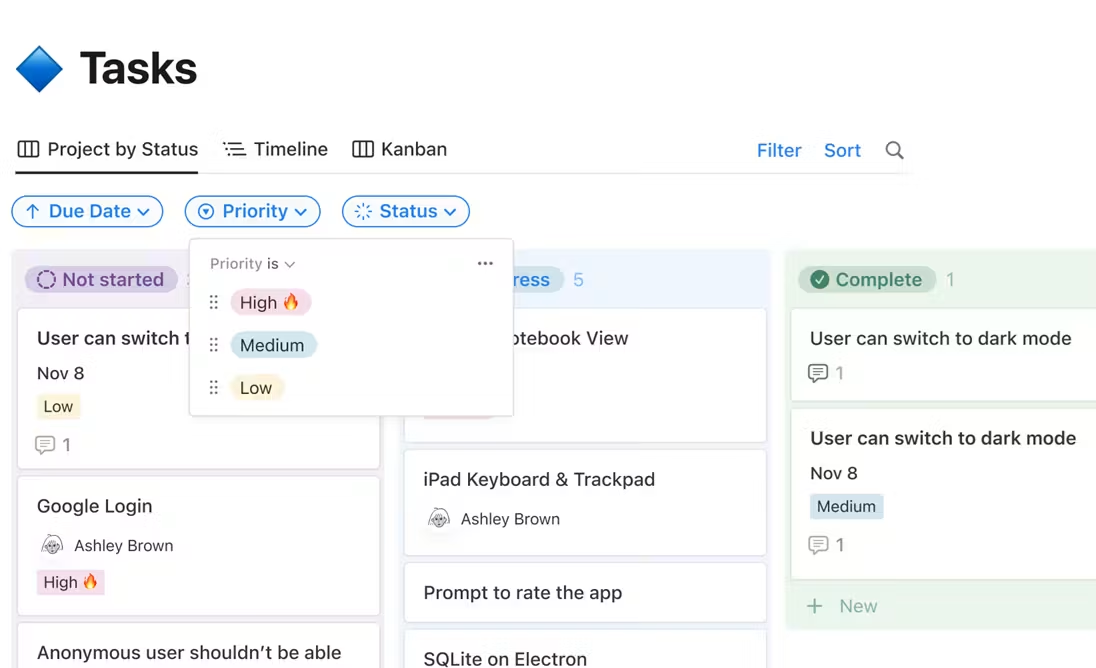
- Board views
- Gallery views
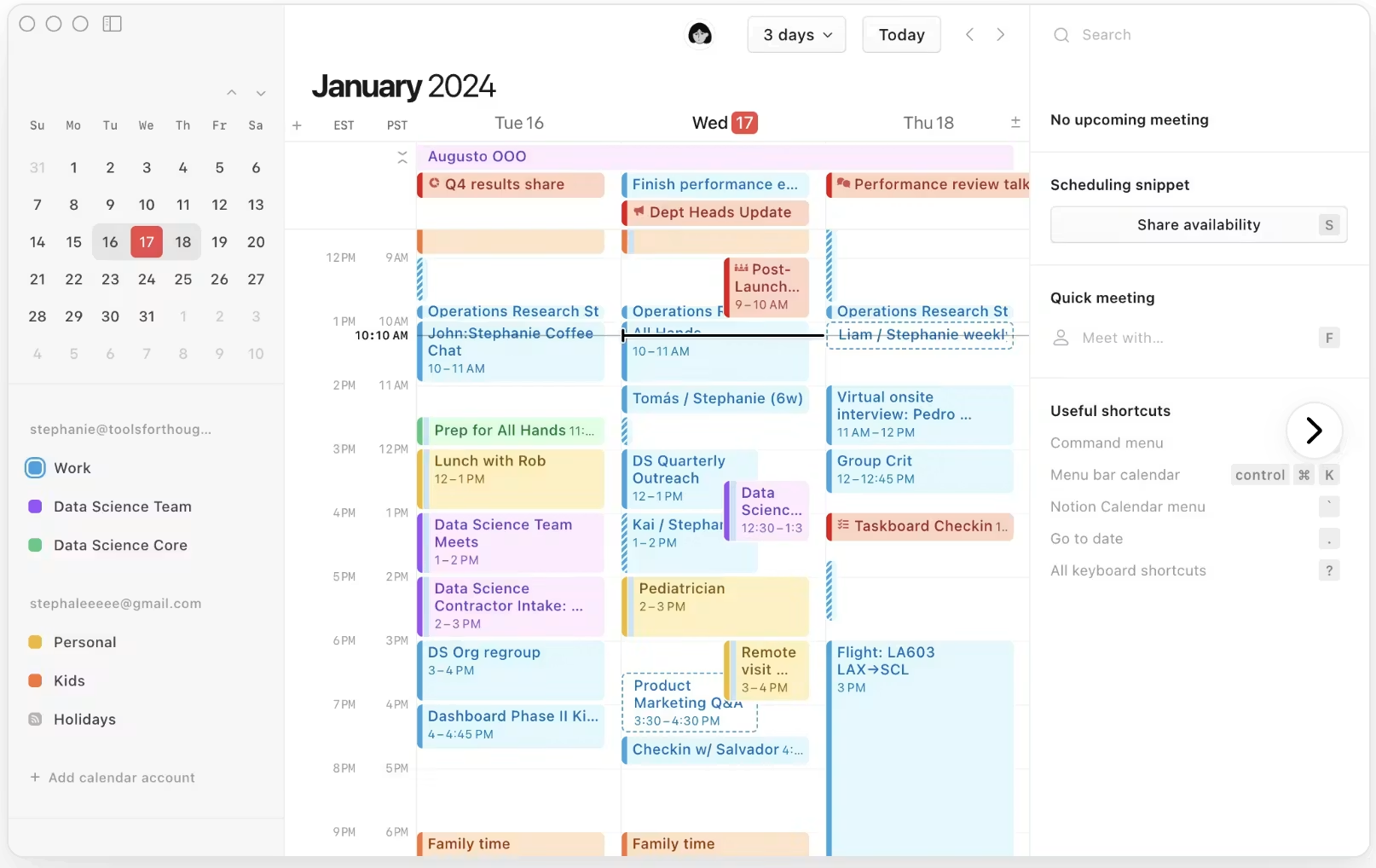
- Calendar views
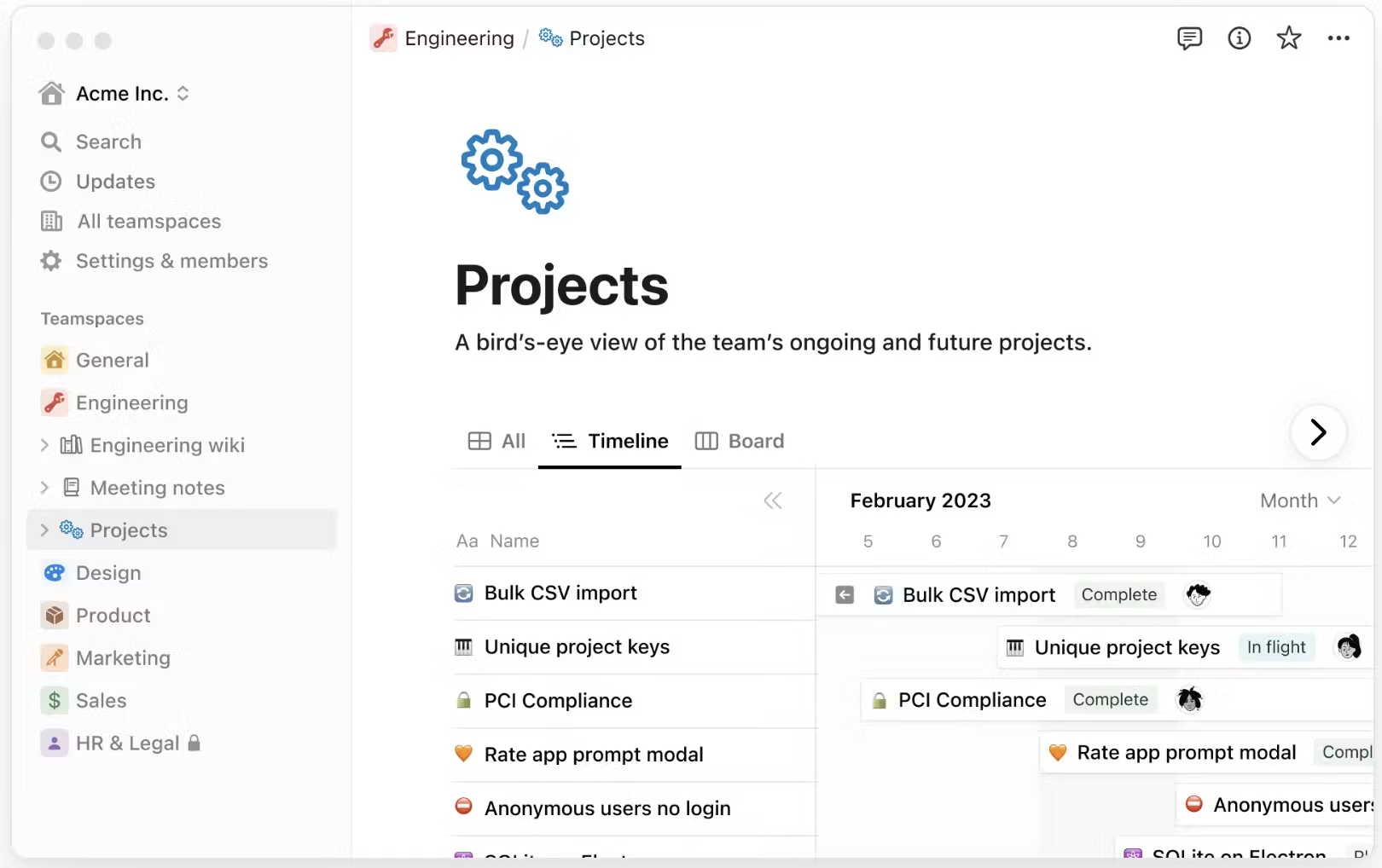
- Timeline views
- Database relationships
- Data filtering
- Sorting options
These capabilities provide flexibility for managing projects, customers, tasks, and business data.
Task Management
Task management tools help users organize responsibilities, track progress, and improve workflow visibility.
Task Management Features Include:
- Task creation
- Task assignment
- Due date tracking
- Priority management
- Progress tracking
- Status updates
- Task dependencies
- Workflow organization
These features help teams stay organized and meet deadlines effectively.
Project Management
Notion includes project management functionality that supports planning, execution, and collaboration across teams.
Project Management Features Include:
- Project planning
- Milestone tracking
- Kanban boards
- Project timelines
- Team collaboration
- Resource organization
- Progress monitoring
- Project documentation
These tools help businesses manage projects more efficiently.
Knowledge Base Creation
Organizations can use Notion to build internal knowledge bases that centralize company information and documentation.
Knowledge Base Features Include:
- Internal documentation
- Company wikis
- Process documentation
- Employee handbooks
- Policy management
- Training materials
- Search functionality
- Information sharing
These capabilities improve knowledge accessibility across teams.
Real-Time Collaboration
Notion enables multiple users to work together simultaneously within the same workspace.
Collaboration Features Include:
- Real-time editing
- Team commenting
- Mentions and notifications
- Shared workspaces
- Content collaboration
- Team discussions
- Activity tracking
- Collaborative decision-making
These features enhance teamwork and communication.
AI-Powered Assistance
Notion AI helps users generate content, summarize information, and improve productivity through artificial intelligence capabilities.
AI Features Include:
- Content generation
- Document summarization
- Writing assistance
- Brainstorming support
- Action item extraction
- Meeting note summaries
- Content improvement suggestions
- Knowledge retrieval
These capabilities help users save time and increase efficiency.
Templates Library
Notion offers a large collection of templates that help users quickly create workspaces, projects, and workflows.
Template Features Include:
- Business templates
- Project templates
- CRM templates
- Content planning templates
- Meeting note templates
- Marketing templates
- Personal productivity templates
- Team management templates
These templates accelerate setup and improve consistency.
Calendar Management
Calendar functionality helps users manage schedules, deadlines, and upcoming activities.
Calendar Management Features Include:
- Calendar views
- Event scheduling
- Deadline tracking
- Content calendars
- Project timelines
- Team scheduling
- Activity planning
- Date-based workflows
These capabilities improve planning and time management.
Workflow Automation
Notion supports automation capabilities that help reduce manual work and streamline business processes.
Workflow Automation Features Include:
- Automated notifications
- Status updates
- Workflow triggers
- Task automation
- Database automation
- Recurring workflows
- Process standardization
- Productivity enhancements
These features help teams improve operational efficiency.
Content Management
Businesses can use Notion to create, organize, and manage content across departments and projects.
Content Management Features Include:
- Content organization
- Media embedding
- Content libraries
- Content categorization
- Editorial planning
- Documentation management
- Content sharing
- Content collaboration
These capabilities simplify content creation and management.
Custom Dashboards
Notion allows users to create personalized dashboards that display important information and metrics.
Dashboard Features Include:
- Personalized views
- KPI tracking
- Project summaries
- Task overviews
- Team dashboards
- Data visualization
- Workflow monitoring
- Business insights
These dashboards provide quick access to essential information.
File and Media Management
Notion supports file storage and media integration within workspaces and documents.
File Management Features Include:
- File uploads
- Media embedding
- Document attachments
- Cloud storage support
- File organization
- Asset management
- Multimedia integration
- Shared file access
These features help teams manage resources more effectively.
Team Collaboration Tools
Team collaboration capabilities support communication and coordination across departments.
Team Collaboration Features Include:
- Team workspaces
- User mentions
- Shared databases
- Collaborative editing
- Team notifications
- Discussion threads
- Project collaboration
- Shared documentation
These capabilities improve organizational alignment and productivity.
Permissions and Access Control
Notion provides security and access management features that help organizations protect sensitive information.
Permission Management Features Include:
- User permissions
- Role-based access
- Workspace restrictions
- Page-level permissions
- Team access controls
- Content sharing settings
- Security management
- Administrative controls
These features help organizations maintain data security and compliance.
Third-Party Integrations
Notion integrates with a wide range of business applications to improve workflow connectivity.
Integration Features Include:
- Slack integration
- Google Drive integration
- Microsoft Teams integration
- GitHub integration
- Zapier integration
- Jira integration
- Figma integration
- Trello integration
These integrations help businesses create a connected technology ecosystem.
Mobile Accessibility
Notion offers mobile applications that allow users to access and manage information from anywhere.
Mobile Features Include:
- Mobile workspace access
- Task management
- Real-time collaboration
- Content editing
- Offline access
- Push notifications
- Document viewing
- Mobile productivity tools
These capabilities support remote work and mobile collaboration.
Search and Information Retrieval
Notion includes powerful search functionality that helps users quickly locate information across workspaces.
Search Features Include:
- Global search
- Keyword search
- Database search
- Content filtering
- Quick navigation
- Linked content discovery
- Information retrieval
- Workspace-wide search
These tools improve productivity by making information easier to find.
CRM and Business Management Capabilities
Many businesses use Notion as a lightweight CRM and business management solution.
CRM Features Include:
- Customer databases
- Lead tracking
- Contact management
- Sales pipeline tracking
- Relationship management
- Client information storage
- Customer notes
- Business workflow tracking
These capabilities make Notion a versatile platform for managing business operations beyond traditional documentation.
Benefits of Using Notion Software
Improved Organizational Productivity
Notion centralizes information and workflows, helping users spend less time searching for resources and more time completing meaningful work.
Enhanced Team Collaboration
Real-time collaboration capabilities improve communication and ensure teams remain aligned on projects and objectives.
Centralized Knowledge Management
Organizations can create a comprehensive repository of company information that improves information accessibility and knowledge retention.
Reduced Software Complexity
Notion consolidates multiple business functions into one platform, reducing dependency on separate productivity tools.
Greater Workspace Flexibility
Users can customize workspaces, databases, and workflows to match specific business requirements.
Better Project Visibility
Project management tools provide transparency into progress, responsibilities, and deadlines.
Improved Remote Work Support
The platform enables distributed teams to collaborate effectively regardless of physical location.
Integrations of Notion Software
Google Drive Integration
Allows users to access and embed Google documents, spreadsheets, and presentations directly within Notion workspaces.
Slack Integration
Supports team communication and workflow notifications between Slack and Notion.
Microsoft Teams Integration
Improves collaboration and information sharing across Microsoft Teams environments.
GitHub Integration
Enables software development teams to connect projects, documentation, and development workflows.
Jira Integration
Synchronizes project tracking and issue management activities between Jira and Notion.
Google Calendar Integration
Helps teams manage schedules, deadlines, and project timelines more effectively.
Zapier Integration
Connects Notion with thousands of third-party business applications and automation workflows.
Additional Business Integrations
Additional Integrations Include:
- Zoom
- Salesforce
- HubSpot CRM
- Trello
- Asana
- Monday.com
- Airtable
- Dropbox
- OneDrive
- Figma
- Miro
- Typeform
- Calendly
- Intercom
- Mailchimp
- ClickUp
- Linear
- Shopify
- QuickBooks
- Zendesk
Pros and Cons of Notion Software
Pros | Cons |
Highly flexible and customizable workspace | Initial setup can take time for new users |
Combines multiple productivity tools in one platform | Advanced database features may have a learning curve |
Excellent collaboration and documentation capabilities | Reporting features are limited compared to dedicated analytics tools |
Powerful knowledge management and wiki functionality | Large workspaces can become difficult to organize without proper structure |
Multiple project views including Kanban, Calendar, and Timeline | Offline functionality is more limited than some desktop-based applications |
Extensive template library for various use cases | Some advanced features require higher-tier plans |
AI-powered productivity and content generation tools | May require process planning for maximum effectiveness |
Who Should Use Notion Software?
Startups
Notion Software is an excellent solution for startups looking to build scalable operational systems without investing in multiple software applications. Startups can use Notion to create business documentation, manage projects, organize product roadmaps, maintain investor updates, track company goals, and centralize team communication. The platform's flexibility allows startups to adapt workflows as the business grows while maintaining a single source of truth for organizational knowledge.
Small Businesses
Small businesses often require cost-effective solutions that combine multiple productivity functions into a single platform. Notion helps small businesses manage daily operations, customer information, employee onboarding, project planning, content creation, and process documentation. By reducing the need for separate tools, businesses can improve efficiency while lowering software management complexity.
Mid-Sized Businesses
Growing organizations can use Notion to improve collaboration across departments, standardize documentation, manage company knowledge, and streamline project execution. Teams can build structured workflows that improve visibility, accountability, and communication across business functions while supporting operational scalability.
Enterprises
Large organizations leverage Notion as a knowledge management software, project management software, and collaboration platform that supports cross-functional teams. Enterprise users often utilize Notion for internal documentation, strategic planning, employee onboarding, departmental collaboration, and company-wide knowledge sharing initiatives.
Remote Teams
Remote and distributed teams benefit significantly from Notion's centralized workspace capabilities. Team members can collaborate in real time, access shared resources, document processes, and maintain alignment regardless of geographical location.
Educational Institutions
Universities, training organizations, and educational teams frequently use Notion to manage coursework, learning materials, research projects, documentation, and student collaboration activities.
Notion Software Use Cases
Knowledge Base Management
Organizations use Notion to create centralized knowledge repositories containing company policies, procedures, training materials, operational documentation, and internal resources. This ensures employees have quick access to accurate information whenever needed.
Project Planning and Execution
Project teams use Notion to organize project tasks, track milestones, manage deliverables, assign responsibilities, and monitor progress. Multiple project views help stakeholders visualize work in ways that best support decision-making.
Employee Onboarding
Human resource teams use Notion to create onboarding portals that provide new employees with training materials, company policies, role expectations, and operational resources. This improves onboarding consistency and reduces administrative workloads.
Content Calendar Management
Marketing teams use Notion to manage content production workflows, editorial calendars, campaign planning, publishing schedules, and collaboration between writers, designers, and marketing managers.
Product Management
Product teams leverage Notion to document product requirements, track feature development, manage roadmaps, organize research findings, and coordinate collaboration between engineering and business teams.
Meeting Management
Organizations use Notion to prepare agendas, document meeting notes, track action items, and maintain records of discussions and decisions. This improves accountability and organizational transparency.
CRM and Customer Tracking
Many businesses create lightweight CRM systems within Notion to manage customer information, sales opportunities, partnerships, and client interactions using custom databases and workflows.
Strategic Planning
Leadership teams use Notion to document business goals, strategic initiatives, company objectives, quarterly planning activities, and performance tracking frameworks.
Top Notion Software Alternatives
ClickUp
ClickUp is a comprehensive productivity and project management platform that combines task management, documentation, collaboration, workflow automation, and reporting tools. It is often considered one of the strongest alternatives to Notion for project-focused teams.
Confluence
Confluence is a knowledge management and team collaboration platform developed by Atlassian. It is widely used by organizations seeking structured documentation, team collaboration, and enterprise knowledge sharing capabilities.
Coda
Coda combines documents, databases, automation, and collaboration tools within a highly customizable workspace. Businesses often compare Coda and Notion when evaluating modern workspace management solutions.
Airtable
Airtable is a flexible database platform that combines spreadsheet simplicity with database functionality. It is commonly used for project management, workflow management, and operational tracking.
Monday.com
Monday.com offers project management, workflow automation, collaboration, and work management capabilities. Organizations often choose Monday.com when they require stronger project tracking and team coordination features.
Asana
Asana is a leading project management software platform that focuses on task management, project visibility, workflow organization, and team productivity.
Trello
Trello provides visual task management through Kanban boards and is widely used by teams seeking a simple project management solution.
Notion Software vs Competitors
Feature | Notion | ClickUp | Confluence | Monday.com |
Document Management | ✓ | ✓ | ✓ | Limited |
Knowledge Base | ✓ | Limited | ✓ | Limited |
Project Management | ✓ | ✓ | Limited | ✓ |
Task Management | ✓ | ✓ | Limited | ✓ |
Database Functionality | ✓ | Limited | No | Limited |
Team Collaboration | ✓ | ✓ | ✓ | ✓ |
Workflow Customization | ✓ | ✓ | Medium | Medium |
AI Features | ✓ | ✓ | Limited | Limited |
Ease of Use | High | Medium | Medium | High |
Best For | All-in-One Workspaces | Productivity & Projects | Documentation | Project Tracking |
Why Choose Notion Software?
Notion Software has become one of the most popular productivity software platforms because it successfully combines multiple workplace functions into a single, highly customizable environment. Rather than requiring businesses to manage separate applications for note-taking, project management, documentation, knowledge sharing, collaboration, and workflow management, Notion provides a unified workspace where all these activities can coexist.
One of the platform's greatest strengths is its flexibility. Organizations are not restricted to predefined workflows or rigid structures. Instead, teams can build customized systems that support their unique operational requirements. Whether creating a project management framework, company wiki, content calendar, CRM database, employee handbook, or strategic planning workspace, Notion adapts to the business rather than forcing the business to adapt to the software.
The platform also excels in knowledge management. As organizations grow, maintaining and sharing institutional knowledge becomes increasingly important. Notion helps businesses centralize information and create a reliable source of truth that improves collaboration, onboarding, decision-making, and operational consistency.
Another major advantage is Notion's ability to support cross-functional collaboration. Marketing teams, product managers, HR departments, leadership teams, customer support groups, and engineering organizations can all work within the same platform while maintaining visibility into shared information and organizational objectives.
For businesses seeking productivity software that combines flexibility, collaboration, documentation, project management, and knowledge management within a single workspace, Notion remains one of the most powerful and scalable solutions available today.
Frequently Asked Questions
What is Notion Software?
Notion Software is a cloud-based productivity software platform that combines document management, project management, task management, knowledge management, collaboration tools, and workspace customization into a single solution. Businesses and individuals use Notion to organize information, manage projects, create documentation, collaborate with teams, and improve overall productivity through a centralized digital workspace.
How does Notion Software improve productivity?
Notion improves productivity by centralizing information that would otherwise be spread across multiple applications. Teams can manage projects, document processes, store company knowledge, track tasks, and collaborate within one platform. This reduces time spent switching between tools and searching for information, allowing employees to focus on higher-value work.
Is Notion suitable for businesses of all sizes?
Yes, Notion is suitable for startups, small businesses, mid-sized organizations, and enterprises. The platform's flexibility allows businesses to create workflows that align with their specific operational needs. Small businesses often use Notion as an all-in-one workspace, while larger organizations leverage it for documentation, collaboration, project management, and knowledge management.
What industries commonly use Notion Software?
Notion is used across a wide range of industries including technology, marketing, consulting, education, healthcare, financial services, creative agencies, professional services, eCommerce, and nonprofit organizations. Any business that requires documentation, collaboration, project management, or knowledge sharing can benefit from Notion's capabilities.
Does Notion offer integrations with other business applications?
Yes, Notion integrates with numerous business applications including Google Drive, Slack, Microsoft Teams, Jira, GitHub, Zoom, Salesforce, HubSpot CRM, Dropbox, Airtable, Zapier, Shopify, Calendly, Mailchimp, QuickBooks, and many others. These integrations help businesses connect workflows and improve productivity across their technology ecosystem.
What are the key benefits of using Notion Software?
Key benefits include improved productivity, enhanced collaboration, centralized knowledge management, reduced software complexity, flexible workspace customization, better project visibility, streamlined communication, improved documentation processes, and stronger support for remote work environments. These benefits make Notion one of the most versatile productivity software solutions available.
What are the best alternatives to Notion Software?
Popular Notion alternatives include ClickUp, Confluence, Coda, Airtable, Monday.com, Asana, and Trello. Each platform offers different strengths related to project management, collaboration, documentation, workflow automation, and productivity management. Businesses should compare features, customization options, integrations, pricing, and scalability when evaluating alternatives.
Where can I compare Notion Software alternatives and competitors?
Businesses researching Notion alternatives can use software comparison platforms such as Krowdbase to evaluate productivity software, project management software, collaboration software, and knowledge management software side by side. Comparing features, integrations, use cases, customer reviews, pros and cons, pricing structures, and business suitability helps organizations identify the best solution for their specific operational requirements.
Conclusion
Notion Software has transformed the way organizations manage information, collaborate on projects, and centralize workplace knowledge. By combining productivity software, project management software, knowledge management software, document management software, and collaboration tools within a single platform, Notion provides businesses with a powerful and flexible workspace solution that supports modern work environments.
The platform's highly customizable architecture enables organizations to build workflows that align with their unique operational needs. Whether managing projects, documenting processes, creating internal knowledge bases, planning content strategies, onboarding employees, or organizing company information, Notion offers the flexibility needed to support a wide range of business functions.
Its strong collaboration capabilities, extensive integrations, AI-powered productivity features, and centralized knowledge management functionality make it particularly valuable for growing businesses and distributed teams. By reducing information silos and improving access to organizational knowledge, Notion helps businesses improve efficiency, transparency, and productivity.
While alternatives such as ClickUp, Confluence, Coda, Airtable, Monday.com, and Asana offer compelling capabilities, Notion continues to stand out due to its versatility and ability to replace multiple productivity tools within a single ecosystem. For organizations seeking an all-in-one productivity software platform that supports collaboration, project management, documentation, and knowledge sharing, Notion remains one of the most comprehensive solutions available today.
Screenshots
Categories
Features
FAQ
The official website of Notion is https://www.notion.so/
Notion belongs to the AI Writing Assistant, Note-Taking, Product Roadmap, Collaboration, Digital Workplace, Document Management, Knowledge Management, Project Management, Project Planning, Project Tracking, Remote Work, Strategic Planning, Task Management, Workflow Management category.
Notion offers features such as Text Editing, Notes Management, To-Do List, Reporting/Project Tracking, Task Editing, Workflow Configuration.
Notion is used in industries such as Information Technology & Services, Startups, Design, Media.
Notion is built for Small Business, Mid Size Business, Enterprise
Notion supports English, French, German, Japanese, Korean, Dutch, Norwegian, Indonesian
Notion supports Android, Windows, Web-based, iPhone/iPad, Mac devices.
The starting price of Notion is USD 10/per month.
Yes, Notion offers a free trial.
Notion was founded in 2013.
Notion has approximately 1000+ employees.
Notion is located in United States.
Notion was founded by Notion Labs, Inc..
Need help choosing this software?
Have questions about features, pricing, integrations, or implementation? Send an enquiry to the vendor and get the information you need.
Pricing
Starting at:
$10/per month
Free Trial Available
Vendor Details
- Vendor
- Notion Labs, Inc.
- Founded
- 2013
- Locations
- United States
- Company Size
- 1000+
- Social Media


