Salesforce Sales Cloud
Bring together CRM apps for sales, service, marketing, commerce, AI, and more in one integrated solution.
What is Salesforce Sales Cloud?
Modern businesses generate customer interactions across multiple channels including websites, email, social media, events, outbound sales, and customer service touchpoints. Managing these relationships manually often leads to missed opportunities, fragmented data, and slower business growth. This is where a modern customer relationship management software platform becomes essential.
Salesforce Sales Cloud is one of the most recognized and widely adopted CRM software solutions in the world. Built specifically to help organizations manage sales processes, improve customer relationships, and accelerate revenue generation, the platform delivers powerful tools for sales automation, lead management, customer data management, analytics, and workflow optimization.
As a core product within the Salesforce ecosystem, Salesforce Sales Cloud software supports startups, small businesses, mid-sized organizations, and enterprises looking to streamline operations and improve customer engagement.
Whether your goal is improving sales pipeline management, increasing conversion rates, automating repetitive tasks, or creating a unified customer view, Salesforce Sales Cloud offers a scalable CRM solution designed to support long-term success.
About Salesforce Sales Cloud?
Salesforce Sales Cloud is a cloud-based customer relationship management software developed to help businesses manage leads, opportunities, accounts, contacts, and sales performance within one centralized environment.
Introduced as part of Salesforce’s broader customer platform, Sales Cloud became one of the first large-scale SaaS CRM platforms to transform how organizations approach sales management.
Today, the Salesforce Sales Cloud platform is used globally to support:
- Lead generation
- Contact management
- Sales pipeline management
- Opportunity tracking
- Forecasting
- Sales automation
- CRM analytics
- Reporting and analytics
Its primary objective is to help sales teams close deals faster while providing management teams with deeper visibility into customer interactions and revenue performance.
Unlike traditional on-premise CRM systems, Salesforce Sales Cloud operates entirely in the cloud, enabling access from anywhere while reducing infrastructure complexity.
Salesforce Sales Cloud is a cloud-based CRM and sales automation platform designed to help businesses manage customer relationships, track leads and opportunities, automate sales processes, and improve team productivity. It enables organizations to streamline the entire sales cycle, gain real-time insights, and accelerate business growth through data-driven decision-making.
Core Purpose of Salesforce Sales Cloud
Salesforce Sales Cloud helps businesses:
- Centralize customer data
- Improve lead tracking
- Increase sales productivity
- Enhance customer engagement
- Automate workflows
- Support business growth
The platform combines CRM tools with intelligent automation and AI-driven recommendations to create a more efficient selling process.
Salesforce Sales Cloud Category
Primary Categories
Secondary Categories
- AI Sales Assistant Software
- Customer Service Software
- Healthcare CRM Software
- Inside Sales Software
- Insurance CRM Software
- Knowledge Base Software
Businesses searching for CRM tools, sales management platforms, customer relationship management software, sales automation solutions, or customer engagement platforms often consider Salesforce Sales Cloud among their top choices due to its extensive functionality, scalability, and enterprise-grade capabilities.
Salesforce Sales Cloud helps organizations centralize customer information, streamline sales processes, automate repetitive tasks, improve forecasting accuracy, and strengthen customer relationships across the entire sales lifecycle.
On Krowdbase, Salesforce Sales Cloud can be explored under the CRM Software and Sales CRM Software categories alongside other leading business software solutions that help companies manage customer interactions, improve sales performance, automate workflows, and accelerate business growth.
Key Features of Salesforce Sales Cloud
Contact and Account Management
Salesforce Sales Cloud helps businesses maintain a centralized database of customers and prospects by storing complete account and contact information in one place.
Key capabilities:
- Centralized customer records
- Complete interaction history
- Customer segmentation
- Account relationship tracking
- Activity monitoring
Business value:
- Improves customer visibility
- Supports personalized engagement
- Reduces duplicate data
Lead Management
Lead management tools allow teams to capture, organize, qualify, and convert prospects efficiently throughout the sales cycle.
Key capabilities:
- Lead capture and tracking
- Automated lead assignment
- Lead qualification
- Lead scoring
- Follow-up management
Business value:
- Improves conversion opportunities
- Reduces manual lead handling
- Accelerates sales response time
Opportunity Management
Sales teams can monitor deals from initial engagement through final conversion.
Key capabilities:
- Opportunity tracking
- Pipeline visualization
- Deal stage management
- Revenue forecasting
- Activity timelines
Business value:
- Provides better pipeline control
- Improves forecasting accuracy
- Helps identify stalled opportunities
Sales Workflow Automation
Automation reduces repetitive work and improves operational consistency.
Key capabilities:
- Task automation
- Approval workflows
- Notifications and reminders
- Process automation
- Workflow routing
Business value:
- Saves time
- Increases productivity
- Reduces operational errors
Reporting and Analytics
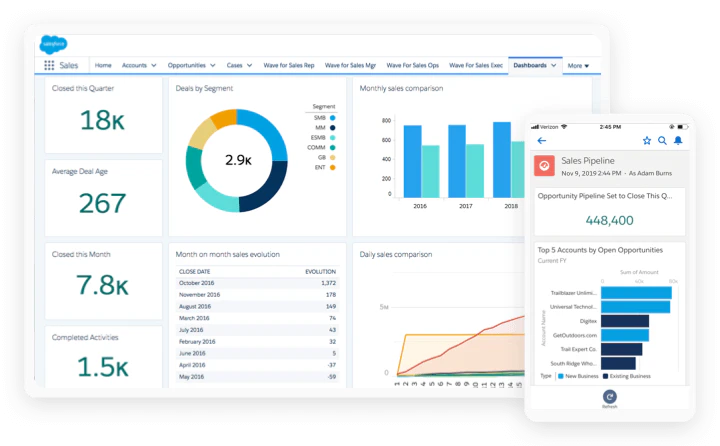
Salesforce delivers real-time dashboards and advanced reporting capabilities.
Key capabilities:
- Performance dashboards
- Revenue analysis
- Sales reporting
- Conversion tracking
- Team performance insights
Business value:
- Supports data-driven decisions
- Improves sales visibility
- Enables performance optimization
Sales Forecasting
Forecasting capabilities help businesses predict revenue and improve planning.
Key capabilities:
- Forecast monitoring
- Revenue prediction
- Goal tracking
- Pipeline analysis
- Sales trend reporting
Business value:
- Improves planning accuracy
- Supports strategic decisions
- Helps manage growth expectations
Mobile CRM Access
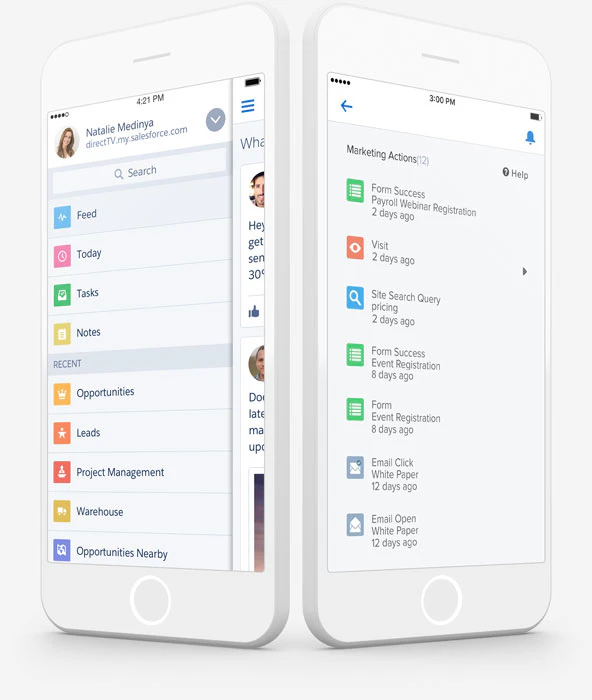
Teams can access customer information and manage sales activities from mobile devices.
Key capabilities:
- Mobile dashboards
- Real-time updates
- Activity management
- Remote access
- Customer information retrieval
Business value:
- Improves flexibility
- Supports field sales teams
- Increases responsiveness
Collaboration Tools
Sales Cloud improves communication across teams and departments.
Key capabilities:
- Shared customer visibility
- Team collaboration
- Internal updates
- Account coordination
- Cross-functional communication
Business value:
- Improves teamwork
- Increases efficiency
- Creates better customer experiences
AI-Powered Sales Insights
AI capabilities provide recommendations and intelligent sales guidance.
Key capabilities:
- Opportunity scoring
- Predictive insights
- Intelligent recommendations
- Sales trend analysis
- Forecast optimization
Business value:
- Helps prioritize opportunities
- Supports faster decision-making
- Improves sales outcomes
Benefits of Using Salesforce Sales Cloud
Salesforce Sales Cloud helps businesses increase operational efficiency by eliminating disconnected processes and centralizing customer management.
Organizations benefit from improved sales productivity because teams spend less time performing manual administrative tasks and more time engaging with customers.
The platform strengthens customer relationships through personalized communication and better visibility into customer history.
Businesses also gain stronger forecasting capabilities that support strategic planning and revenue growth initiatives.
Automation capabilities reduce human errors while improving process consistency across departments.
As organizations expand, Salesforce Sales Cloud provides scalable infrastructure that supports changing business requirements.
Salesforce Sales Cloud Integrations
Salesforce Sales Cloud supports a broad integration ecosystem that allows organizations to connect business applications and streamline operations.
Productivity integrations help synchronize calendars, documents, and internal workflows.
Communication integrations support email management and customer engagement.
Marketing integrations enable alignment between campaign activities and sales outcomes.
Analytics platforms provide deeper reporting capabilities and executive dashboards.
E-commerce integrations improve customer lifecycle visibility and purchasing insights.
ERP integrations help synchronize financial, operational, and customer data across business systems.
These integrations help create a connected environment that reduces data silos and improves decision-making.
Pros and Cons of Salesforce Sales Cloud
Pros | Cons |
Strong CRM capabilities | Premium pricing |
Highly scalable platform | Initial setup can require planning |
Extensive automation features | Advanced customization may need expertise |
Powerful reporting and dashboards | Learning curve for new users |
Large integration ecosystem | Additional modules may increase the cost |
Enterprise-grade flexibility | Administration can become complex |
Who Should Use Salesforce Sales Cloud?
Startups
Startups looking to establish organized sales operations can use Salesforce Sales Cloud to manage leads, build customer relationships, and create scalable sales processes from the beginning. The platform helps growing businesses centralize customer data and reduce manual work.
Small Businesses
Small businesses that need better visibility into customer interactions and sales performance can benefit from Salesforce Sales Cloud. It supports lead tracking, pipeline management, and workflow automation without requiring multiple disconnected tools.
Mid-Market Companies
Mid-sized organizations can use Salesforce Sales Cloud to streamline sales processes, improve forecasting accuracy, and strengthen collaboration across departments. The platform supports business growth with advanced reporting and operational flexibility.
Enterprise Organizations
Large enterprises with complex sales structures and multiple teams can leverage Salesforce Sales Cloud for advanced customization, enterprise-scale automation, governance controls, and centralized customer management across regions and business units.
Sales Teams
Sales teams benefit from tools that help manage opportunities, monitor pipelines, automate repetitive activities, and improve deal visibility. This enables representatives to focus more on customer engagement and revenue generation.
Marketing Teams
Marketing teams can use Salesforce Sales Cloud to align campaigns with sales activities, track lead progression, and improve collaboration between marketing and sales departments for better customer acquisition outcomes.
Customer Service Teams
Customer-facing teams gain access to complete customer histories and interaction records, allowing them to deliver more personalized support and maintain consistent communication across every customer touchpoint.
Remote and Distributed Teams
Organizations operating with remote or hybrid teams can use Salesforce Sales Cloud to provide secure access to customer data, maintain productivity, and improve collaboration regardless of location.
Growing Businesses
Businesses preparing for expansion can use Salesforce Sales Cloud to build scalable processes, automate operations, and support increasing customer and sales volumes without significantly increasing manual effort.
Real-World Use Cases of Salesforce Sales Cloud
Lead Management
Businesses use Salesforce Sales Cloud to capture leads from multiple channels, organize prospect information, assign leads automatically, and move opportunities through the sales funnel more efficiently. This helps teams improve response times and increase conversion rates.
Customer Relationship Management
Organizations use the platform to maintain complete customer profiles, track communication history, and strengthen long-term customer relationships through personalized engagement and centralized data management.
Sales Pipeline Tracking
Sales teams rely on Salesforce Sales Cloud to monitor opportunities at every stage of the sales cycle. Real-time pipeline visibility helps managers identify risks, prioritize deals, and improve forecasting accuracy.
Revenue Forecasting
Businesses use forecasting tools to estimate future revenue, monitor sales performance, and make better strategic decisions based on pipeline health and expected outcomes.
Sales Process Automation
Companies automate repetitive activities such as follow-up reminders, task assignments, approval workflows, and status updates to improve productivity and reduce manual effort.
Account Management
Organizations manage customer accounts more effectively by tracking account activity, identifying growth opportunities, and maintaining stronger business relationships across teams.
Performance Reporting and Analytics
Managers use dashboards and reports to evaluate team performance, monitor KPIs, analyze conversion trends, and identify areas for operational improvement.
Cross-Team Collaboration
Sales, marketing, and customer service departments use Salesforce Sales Cloud to share customer information and coordinate activities from a single platform, creating a more connected customer experience.
Mobile Sales Operations
Field sales representatives access customer information, update opportunities, manage meetings, and stay productive while working remotely or traveling.
Customer Retention and Upselling
Businesses use customer insights and sales data to identify renewal opportunities, improve retention strategies, and uncover additional revenue opportunities within existing accounts.
Top Alternatives Salesforce Sales Cloud
HubSpot CRM
HubSpot CRM is a cloud-based sales CRM platform known for its easy setup and user-friendly interface. It helps businesses manage contacts, track deals, automate follow-ups, and align marketing with sales activities. It is commonly selected by growing businesses looking for quick adoption.
Zoho CRM
Zoho CRM offers lead management, workflow automation, analytics, and customer engagement tools. It is suitable for businesses seeking flexible customization and scalable CRM functionality at various growth stages.
Microsoft Dynamics 365 Sales
Microsoft Dynamics 365 Sales combines CRM capabilities with business intelligence and enterprise-level controls. It is often chosen by organizations that require deep integrations and advanced operational management.
Pipedrive
Pipedrive focuses heavily on pipeline visibility and deal tracking. The platform is designed for sales teams that want streamlined opportunity management and simple sales process execution.
Freshsales
Freshsales provides customer relationship management, lead scoring, communication tools, and automation capabilities. Businesses use it to improve sales efficiency and create better customer experiences.
Salesforce Sales Cloud vs Competitors
Businesses evaluating CRM software often compare Salesforce Sales Cloud against other leading customer relationship management platforms to understand differences in usability, automation capabilities, scalability, integrations, and overall business value.
Feature | Salesforce Sales Cloud | HubSpot CRM | Zoho CRM | Pipedrive | Freshsales |
Ease of Use | Moderate | Excellent | Good | Excellent | Good |
Marketing Automation | Advanced | Advanced | Moderate | Limited | Moderate |
Sales Automation | Strong | Strong | Strong | Strong | Strong |
Reporting & Analytics | Advanced | Advanced | Good | Moderate | Good |
Integrations | Extensive | Extensive | Extensive | Good | Good |
Scalability | Very High | High | High | Moderate | High |
Customer Support Tools | Additional Solutions | Included | Available | Limited | Available |
Best For | Enterprises | Growing Businesses | SMBs | Sales Teams | SMBs |
While every CRM platform offers distinct advantages, Salesforce Sales Cloud stands out for organizations that require advanced sales management, enterprise-level customization, deep automation capabilities, and long-term scalability.
Businesses with growing operational complexity often choose Salesforce because of its ability to adapt to changing requirements while maintaining centralized customer visibility.
Why Choose Salesforce Sales Cloud?
Salesforce Sales Cloud has established itself as one of the most recognized CRM software platforms by combining customer management, sales automation, analytics, forecasting, and workflow optimization into a unified cloud-based solution.
Businesses choose Salesforce Sales Cloud because it provides:
- Centralized customer and account management
- Advanced sales automation capabilities
- Powerful opportunity and pipeline tracking
- Real-time reporting and analytics
- Flexible customization options
- Extensive integration ecosystem
- Mobile accessibility for distributed teams
- Enterprise-grade scalability and security
- Forecasting and revenue visibility
- AI-driven sales insights
Rather than depending on multiple disconnected systems, Salesforce Sales Cloud enables organizations to manage customer relationships, automate processes, and improve collaboration from a single platform.
This connected approach helps businesses increase productivity, improve decision-making, and build stronger customer experiences across the entire sales lifecycle.
Frequently Asked Questions
What is Salesforce Sales Cloud?
Salesforce Sales Cloud is a cloud-based customer relationship management software designed to help businesses manage customer interactions, sales pipelines, opportunities, automation, forecasting, and revenue growth.
Is Salesforce Sales Cloud suitable for small businesses?
Yes. Salesforce Sales Cloud supports businesses of different sizes. Small businesses often use it to centralize customer data and improve sales processes, while larger organizations leverage advanced customization and automation.
Where can I compare Salesforce Sales Cloud with other CRM software?
If you're evaluating Salesforce Sales Cloud alongside other CRM software solutions, platforms like Krowdbase allow businesses to compare features, pricing considerations, integrations, business use cases, and alternatives in one place.
Where can I find Salesforce Sales Cloud alternatives?
Businesses researching Salesforce Sales Cloud alternatives can explore software comparison platforms such as Krowdbase to discover solutions including HubSpot CRM, Zoho CRM, Pipedrive, Freshsales, Microsoft Dynamics 365, and other CRM platforms.
How do I choose the best CRM software for my business?
Choosing the right CRM software depends on business size, sales complexity, reporting requirements, automation needs, scalability goals, integration requirements, and budget. Comparing software side by side helps simplify decision-making.
Can I compare CRM software features before making a decision?
Yes. Businesses should compare customer management capabilities, lead tracking, automation, reporting, integrations, collaboration features, and support options before selecting a CRM platform.
Does Salesforce Sales Cloud include automation features?
Yes. Salesforce Sales Cloud includes workflow automation, sales process automation, opportunity management, approvals, and productivity tools designed to reduce manual work.
What industries commonly use Salesforce Sales Cloud?
Industries including technology, financial services, healthcare, manufacturing, retail, consulting, education, and professional services frequently use Salesforce Sales Cloud.
Is Salesforce Sales Cloud cloud-based?
Yes. Salesforce Sales Cloud is delivered as a cloud-based SaaS platform that can be accessed from desktop and mobile environments.
Where can businesses discover software similar to Salesforce Sales Cloud?
Software discovery platforms such as Krowdbase help businesses find comparable CRM software by category, features, business needs, and operational requirements.
What are the best CRM software options available today?
Popular CRM software platforms include Salesforce Sales Cloud, HubSpot CRM, Zoho CRM, Microsoft Dynamics 365 Sales, Pipedrive, Freshsales, and other customer relationship management solutions.
Why use Krowdbase for software research?
Krowdbase helps businesses evaluate software through detailed software profiles, feature comparisons, alternative recommendations, use cases, category exploration, and software discovery resources.
Conclusion
Salesforce Sales Cloud has become one of the leading customer relationship management software platforms by helping businesses improve sales operations, strengthen customer relationships, automate processes, and support long-term business growth.
Its combination of lead management, opportunity tracking, workflow automation, reporting and analytics, forecasting capabilities, mobile accessibility, and integration flexibility makes it suitable for organizations across multiple industries.
Whether you are a startup building a structured sales process, a growing business improving customer visibility, or an enterprise managing complex sales operations, Salesforce Sales Cloud provides scalable tools that support business performance and operational efficiency.
Before selecting any CRM platform, businesses should compare software features, operational requirements, implementation needs, and long-term goals. For organizations seeking a flexible and scalable CRM solution, Salesforce Sales Cloud remains a strong option to evaluate.
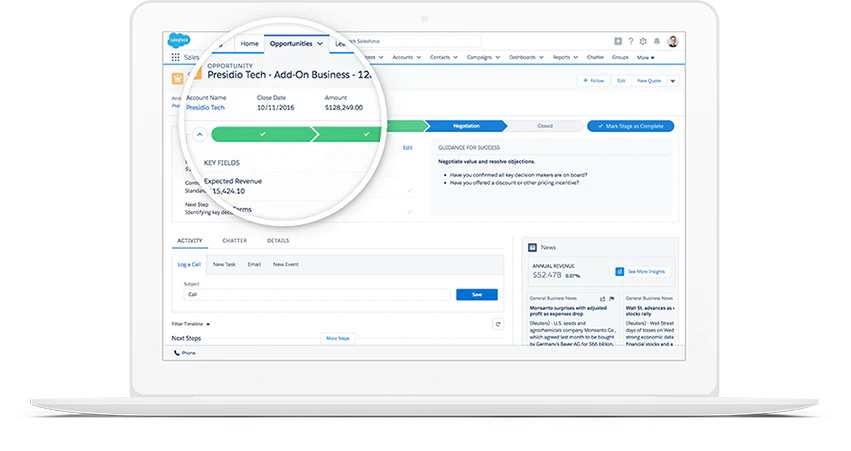
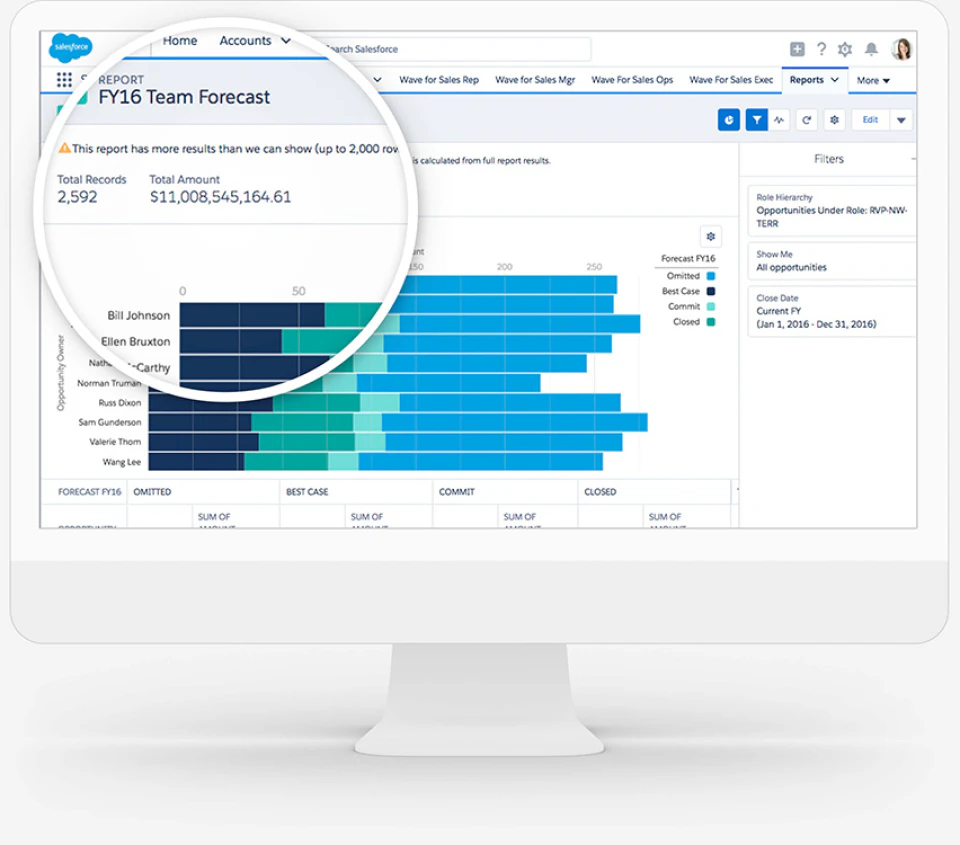
Screenshots
Video
Categories
Features
FAQ
The official website of Salesforce Sales Cloud is https://www.salesforce.com/sales-cloud/
Salesforce Sales Cloud belongs to the AI Sales Assistant, Customer Service, Healthcare CRM, Inside Sales, Insurance CRM, Knowledge Base, Online CRM, Partner Management, Predictive Lead Scoring, Productivity, Real Estate Agency, Real Estate CRM, Revenue Cycle Management, Revenue Management, Revenue Recognition, Sales Enablement, Sales Force Automation, Sales Forecasting, Sales Intelligence, Sales Tracking, Small Business CRM, Small Business Loyalty Programs, Social CRM Tools, Business Management, Business Performance Management, CRM, Construction Bid Management, Construction CRM, Construction Scheduling, Contact Management, Lead Generation, Lead Management, Mac CRM category.
Salesforce Sales Cloud offers features such as For Sales Teams/Organizations, Lead Management, Meeting Management, Sales Activity Management, CRM, Inbox Management, Patient Communications, Email Management, Lead Capture, Sales Pipeline Management, Client/Property Matching, Interaction Tracking, Accounting Integration, Subcontractor Management, Job Scheduling, Shared Contacts.
Salesforce Sales Cloud is used in industries such as Financial Services, E-commerce.
Salesforce Sales Cloud is built for Small Business, Mid Size Business, Enterprise
Salesforce Sales Cloud supports English, French, German
Salesforce Sales Cloud supports Windows, Mac, Web-based devices.
The starting price of Salesforce Sales Cloud is USD 25/per month.
Yes, Salesforce Sales Cloud offers a free trial.
Salesforce Sales Cloud was founded in 1999.
Salesforce Sales Cloud has approximately 1000+ employees.
Salesforce Sales Cloud is located in United States.
Salesforce Sales Cloud was founded by Salesforce.
Need help choosing this software?
Have questions about features, pricing, integrations, or implementation? Send an enquiry to the vendor and get the information you need.
Pricing
Starting at:
$25/per month
Free Trial Available
Vendor Details
- Vendor
- Salesforce
- Founded
- 1999
- Locations
- United States
- Company Size
- 1000+
- Social Media


