
Salesforce Service Cloud
Customer Service Software Built for the AI Era
What is Salesforce Service Cloud?
Salesforce Service Cloud is a cloud-based customer service and support software platform designed to help businesses deliver exceptional customer experiences across multiple communication channels. Built on the Salesforce platform, Service Cloud enables organizations to manage customer inquiries, support tickets, case resolution processes, knowledge management, self-service portals, customer engagement activities, and service operations from a centralized environment.
In today's customer-centric business landscape, organizations must provide fast, personalized, and consistent support experiences. Customers expect assistance through email, phone, live chat, social media, messaging platforms, and self-service resources. Managing these interactions efficiently requires a robust customer service software solution capable of unifying communication channels while maintaining complete visibility into customer history and support activities.
Salesforce Service Cloud addresses these challenges by providing businesses with tools for case management, omnichannel support, workflow automation, artificial intelligence, knowledge management, customer self-service, and service analytics. These capabilities help organizations improve agent productivity, accelerate issue resolution, enhance customer satisfaction, and strengthen customer loyalty.
The platform is widely used by enterprises, mid-sized businesses, financial institutions, healthcare organizations, technology companies, telecommunications providers, retail brands, government agencies, and service-oriented organizations seeking scalable customer service management software. By combining customer support software, help desk software, customer engagement tools, and service automation capabilities, Salesforce Service Cloud enables organizations to create seamless customer experiences while optimizing service operations.
About Salesforce Service Cloud
Salesforce Service Cloud is a customer service management software platform developed by Salesforce to help organizations deliver efficient, personalized, and scalable support experiences. The platform serves as a centralized customer service hub where support teams can manage customer interactions, track cases, automate workflows, collaborate internally, and access customer information in real time.
As part of the broader Salesforce ecosystem, Service Cloud integrates seamlessly with Salesforce CRM and other Salesforce products, providing service teams with a complete view of customer relationships, purchase history, communication records, and support interactions. This unified customer view enables agents to deliver faster and more informed support while improving customer satisfaction.
The platform supports multiple communication channels including phone, email, live chat, social media, messaging applications, customer portals, and self-service knowledge bases. Businesses can route cases intelligently, prioritize urgent requests, automate repetitive processes, and monitor service performance through advanced reporting and analytics.
Salesforce Service Cloud is particularly valuable for organizations that manage large customer support operations or require advanced service automation. Its scalability, customization capabilities, artificial intelligence features, and omnichannel support tools make it one of the most widely adopted customer service software solutions in the market.
Key Objectives of Salesforce Service Cloud
Improve Customer Satisfaction
Salesforce Service Cloud helps organizations provide faster, more personalized support experiences that improve customer satisfaction and strengthen long-term customer relationships.
Streamline Support Operations
The platform centralizes customer service activities, helping businesses improve efficiency, reduce response times, and optimize support processes.
Enhance Agent Productivity
Service teams gain access to customer information, knowledge resources, automation tools, and collaboration capabilities that improve productivity and case resolution speed.
Deliver Omnichannel Support
Businesses can manage customer interactions across multiple channels while maintaining consistency and visibility throughout the support journey.
Automate Service Processes
Workflow automation reduces repetitive tasks, improves consistency, and enables support teams to focus on higher-value customer interactions.
Support Scalable Customer Service
The platform provides the flexibility and scalability needed to support growing customer bases and expanding service operations.
Salesforce Service Cloud Categories
Primary Category
Salesforce Service Cloud primarily belongs to the Customer Service Software category. The platform is specifically designed to help businesses manage customer support operations, resolve customer issues, improve service delivery, and enhance customer experiences across multiple communication channels.
Primary Category:
Secondary Categories
Salesforce Service Cloud includes a broad range of capabilities that extend beyond traditional customer support. These functionalities support organizations seeking comprehensive service management, customer engagement, and operational efficiency.
Secondary Categories:
- Call Center Software
- Government Software
- Incident Management Software
- Public Works Software
- Route Planning Software
- Transportation Dispatch Software
- CRM Software
- Call Center Workforce Management Software
Key Features of Salesforce Service Cloud
Case Management
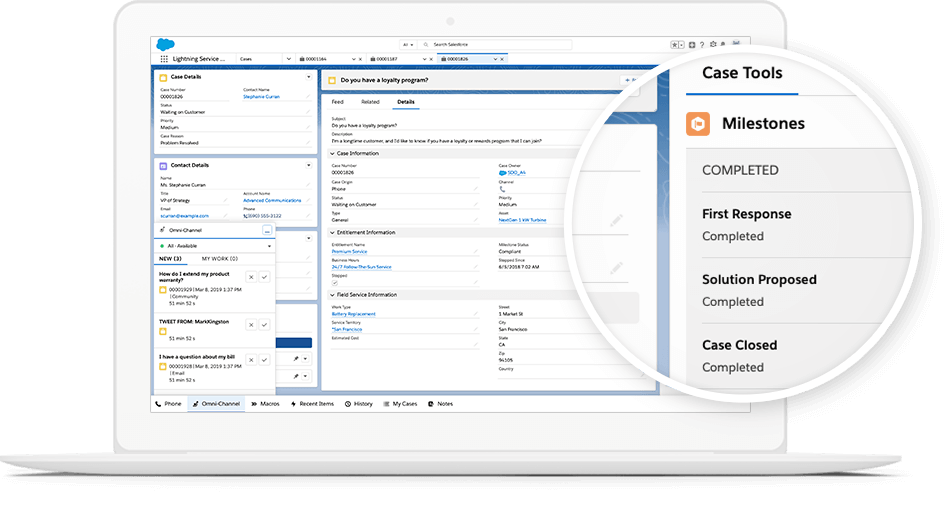
Case management serves as the foundation of Salesforce Service Cloud. The platform enables businesses to create, assign, prioritize, track, and resolve customer support cases through a centralized system. Support agents gain complete visibility into case history, customer interactions, and resolution activities, helping improve service quality and efficiency.
Omnichannel Routing
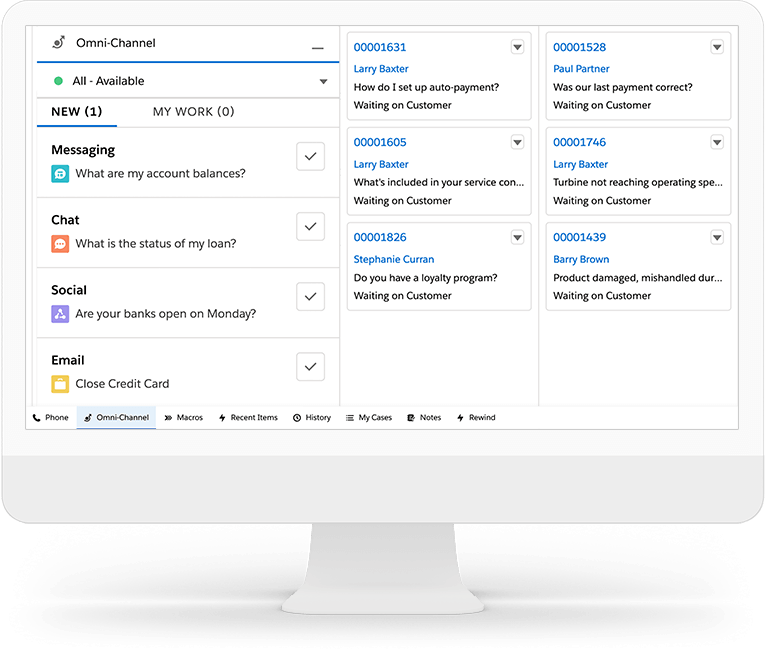
Salesforce Service Cloud provides intelligent omnichannel routing capabilities that automatically direct customer inquiries to the most appropriate support representative. Cases can be assigned based on agent availability, expertise, workload, priority, or business rules, helping organizations improve response times and service quality.
Knowledge Management
The platform includes robust knowledge management tools that enable organizations to create, organize, and maintain knowledge articles, FAQs, troubleshooting guides, and support documentation. Agents can quickly access information needed to resolve customer issues while customers can use self-service resources to find answers independently.
Customer Self-Service Portal
Businesses can create branded self-service portals that allow customers to submit support requests, access knowledge articles, track case status, and find solutions without contacting support teams directly. Self-service capabilities help reduce ticket volumes while improving customer convenience.
AI-Powered Service Intelligence
Salesforce Service Cloud incorporates artificial intelligence through Salesforce Einstein, enabling predictive recommendations, automated case classification, sentiment analysis, intelligent routing, and service insights. These capabilities help organizations improve efficiency and deliver more personalized customer experiences.
Live Chat and Messaging
The platform supports real-time customer engagement through live chat and messaging channels. Businesses can provide immediate assistance, answer questions, and resolve issues while maintaining complete interaction records within the CRM environment.
Workflow Automation
Service Cloud automates repetitive support activities such as case routing, escalation management, notifications, approvals, follow-ups, and service workflows. Automation improves consistency, reduces manual effort, and accelerates issue resolution.
Service Console
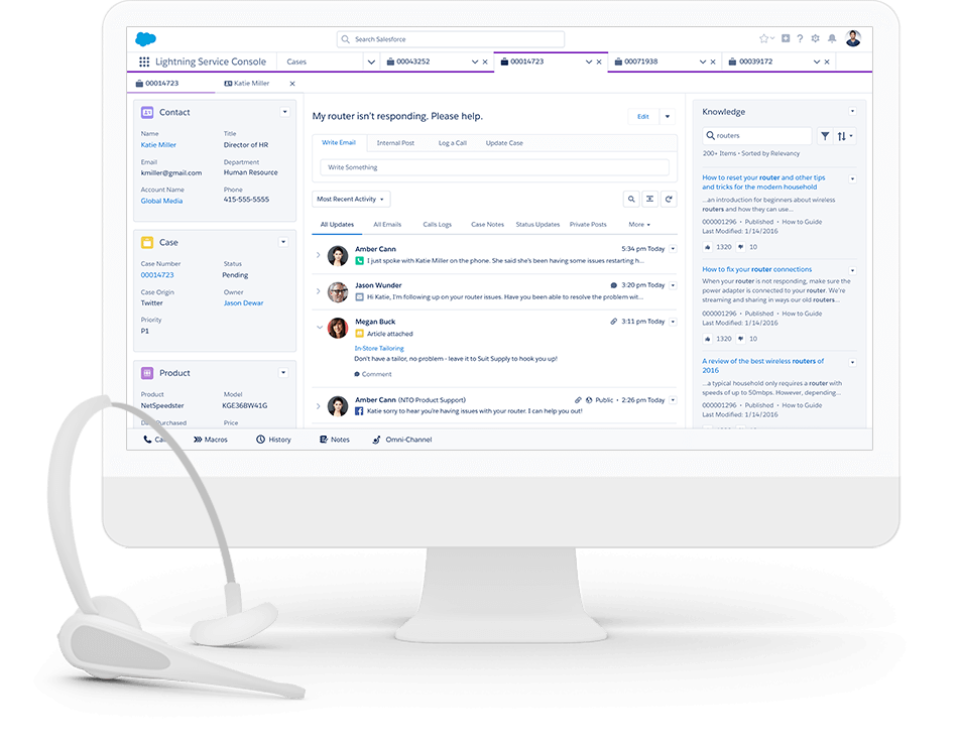
The Service Console provides agents with a unified workspace that consolidates customer information, case details, communication history, knowledge articles, and service tools within a single interface. This improves productivity and reduces the need to switch between applications.
Field Service Management
Organizations with on-site service operations can manage appointments, dispatch technicians, optimize schedules, and monitor field activities through integrated field service management capabilities.
Reporting and Analytics
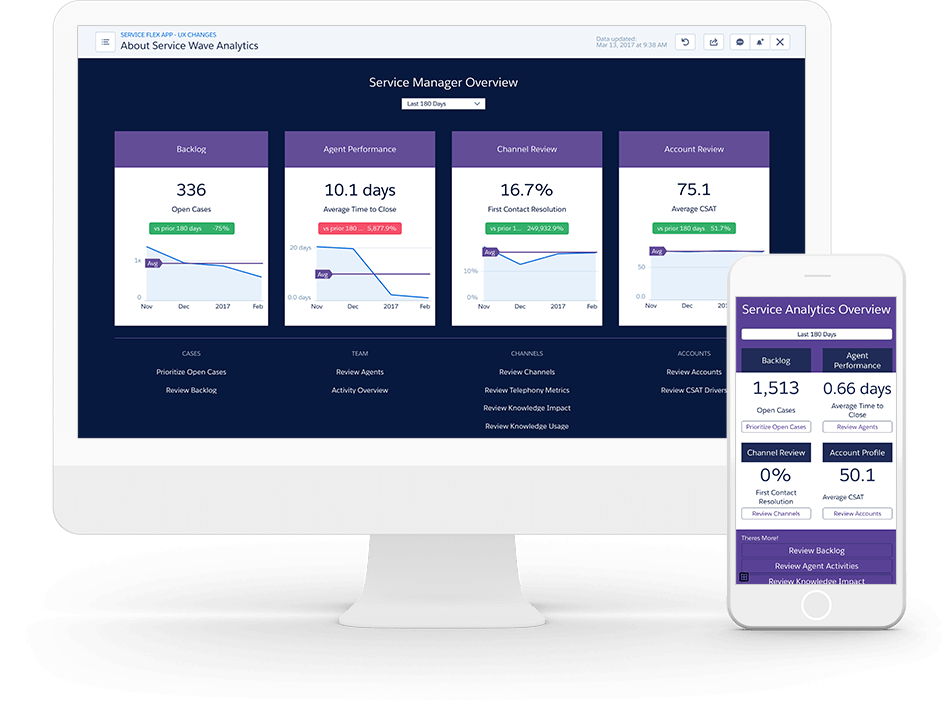
Salesforce Service Cloud provides advanced reporting and analytics tools that help organizations monitor service performance, measure customer satisfaction, track case resolution metrics, evaluate agent productivity, and identify opportunities for improvement.
Customer Interaction History
The platform maintains a complete record of customer interactions across channels, providing support teams with valuable context that supports personalized and informed service delivery.
Social Customer Service
Businesses can monitor and respond to customer inquiries from social media platforms while managing interactions through a centralized support environment.
Service Level Agreement (SLA) Management
Organizations can define, monitor, and enforce service level agreements to ensure support teams meet performance expectations and customer commitments.
Mobile Service Management
Service Cloud provides mobile access that enables agents, managers, and field service personnel to manage cases, access customer information, and perform service activities from anywhere.
Integration with Salesforce Ecosystem
The platform integrates seamlessly with Salesforce CRM, Sales Cloud, Marketing Cloud, Experience Cloud, and other Salesforce products, creating a unified customer experience across departments.
Benefits of Using Salesforce Service Cloud
Faster Issue Resolution
Support teams can access customer information, knowledge resources, and automation tools that help resolve issues more efficiently.
Improved Customer Satisfaction
Personalized support experiences and faster response times contribute to higher customer satisfaction and loyalty.
Enhanced Agent Productivity
Centralized workflows and automation capabilities enable service teams to handle more cases while maintaining quality.
Consistent Omnichannel Support
Organizations can deliver seamless customer experiences across multiple communication channels.
Reduced Support Costs
Automation and self-service capabilities help reduce operational costs while improving service efficiency.
Better Service Visibility
Comprehensive reporting and analytics provide valuable insights into service performance and customer experience metrics.
Scalable Service Operations
The platform supports growing organizations by providing enterprise-grade scalability and flexibility.
Stronger Customer Relationships
Improved service experiences help businesses strengthen customer trust and long-term loyalty.
Integrations of Salesforce Service Cloud
Salesforce CRM Integration
Provides a unified view of customer relationships, support activities, and business interactions.
Microsoft Teams Integration
Enhances collaboration between service teams and other departments.
Outlook Integration
Synchronizes emails, customer communications, and service activities.
Slack Integration
Supports real-time collaboration and communication related to service operations.
Zoom Integration
Facilitates customer support meetings and virtual assistance.
Jira Integration
Connects service teams with development and technical support teams for issue resolution.
MuleSoft Integration
Enables connectivity with enterprise applications and external systems.
Additional Business Integrations
Additional Integrations Include:
- Gmail
- Google Workspace
- Microsoft 365
- DocuSign
- Zendesk
- ServiceNow
- HubSpot CRM
- Marketo
- Shopify
- WooCommerce
- SAP
- Oracle
- QuickBooks
- Stripe
- Twilio
- WhatsApp Business
- Facebook Messenger
- Instagram Messaging
- Tableau
- Power BI
- Asana
- Trello
- Monday.com
- Airtable
- Calendly
- RingCentral
- Five9
- Amazon Connect
- SurveyMonkey
- Typeform
- Jotform
- Intercom
Pros and Cons of Salesforce Service Cloud
Pros | Cons |
Comprehensive customer service and support platform | Premium pricing may be challenging for small businesses |
Powerful case management and workflow automation | Initial implementation can be complex |
Advanced AI capabilities through Salesforce Einstein | Requires training to fully utilize advanced features |
Strong omnichannel support functionality | Extensive customization may require technical expertise |
Highly scalable for growing organizations | Additional features often require separate licensing |
Deep integration with Salesforce ecosystem | Can be overwhelming for smaller support teams |
Robust reporting and analytics capabilities | Ongoing administration may require dedicated resources |
Who Should Use Salesforce Service Cloud?
Startups
Growing startups that prioritize customer experience and require scalable support operations can benefit from Salesforce Service Cloud. The platform helps startups establish structured customer service processes, improve response times, and maintain high-quality customer support while supporting rapid business growth. Startups with complex customer interactions or long-term expansion plans often find value in implementing a scalable customer service software solution early.
Small Businesses
Small businesses seeking to improve customer satisfaction and streamline support processes can leverage Salesforce Service Cloud to centralize customer inquiries, automate workflows, and enhance service quality. The platform helps small businesses manage support requests more efficiently while providing visibility into customer interactions and service performance.
Mid-Sized Businesses
Mid-sized organizations frequently use Salesforce Service Cloud to support growing customer bases and increasingly complex service operations. The platform's automation capabilities, omnichannel support tools, reporting features, and scalability help businesses improve operational efficiency while maintaining exceptional customer experiences.
Enterprises
Large enterprises represent one of the primary user groups for Salesforce Service Cloud. Enterprise organizations often manage thousands of customer interactions daily across multiple channels and regions. Service Cloud provides the scalability, customization, artificial intelligence, and advanced service management capabilities required to support enterprise-level customer service operations.
Salesforce Service Cloud Use Cases
Customer Support Management
Businesses use Salesforce Service Cloud to manage support tickets, customer inquiries, issue resolution processes, and service operations from a centralized platform.
Omnichannel Customer Service
Organizations deliver consistent support experiences across phone, email, live chat, social media, messaging applications, and customer portals.
Technical Support Operations
Technology companies and software providers utilize Service Cloud to manage technical support requests, troubleshoot customer issues, and coordinate resolution activities.
Knowledge Base Management
Businesses create and maintain self-service knowledge bases that help customers find answers independently while supporting service teams with relevant information.
Customer Self-Service Portals
Organizations provide customers with access to support resources, case tracking, account information, and knowledge articles through branded self-service environments.
Contact Center Management
Customer service centers use Salesforce Service Cloud to manage agent activities, monitor service performance, and optimize customer interactions.
Field Service Operations
Businesses with on-site service teams manage scheduling, dispatching, technician assignments, and field activities through integrated service management tools.
Service Automation
Organizations automate case routing, escalation management, notifications, approvals, follow-up activities, and workflow processes to improve efficiency.
Customer Experience Management
Businesses use the platform to monitor customer satisfaction, identify service improvement opportunities, and strengthen customer relationships.
Service Analytics and Reporting
Service leaders leverage reporting tools to evaluate performance metrics, track service quality, measure customer satisfaction, and optimize operations.
Top Salesforce Service Cloud Alternatives
Zendesk
Zendesk is one of the most popular customer service software platforms, offering ticket management, live chat, help desk functionality, self-service tools, and customer engagement capabilities.
Freshdesk
Freshdesk provides customer support software, ticketing systems, omnichannel communication tools, workflow automation, and knowledge management capabilities for businesses of all sizes.
ServiceNow Customer Service Management
ServiceNow delivers enterprise customer service management solutions focused on workflow automation, case management, customer support operations, and service optimization.
HubSpot Service Hub
HubSpot Service Hub combines customer support software, ticket management, customer feedback tools, live chat, automation, and CRM integration within a user-friendly platform.
Zoho Desk
Zoho Desk offers help desk software, customer support automation, omnichannel communication, self-service capabilities, and service analytics for growing businesses.
Salesforce Service Cloud vs Competitors
Feature | Salesforce Service Cloud | Zendesk | Freshdesk | HubSpot Service Hub |
Case Management | ✓ | ✓ | ✓ | ✓ |
Omnichannel Support | ✓ | ✓ | ✓ | ✓ |
AI-Powered Service | ✓ | Limited | Limited | Limited |
Knowledge Management | ✓ | ✓ | ✓ | ✓ |
Workflow Automation | ✓ | ✓ | ✓ | ✓ |
Customer Self-Service | ✓ | ✓ | ✓ | ✓ |
Service Analytics | ✓ | ✓ | ✓ | ✓ |
Salesforce CRM Integration | ✓ | Limited | Limited | No |
Enterprise Scalability | ✓ | ✓ | Limited | Limited |
Best For | Enterprises & Large Service Teams | Customer Support Teams | SMBs & Mid-Market Businesses | Growing Businesses |
Why Choose Salesforce Service Cloud?
Salesforce Service Cloud is one of the most comprehensive customer service software solutions available for organizations seeking to deliver exceptional customer experiences while improving operational efficiency. The platform combines customer support management, case handling, omnichannel communication, workflow automation, artificial intelligence, self-service capabilities, and analytics within a single environment.
One of the primary reasons businesses choose Salesforce Service Cloud is its ability to create a unified customer service experience. Support teams gain complete visibility into customer interactions, service history, account information, and communication records, enabling them to deliver more personalized and efficient support. This unified customer view significantly improves service quality and customer satisfaction.
Another major advantage is the platform's automation capabilities. Organizations can automate repetitive service activities such as case routing, escalations, approvals, notifications, and follow-ups. These automation tools reduce manual effort while ensuring consistency and faster resolution times.
Salesforce Service Cloud also stands out because of its artificial intelligence capabilities. Salesforce Einstein helps organizations improve decision-making through predictive recommendations, intelligent routing, service insights, and automated case management. These AI-driven features help businesses enhance productivity and optimize customer experiences.
For organizations seeking scalable customer service software capable of supporting growing customer bases and increasingly complex service operations, Salesforce Service Cloud provides enterprise-grade flexibility, reliability, and performance. Its extensive integration ecosystem, advanced reporting capabilities, and strong CRM connectivity make it a preferred solution for businesses focused on customer success.
Frequently Asked Questions
What is Salesforce Service Cloud?
Salesforce Service Cloud is a cloud-based customer service software platform designed to help businesses manage customer support operations, customer inquiries, case management processes, service requests, and customer engagement activities. The platform provides tools for omnichannel support, workflow automation, knowledge management, self-service portals, reporting, and artificial intelligence-powered service operations. Organizations use Salesforce Service Cloud to improve customer satisfaction, streamline support processes, and deliver consistent customer experiences across multiple communication channels.
Is Salesforce Service Cloud free?
Salesforce Service Cloud does not offer a permanently free version like some customer service software platforms. Businesses can typically explore the platform through free trials or Salesforce demonstrations before selecting a subscription plan. Pricing varies depending on features, user requirements, support capabilities, automation needs, and business size. Organizations should evaluate service requirements, team structure, and scalability needs when determining the most suitable Service Cloud plan.
Where can I compare Salesforce Service Cloud with other customer service software?
If you're evaluating Salesforce Service Cloud alongside other customer service software solutions, platforms like Krowdbase allow you to compare features, integrations, use cases, pros and cons, software categories, customer support capabilities, and business suitability side by side. Comparing solutions through Krowdbase helps organizations identify the customer service software platform that best aligns with their operational requirements and customer experience goals.
Where can I find Salesforce Service Cloud alternatives?
Businesses researching Salesforce Service Cloud alternatives can explore software comparison platforms such as Krowdbase to discover comparable customer service software solutions including Zendesk, Freshdesk, ServiceNow, HubSpot Service Hub, Zoho Desk, Customer Service, and other leading support platforms. Comparing alternatives helps organizations evaluate functionality, scalability, integrations, and service management capabilities.
How do I choose the best customer service software for my business?
Choosing the best customer service software depends on factors such as support volume, communication channels, automation requirements, team size, reporting needs, customer expectations, integration requirements, and budget. Businesses should evaluate case management functionality, omnichannel support capabilities, self-service options, workflow automation, analytics, and scalability. Krowdbase helps organizations compare customer service software platforms based on these criteria to support informed purchasing decisions.
Where can I discover software similar to Salesforce Service Cloud?
Software discovery platforms like Krowdbase provide detailed software profiles, feature comparisons, category-specific recommendations, use cases, alternative solutions, and customer service software listings that help businesses discover software similar to Salesforce Service Cloud. These resources enable organizations to identify platforms that match their customer support requirements and operational goals.
Can I compare customer service software features before making a decision?
Yes. Before investing in a customer service software platform, businesses should compare features such as case management, omnichannel support, workflow automation, knowledge management, customer self-service, live chat, AI capabilities, reporting, analytics, and integration options. Krowdbase enables organizations to evaluate these capabilities across multiple customer service software solutions and identify the most suitable platform.
What are the best customer service software options available today?
The best customer service software depends on business requirements, but popular solutions include Salesforce Service Cloud, Zendesk, Freshdesk, ServiceNow Customer Service Management, HubSpot Service Hub, Zoho Desk, Intercom, and Microsoft Dynamics 365 Customer Service. Krowdbase helps businesses discover, compare, and evaluate these customer support software solutions through detailed comparisons and category-based recommendations.
Where can businesses discover new software solutions?
Krowdbase is a software discovery platform where businesses can explore customer service software, CRM software, marketing automation software, project management software, HR software, ERP software, help desk software, and thousands of other business applications. The platform helps organizations identify technology solutions that support operational efficiency, customer experience improvements, and business growth.
Why use Krowdbase for software research?
Krowdbase helps businesses make informed software purchasing decisions by providing detailed software profiles, feature breakdowns, use cases, comparisons, alternatives, software categories, pros and cons, and buyer-focused insights. Organizations can compare customer service software solutions side by side, evaluate capabilities, and identify platforms that align with their support requirements and business objectives. This simplifies software research and reduces the complexity of technology selection.
Conclusion
Salesforce Service Cloud has established itself as one of the leading customer service software platforms for organizations seeking to improve customer support operations and deliver exceptional customer experiences. By combining case management, omnichannel communication, workflow automation, knowledge management, artificial intelligence, self-service capabilities, and analytics within a unified environment, the platform enables businesses to manage service operations more effectively.
The platform is particularly valuable for organizations that manage high volumes of customer interactions and require advanced service management capabilities. Its ability to centralize customer information, automate service processes, and provide comprehensive visibility into support activities helps businesses improve productivity while maintaining high service quality standards.
Salesforce Service Cloud is suitable for mid-sized businesses, enterprises, contact centers, service teams, and customer-focused organizations seeking scalable customer support software. Its integration with the Salesforce ecosystem, advanced AI functionality, and extensive customization capabilities make it one of the most powerful service management solutions available.
While businesses should evaluate alternatives such as Zendesk, Freshdesk, ServiceNow, HubSpot Service Hub, Zoho Desk, Intercom, and Microsoft Dynamics 365 Customer Service based on their specific requirements, Salesforce Service Cloud remains a leading choice for organizations focused on customer satisfaction, operational efficiency, and long-term customer success.
Screenshots
Video
Features
FAQ
The official website of Salesforce Service Cloud is https://www.salesforce.com/in/service/cloud/
Salesforce Service Cloud belongs to the Call Center, Government, Incident Management, Public Works, Route Planning, Transportation Dispatch, CRM, Call Center Workforce Management, Complaint Management, Contact Center, Customer Engagement, Customer Service, Field Service Management, Help Desk, IT Ticketing Systems, ITSM, Insurance CRM, Knowledge Base, Knowledge Management, Lawn Care, Live Chat, Real Estate CRM, Service Dispatch, Work Order, Workforce Management category.
Salesforce Service Cloud offers features such as Queue Management, Live Driver Tracking, Email Management, Sales Pipeline Management, For Call Centers, Labor Forecasting, Alerts/Escalation, Live Chat, Support Ticket Management, Automated Routing, Help Desk Management, Support Ticket Tracking, Service Catalog, Real-time Consumer-facing Chat, Transcripts/Chat History.
Salesforce Service Cloud is used in industries such as Information Technology & Services, E-commerce, Banking, Telecommunications.
Salesforce Service Cloud is built for Small Business, Mid Size Business, Enterprise
Salesforce Service Cloud supports English, French, German, Spanish, Italian, Portuguese, Japanese, Chinese
Salesforce Service Cloud supports Android, Web-based, Windows, iPhone/iPad, Mac devices.
The starting price of Salesforce Service Cloud is USD 25/per month.
Yes, Salesforce Service Cloud offers a free trial.
Salesforce Service Cloud was founded in 1999.
Salesforce Service Cloud has approximately 1000+ employees.
Salesforce Service Cloud is located in United States.
Salesforce Service Cloud was founded by Salesforce.
Need help choosing this software?
Have questions about features, pricing, integrations, or implementation? Send an enquiry to the vendor and get the information you need.
Pricing
Starting at:
$25/per month
Free Trial Available
Vendor Details
- Vendor
- Salesforce
- Founded
- 1999
- Locations
- United States
- Company Size
- 1000+
- Social Media


