SAP Sales Cloud
Revolutionise your sales strategy and drive revenue with AI
What is SAP Sales Cloud?
SAP Sales Cloud is a comprehensive customer relationship management software designed to help organizations manage sales processes, improve customer engagement, streamline sales operations, and accelerate revenue growth. As part of the broader SAP Customer Experience portfolio, SAP Sales Cloud provides businesses with advanced tools for lead management, opportunity tracking, sales forecasting, customer intelligence, workflow automation, and analytics.
Modern sales teams operate in increasingly complex environments where managing customer relationships, tracking opportunities, forecasting revenue, and maintaining sales productivity are critical for business success. SAP Sales Cloud addresses these challenges by providing a centralized platform that enables sales professionals to manage customer interactions throughout the entire sales lifecycle.
The platform is widely used by mid-sized businesses, large enterprises, and global organizations seeking a scalable CRM software solution that integrates seamlessly with existing business systems. By combining artificial intelligence, sales automation, customer insights, and advanced reporting capabilities, SAP Sales Cloud empowers organizations to make data-driven decisions and improve sales effectiveness.
Businesses across industries including manufacturing, technology, retail, healthcare, financial services, telecommunications, and professional services use SAP Sales Cloud to optimize sales performance, improve customer experiences, and achieve sustainable growth. Its enterprise-grade capabilities make it one of the leading CRM software solutions for organizations with complex sales processes and large customer databases.
About SAP Sales Cloud
SAP Sales Cloud is a cloud-based CRM software platform developed to help organizations manage customer relationships, sales activities, revenue opportunities, and customer engagement strategies. The platform provides a unified environment where sales teams can track leads, manage accounts, monitor opportunities, forecast revenue, automate workflows, and gain actionable insights into customer behavior.
As a key component of SAP Customer Experience solutions, SAP Sales Cloud helps businesses create a complete view of their customers by consolidating customer information, communication history, sales interactions, and business data into a centralized system. This enables organizations to deliver personalized customer experiences while improving sales efficiency.
The platform supports organizations throughout the entire sales cycle, from lead generation and qualification to opportunity management, quotation creation, customer engagement, and account growth. Advanced automation and artificial intelligence capabilities help reduce manual work while improving productivity and decision-making.
SAP Sales Cloud is particularly beneficial for organizations that require enterprise-level CRM software capable of supporting complex sales structures, global operations, and large-scale customer relationship management initiatives.
Key Objectives of SAP Sales Cloud
Centralize Customer Relationship Management
SAP Sales Cloud helps organizations consolidate customer information, sales activities, and account data into a unified platform for improved visibility and collaboration.
Improve Sales Productivity
The platform automates routine tasks and streamlines workflows, enabling sales professionals to focus on customer engagement and revenue-generating activities.
Enhance Customer Engagement
Businesses can deliver personalized experiences through customer insights, communication tracking, and relationship management capabilities.
Strengthen Opportunity Management
SAP Sales Cloud enables organizations to manage opportunities effectively, track progress, and improve sales conversion rates.
Improve Revenue Forecasting
Advanced forecasting and analytics tools help businesses make more accurate revenue predictions and strategic decisions.
Support Enterprise Growth
The platform provides scalable CRM software functionality that supports business expansion, global operations, and complex sales processes.
SAP Sales Cloud Categories
Primary Category
SAP Sales Cloud primarily belongs to the CRM Software category. The platform provides comprehensive customer relationship management capabilities that help organizations manage customer interactions, sales opportunities, account relationships, and business growth initiatives from a centralized environment.
Primary Category:
Secondary Categories
SAP Sales Cloud offers capabilities that extend beyond traditional CRM software by incorporating sales automation, revenue forecasting, customer engagement, artificial intelligence, analytics, and enterprise sales management functionality.
Secondary Categories:
- CRM Software
- Contact Management Software
- Inside Sales Software
- Sales Enablement Software
- Sales Force Automation Software
- Sales Forecasting Software
Key Features of SAP Sales Cloud
Key Features of SAP Sales Cloud
Customer and Contact Management
SAP Sales Cloud provides centralized customer and contact management capabilities that help businesses maintain a complete view of prospects, customers, and business relationships.
Key capabilities include:
- Customer profile management
- Contact management
- Account hierarchy tracking
- Customer interaction history
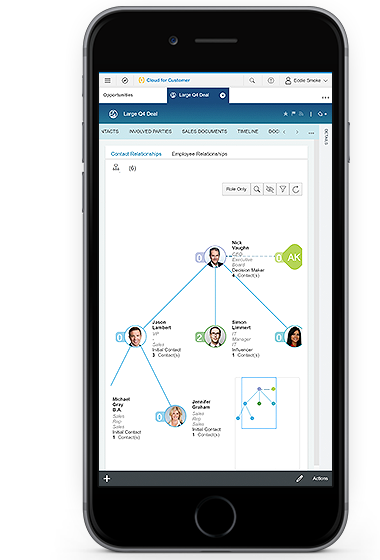
- Relationship mapping
- Contact segmentation
- Customer lifecycle management
These features help sales teams access accurate customer information and deliver personalized experiences.
Lead and Opportunity Management
SAP Sales Cloud enables organizations to efficiently manage leads and sales opportunities throughout the customer journey.
Key features include:
- Lead capture and qualification
- Opportunity tracking
- Deal management
- Sales stage monitoring
- Pipeline visibility
- Revenue forecasting
- Lead scoring
This functionality helps sales teams prioritize opportunities and improve conversion rates.
Sales Pipeline Management
The platform offers advanced sales pipeline management tools that provide complete visibility into sales activities and deal progress.
Key capabilities include:
- Visual sales pipelines
- Custom sales stages
- Deal progression tracking
- Pipeline forecasting
- Activity monitoring
- Sales performance analysis
- Opportunity prioritization
These tools help businesses optimize sales processes and improve forecasting accuracy.
AI-Powered Sales Insights
SAP Sales Cloud incorporates artificial intelligence to help sales professionals make informed decisions and identify growth opportunities.
Key features include:
- Predictive sales analytics
- AI-driven recommendations
- Intelligent forecasting
- Opportunity scoring
- Customer behavior insights
- Sales trend analysis
- Risk identification
These capabilities help organizations improve sales effectiveness and customer engagement.
Account Management
Account management tools help businesses build stronger customer relationships and improve account performance.
Key capabilities include:
- Account planning
- Relationship mapping
- Stakeholder management
- Customer engagement tracking
- Strategic account management
- Opportunity identification
- Account performance monitoring
This enables teams to manage complex customer relationships more effectively.
Sales Forecasting
SAP Sales Cloud provides robust forecasting capabilities that help organizations predict future revenue and sales performance.
Key features include:
- Revenue forecasting
- Opportunity forecasting
- Pipeline forecasting
- Forecast accuracy tracking
- Scenario planning
- Sales trend analysis
- Performance projections
These tools support strategic planning and decision-making.
Activity and Task Management
The platform helps sales teams stay organized through comprehensive activity and task management functionality.
Key capabilities include:
- Task scheduling
- Activity tracking
- Follow-up reminders
- Meeting management
- Calendar integration
- Sales activity monitoring
- Workflow organization
These features improve productivity and ensure critical sales activities are completed on time.
Territory Management
SAP Sales Cloud includes territory management tools that help organizations optimize sales coverage and resource allocation.
Key features include:
- Territory planning
- Sales region management
- Resource allocation
- Account assignment
- Territory performance analysis
- Coverage optimization
- Sales capacity planning
These capabilities improve sales efficiency and market coverage.
Quote and Proposal Management
The platform helps businesses streamline quote creation and proposal management processes.
Key functionality includes:
- Quote generation
- Proposal creation
- Pricing management
- Approval workflows
- Document management
- Version control
- Sales document tracking
These features help accelerate the sales cycle and improve customer responsiveness.
Reporting and Analytics
SAP Sales Cloud provides advanced reporting and analytics tools that help organizations gain actionable business insights.
Key reporting capabilities include:
- Sales performance reports
- Pipeline analytics
- Revenue analysis
- Customer insights
- Forecast reports
- Team productivity tracking
- KPI dashboards
These analytics support data-driven sales strategies and continuous improvement.
Mobile Sales Enablement
The platform offers mobile accessibility that enables sales professionals to work effectively from any location.
Key mobile capabilities include:
- Mobile CRM access
- Customer information management
- Opportunity updates
- Task management
- Activity tracking
- Meeting preparation
- Real-time notifications
This functionality supports field sales teams and remote business operations.
Workflow Automation
SAP Sales Cloud helps businesses automate repetitive sales processes and improve operational efficiency.
Key automation features include:
- Lead assignment automation
- Approval workflows
- Follow-up automation
- Notification management
- Activity automation
- Sales process automation
- Data synchronization
These tools reduce manual work and improve consistency across sales operations.
Integration Capabilities
SAP Sales Cloud integrates with a wide range of enterprise applications to create a connected business ecosystem.
Key integration capabilities include:
- SAP ERP integration
- SAP S/4HANA integration
- Microsoft Outlook integration
- Microsoft Teams integration
- Email synchronization
- Third-party application connectivity
- API-based integrations
These integrations help organizations eliminate data silos and improve collaboration across departments.
Benefits of Using SAP Sales Cloud
Improved Sales Efficiency
Automation and centralized workflows help reduce administrative work and increase sales productivity.
Better Customer Relationships
Comprehensive customer insights enable personalized engagement and stronger customer connections.
More Accurate Forecasting
Advanced forecasting tools improve revenue predictions and support strategic planning.
Enhanced Decision-Making
Real-time analytics and intelligent recommendations help businesses make data-driven decisions.
Increased Sales Visibility
Organizations gain complete visibility into sales pipelines, opportunities, and customer activities.
Enterprise Scalability
SAP Sales Cloud supports growing businesses and global enterprises with scalable CRM capabilities.
Integrations of SAP Sales Cloud
SAP S/4HANA Integration
Provides seamless connectivity between sales operations and enterprise resource planning processes.
SAP ERP Integration
Synchronizes customer, financial, and operational data across business systems.
Microsoft Outlook Integration
Enables email synchronization, calendar management, and customer communication tracking.
Microsoft Teams Integration
Supports collaboration and communication between sales teams and departments.
SAP Commerce Cloud Integration
Connects sales activities with eCommerce operations and customer purchasing behavior.
SAP Marketing Cloud Integration
Aligns sales and marketing activities through shared customer insights and campaign data.
Microsoft 365 Integration
Enhances productivity through integration with Microsoft applications and services.
Additional Business Integrations
Additional Integrations Include:
- Google Workspace
- Salesforce
- LinkedIn Sales Navigator
- Zoom
- Slack
- DocuSign
- Adobe Sign
- HubSpot
- Mailchimp
- ActiveCampaign
- Zendesk
- ServiceNow
- QuickBooks
- Oracle ERP
- SAP Business One
- Tableau
- Power BI
- Jira
- Asana
- Monday.com
Pros and Cons of SAP Sales Cloud
Pros | Cons |
Enterprise-grade CRM software with advanced sales capabilities | Higher implementation costs compared to SMB-focused CRM solutions |
Seamless integration with SAP ecosystem and business applications | Initial setup and configuration can be complex |
Powerful sales automation and workflow management features | Requires training for users unfamiliar with SAP products |
Advanced forecasting, analytics, and reporting capabilities | May offer more functionality than small businesses require |
Artificial intelligence-driven sales insights and recommendations | Customizations can require technical expertise |
Strong account, contact, and opportunity management tools | Licensing costs can increase for large teams |
Scalable platform suitable for global organizations | Implementation timelines can be longer than simpler CRM platforms |
Who Should Use SAP Sales Cloud?
Startups
SAP Sales Cloud may not be the first choice for early-stage startups due to its enterprise-focused capabilities and implementation requirements. However, rapidly growing startups with complex sales processes, international operations, or plans for significant expansion can benefit from its advanced CRM software features, automation capabilities, and scalability.
Small Businesses
Small businesses with sophisticated sales operations, multiple product lines, or a need for advanced forecasting and customer management capabilities may find SAP Sales Cloud valuable. Organizations already using SAP business applications can especially benefit from the platform's seamless integration capabilities and centralized customer management environment.
Mid-Sized Businesses
Mid-sized organizations are among the primary users of SAP Sales Cloud. These businesses often require advanced CRM software to manage larger customer databases, sales teams, opportunities, and revenue forecasting activities. SAP Sales Cloud helps streamline operations while providing visibility into customer interactions and sales performance.
Enterprises
SAP Sales Cloud is particularly designed for enterprise organizations managing complex sales processes, global customer relationships, and large sales teams. Enterprises benefit from advanced analytics, artificial intelligence capabilities, workflow automation, account management, and integration with broader SAP business solutions.
SAP Sales Cloud Use Cases
Lead Management and Qualification
Organizations use SAP Sales Cloud to capture, qualify, prioritize, and manage leads throughout the sales lifecycle. Automated lead management processes help improve efficiency and increase conversion rates.
Opportunity Management
Sales teams track opportunities from initial engagement through deal closure, ensuring visibility into sales progress and customer interactions at every stage.
Enterprise Account Management
Businesses manage strategic customer accounts, monitor relationships, track communications, and identify opportunities for account growth using centralized account management tools.
Sales Forecasting
Organizations leverage forecasting capabilities to predict future revenue, evaluate pipeline performance, identify risks, and support strategic planning initiatives.
Territory Management
SAP Sales Cloud helps businesses optimize sales territories, allocate resources efficiently, manage quotas, and improve sales coverage across markets.
Customer Relationship Management
Organizations centralize customer data, communication history, and sales interactions to improve engagement and deliver personalized customer experiences.
Sales Performance Management
Managers use the platform to monitor sales activities, evaluate team productivity, track KPIs, and improve overall sales effectiveness.
Revenue Growth Initiatives
Businesses use SAP Sales Cloud insights, automation, and analytics to identify growth opportunities, improve customer retention, and increase revenue generation.
Top SAP Sales Cloud Alternatives
Salesforce Sales Cloud
Salesforce Sales Cloud is one of the most widely adopted enterprise CRM software platforms, offering extensive customization, automation, analytics, artificial intelligence, and ecosystem capabilities.
Microsoft Dynamics 365 Sales
Microsoft Dynamics 365 Sales combines CRM software, AI-powered insights, automation, and Microsoft ecosystem integrations to support enterprise sales operations.
HubSpot CRM
HubSpot CRM provides a user-friendly customer relationship management platform with sales, marketing, customer service, and automation tools suitable for businesses of all sizes.
Zoho CRM
Zoho CRM offers flexible customization, workflow automation, analytics, and multi-channel customer engagement capabilities for growing businesses and enterprises.
Oracle CX Sales
Oracle CX Sales delivers enterprise-grade CRM software, predictive analytics, artificial intelligence, and sales performance management capabilities for large organizations.
Freshsales
Freshsales combines CRM software, lead management, sales automation, artificial intelligence, and communication tools within an intuitive platform designed for modern sales teams.
SAP Sales Cloud vs Competitors
Feature | SAP Sales Cloud | Salesforce Sales Cloud | Microsoft Dynamics 365 Sales | HubSpot CRM |
Lead Management | ✓ | ✓ | ✓ | ✓ |
Opportunity Management | ✓ | ✓ | ✓ | ✓ |
Sales Automation | ✓ | ✓ | ✓ | ✓ |
AI-Powered Insights | ✓ | ✓ | ✓ | Limited |
Revenue Forecasting | ✓ | ✓ | ✓ | Limited |
Enterprise Scalability | ✓ | ✓ | ✓ | Medium |
SAP Integration | ✓ | No | No | No |
Reporting & Analytics | ✓ | ✓ | ✓ | ✓ |
Mobile Access | ✓ | ✓ | ✓ | ✓ |
Best For | SAP Ecosystem & Enterprises | Large Enterprises | Microsoft-Centric Organizations | Growing Businesses |
Why Choose SAP Sales Cloud?
SAP Sales Cloud is a powerful CRM software solution designed for organizations that require advanced sales management, customer relationship management, and revenue optimization capabilities. Unlike many traditional CRM platforms, SAP Sales Cloud combines enterprise-grade sales functionality with artificial intelligence, analytics, automation, and deep integration capabilities that support complex business environments.
One of the strongest reasons organizations choose SAP Sales Cloud is its ability to create a complete view of customers across multiple touchpoints. Sales teams gain access to comprehensive customer information, enabling them to personalize engagement strategies and build stronger customer relationships. This unified customer visibility improves collaboration across departments and enhances overall customer experiences.
The platform's intelligent automation capabilities help organizations reduce administrative workloads, streamline workflows, and improve productivity. Automated lead assignments, approval processes, activity tracking, and opportunity management ensure that sales teams can focus on high-value activities rather than repetitive tasks.
SAP Sales Cloud also excels in forecasting and analytics. Organizations can leverage real-time insights, predictive intelligence, and performance metrics to improve decision-making, identify growth opportunities, and manage risks more effectively.
For businesses already utilizing SAP solutions, the platform offers exceptional integration capabilities that connect sales operations with finance, supply chain, marketing, and customer service functions. This creates a connected ecosystem that supports operational efficiency and long-term business growth.
Frequently Asked Questions
What is SAP Sales Cloud?
SAP Sales Cloud is a cloud-based CRM software platform designed to help businesses manage customer relationships, sales activities, opportunities, forecasting, and customer engagement. It provides organizations with tools for lead management, account management, workflow automation, analytics, artificial intelligence-driven insights, and revenue forecasting. The platform is part of the SAP Customer Experience portfolio and is widely used by mid-sized businesses and enterprises.
How does SAP Sales Cloud help sales teams?
SAP Sales Cloud helps sales teams by centralizing customer data, automating workflows, improving opportunity management, and providing actionable insights into customer behavior and sales performance. Sales representatives can manage leads, track opportunities, monitor customer interactions, forecast revenue, and collaborate more effectively using a unified CRM software platform.
Is SAP Sales Cloud suitable for enterprises?
Yes, SAP Sales Cloud is specifically designed to support enterprise organizations and complex sales environments. The platform offers advanced scalability, enterprise-level security, workflow automation, forecasting, analytics, artificial intelligence capabilities, and deep integration with SAP business systems. These capabilities make it a preferred CRM software solution for large organizations operating across multiple regions and markets.
What industries commonly use SAP Sales Cloud?
SAP Sales Cloud is widely used across industries including manufacturing, technology, retail, healthcare, telecommunications, automotive, consumer goods, financial services, professional services, and industrial sectors. Organizations with large customer bases, complex sales processes, and enterprise-level operational requirements often benefit from the platform's advanced CRM software functionality.
Does SAP Sales Cloud integrate with other business applications?
Yes, SAP Sales Cloud integrates with a wide range of business applications including SAP S/4HANA, SAP ERP, Microsoft 365, Microsoft Teams, Outlook, LinkedIn Sales Navigator, Zoom, Slack, DocuSign, Zendesk, Oracle ERP, Salesforce, Tableau, Power BI, and many other enterprise systems. These integrations help organizations streamline operations and create connected business workflows.
What are the key benefits of using SAP Sales Cloud?
The key benefits of SAP Sales Cloud include improved sales productivity, stronger customer relationships, advanced revenue forecasting, intelligent automation, enterprise scalability, real-time analytics, enhanced decision-making, and comprehensive customer visibility. These capabilities help organizations improve sales performance, optimize operations, and achieve sustainable growth.
What are the best alternatives to SAP Sales Cloud?
Popular SAP Sales Cloud alternatives include Salesforce Sales Cloud, Microsoft Dynamics 365 Sales, HubSpot CRM, Oracle CX Sales, Zoho CRM, and Freshsales. Each CRM software platform offers unique strengths related to automation, customization, analytics, artificial intelligence, and scalability. Businesses should compare features, integrations, implementation requirements, and pricing before selecting the most suitable solution.
Where can I compare SAP Sales Cloud alternatives and competitors?
Businesses researching SAP Sales Cloud alternatives can use software discovery and comparison platforms such as Krowdbase to evaluate CRM software solutions side by side. Comparing features, integrations, pricing, use cases, customer reviews, automation capabilities, scalability, and pros and cons helps organizations make informed purchasing decisions. Reviewing SAP Sales Cloud alongside Salesforce Sales Cloud, Microsoft Dynamics 365 Sales, Oracle CX Sales, Zoho CRM, HubSpot CRM, and Freshsales can help identify the right CRM software for specific business objectives.
Conclusion
SAP Sales Cloud is a robust CRM software platform that enables organizations to manage customer relationships, optimize sales operations, improve forecasting accuracy, and drive revenue growth. Designed primarily for mid-sized businesses and enterprises, the platform combines customer relationship management, sales automation, artificial intelligence, analytics, and forecasting capabilities within a unified environment.
The platform's ability to centralize customer data, automate workflows, deliver intelligent recommendations, and provide real-time sales insights makes it a valuable solution for organizations seeking to improve sales performance and customer engagement. Businesses can leverage advanced opportunity management, account management, reporting, and forecasting tools to make better decisions and accelerate growth.
SAP Sales Cloud is particularly beneficial for enterprises and organizations already operating within the SAP ecosystem. Its seamless integration with SAP business applications creates a connected environment that supports collaboration across sales, finance, marketing, customer service, and operations teams.
While organizations should evaluate alternatives such as Salesforce Sales Cloud, Microsoft Dynamics 365 Sales, Oracle CX Sales, Zoho CRM, HubSpot CRM, and Freshsales based on their specific requirements, SAP Sales Cloud remains one of the leading enterprise CRM software solutions available today. Its combination of scalability, intelligence, automation, and integration capabilities makes it an excellent choice for businesses focused on long-term customer relationship management and sustainable revenue growth.
Screenshots
Video
Features
FAQ
The official website of SAP Sales Cloud is https://www.sap.com/products/crm/sales-cloud.html
SAP Sales Cloud belongs to the CRM, Contact Management, Inside Sales, Sales Enablement, Sales Force Automation, Sales Forecasting, Sales Intelligence, Workforce Management category.
SAP Sales Cloud offers features such as Interaction Tracking.
SAP Sales Cloud is used in industries such as Information Technology & Services, Manufacturing, Financial Services, Telecommunications, Automotive, Consumer Goods.
SAP Sales Cloud is built for Mid Size Business, Enterprise
SAP Sales Cloud supports English
SAP Sales Cloud supports Android, Windows, iPhone/iPad, Web-based devices.
The starting price of SAP Sales Cloud is USD 139/usage based.
No, SAP Sales Cloud does not offer a free trial.
SAP Sales Cloud was founded in 1972.
SAP Sales Cloud has approximately 1000+ employees.
SAP Sales Cloud is located in United States.
SAP Sales Cloud was founded by SAP.
Need help choosing this software?
Have questions about features, pricing, integrations, or implementation? Send an enquiry to the vendor and get the information you need.
Pricing
Starting at:
$139/usage based
Free Trial Available
Vendor Details
- Vendor
- SAP
- Founded
- 1972
- Locations
- United States
- Company Size
- 1000+
- Social Media

