
Microsoft Dynamics 365 Sales
Close deals faster and improve team productivity with a trusted CRM solution.
What is Microsoft Dynamics 365 Sales?
Businesses today operate in an increasingly competitive environment where customer expectations continue to rise and buying journeys have become more complex than ever before. Organizations are expected to deliver personalized experiences, respond faster to inquiries, maintain accurate customer information, and create seamless interactions across multiple communication channels. Managing all of these activities manually often leads to inefficiencies, lost opportunities, and inconsistent customer experiences.
This is where Microsoft Dynamics 365 Sales becomes an important business solution.
Microsoft Dynamics 365 Sales is a cloud-based customer relationship management software built to help organizations manage customer relationships, improve sales execution, streamline processes, and increase revenue visibility. The platform combines customer intelligence, sales automation, workflow automation, reporting and analytics, contact management, and customer engagement into a single environment designed to support modern sales teams.
Unlike traditional CRM software that focuses only on storing customer information, Microsoft Dynamics 365 Sales provides intelligent capabilities that help organizations understand customer behavior, prioritize opportunities, automate repetitive activities, and create stronger long-term relationships.
The platform serves organizations ranging from startups and small businesses to global enterprises that require advanced customer management and scalable operational workflows.
Microsoft Dynamics 365 Sales supports business growth through a connected environment where teams can monitor leads, manage opportunities, collaborate internally, automate engagement activities, and make informed decisions based on real-time CRM analytics.
Organizations searching for the best CRM software often evaluate Microsoft Dynamics 365 Sales because of its integration capabilities, flexibility, enterprise readiness, and connection with the Microsoft business ecosystem.
About Microsoft Dynamics 365 Sales
Microsoft Dynamics 365 Sales is part of Microsoft’s larger Dynamics 365 suite of business applications. The platform was designed to modernize customer relationship management by moving beyond static databases and introducing intelligent sales capabilities.
Historically, businesses relied heavily on spreadsheets, disconnected databases, and manual reporting methods to manage customer relationships. Those approaches created operational inefficiencies and limited visibility into customer behavior.
Microsoft introduced Dynamics to solve those challenges and gradually transformed it into a comprehensive CRM solution capable of supporting the entire sales lifecycle.
Today, Microsoft Dynamics 365 Sales helps organizations:
- Centralize customer information
- Improve customer engagement
- Manage sales activities
- Automate repetitive processes
- Improve lead tracking
- Strengthen customer retention
- Support strategic decision-making
- Increase sales productivity
One of the major advantages of Microsoft Dynamics 365 Sales is its ability to create a connected customer journey.
Instead of isolated systems for sales, communication, reporting, and collaboration, organizations gain access to a centralized CRM platform where customer data becomes accessible across departments.
This improves alignment between sales teams, managers, marketing professionals, and customer-facing employees.
Businesses that require visibility across complex sales processes often adopt Microsoft Dynamics 365 Sales as their preferred customer relationship management software.
Microsoft Dynamics 365 Sales Category Description
Microsoft Dynamics 365 Sales belongs to multiple software categories because of its broad capabilities.
This category includes platforms designed to manage customer interactions, improve engagement, organize customer information, and support business growth.
Microsoft Dynamics 365 Sales functions as a centralized CRM software solution where organizations manage customers throughout the entire lifecycle.
Primary Category
Secondary Categories
- CRM Software
- Customer Communications Management Software
- Customer Engagement Software
- Customer Journey Mapping Tools Software
- Inside Sales Software
- Lead Management Software
- Online CRM Software
- Sales Force Automation Software
These categories highlight the platform’s ability to support multiple business functions beyond traditional sales management.
Key Features of Microsoft Dynamics 365 Sales
Microsoft Dynamics 365 Sales includes an extensive set of features designed to improve operational efficiency and support modern customer management.
Contact Management
Contact management serves as the foundation of effective customer relationship management.
Microsoft Dynamics 365 Sales enables organizations to create centralized customer profiles that include interaction history, communication records, account information, sales activities, and engagement data.
Users gain access to:
- Complete customer records
- Relationship history
- Customer segmentation
- Customer activity timelines
- Customer data management
By consolidating customer information, businesses reduce duplication and improve visibility across departments.
This centralized approach supports better customer experiences and enables more personalized engagement strategies.
Lead Tracking and Lead Management
Generating leads is only the first step in business growth.
Organizations must efficiently capture, qualify, prioritize, and convert opportunities.
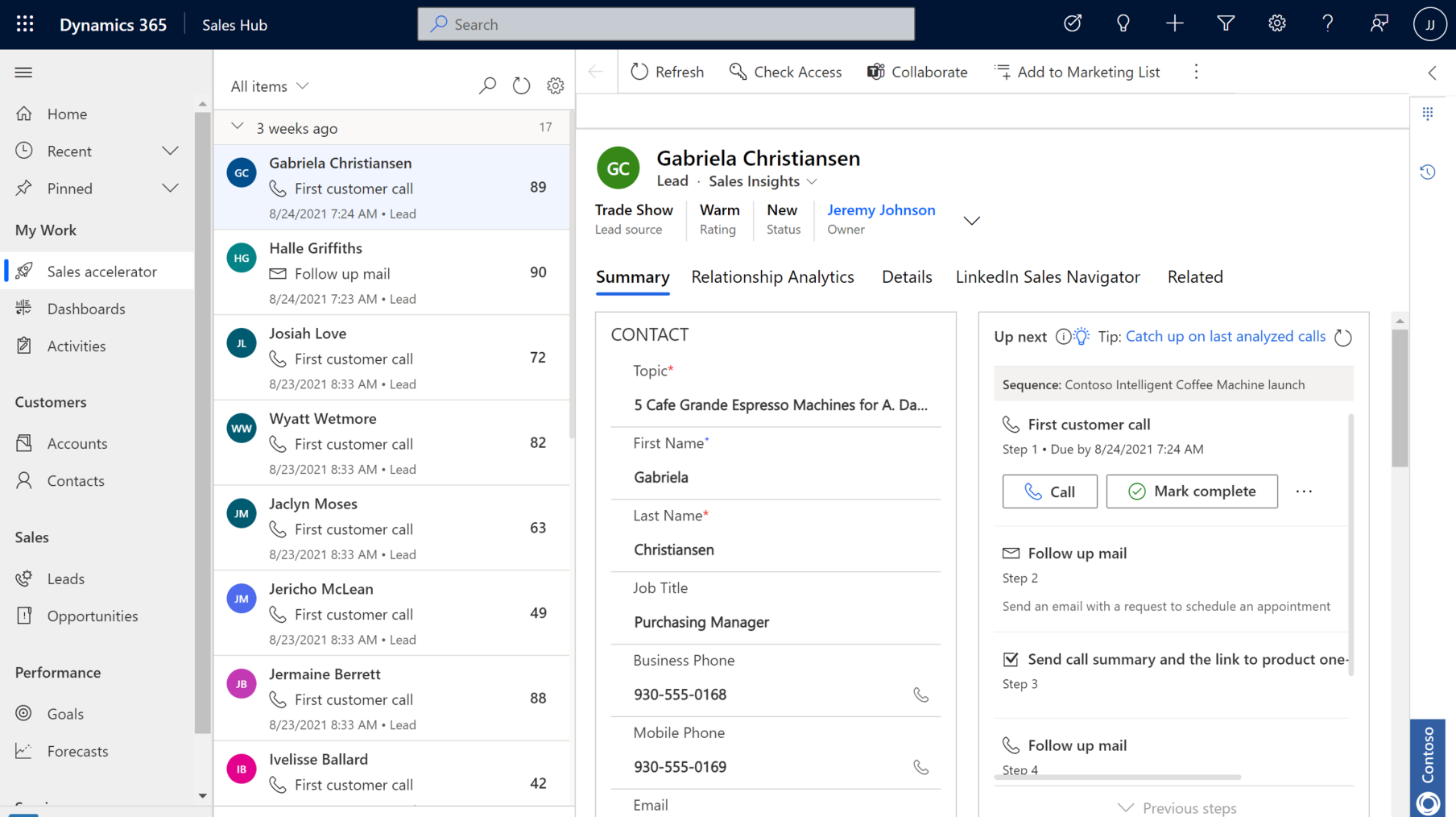
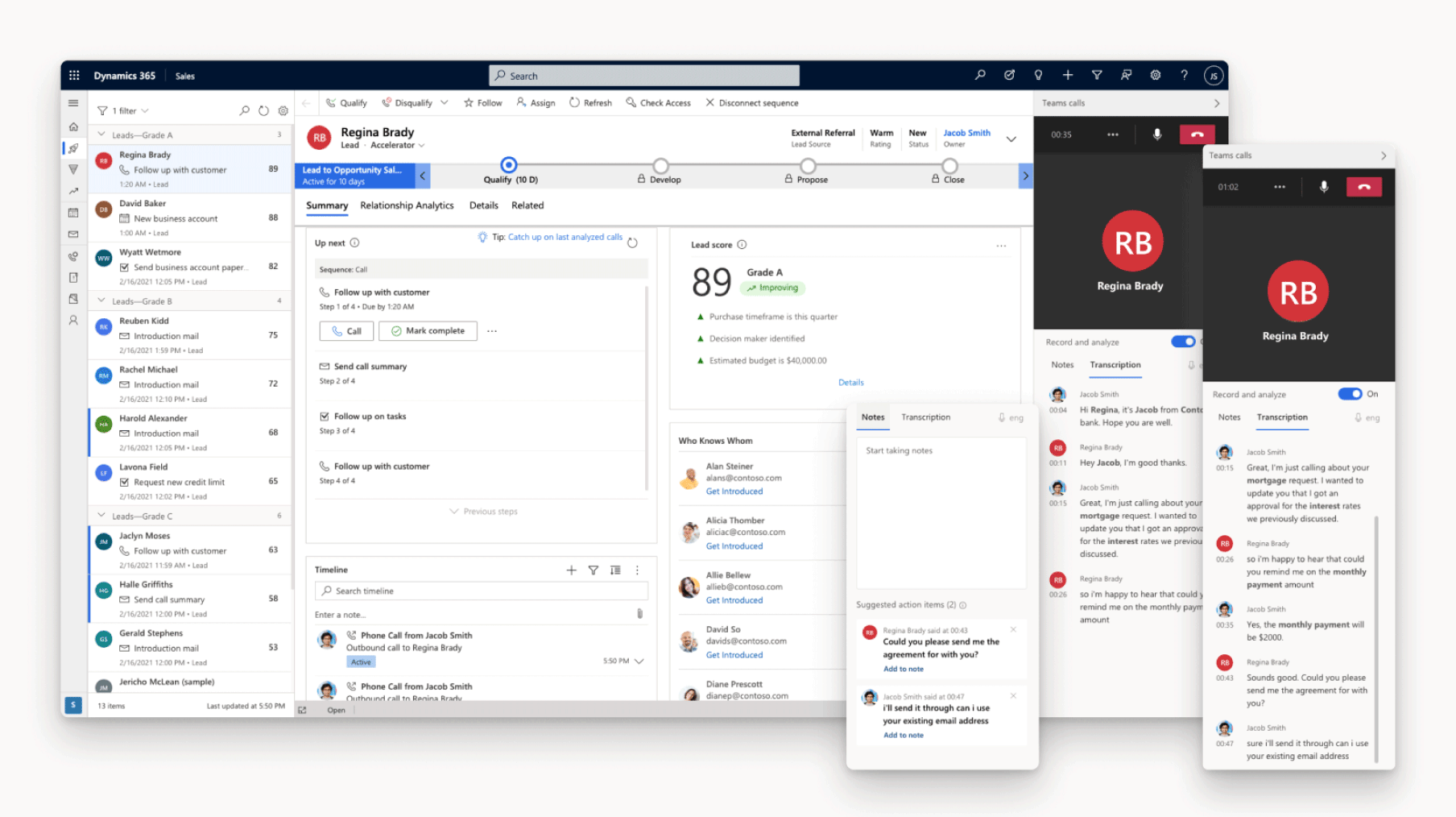
Microsoft Dynamics 365 Sales includes advanced lead tracking capabilities that help businesses manage the entire lead lifecycle.
Lead management capabilities include:
- Automated lead assignment
- Lead qualification
- Opportunity creation
- Lead scoring
- Customer journey tracking
- Pipeline routing
These tools reduce manual work and ensure high-value opportunities receive immediate attention.
Sales representatives gain better visibility into lead quality and can prioritize activities more effectively.
Sales Pipeline Management
Managing a healthy pipeline is essential for predictable revenue growth.
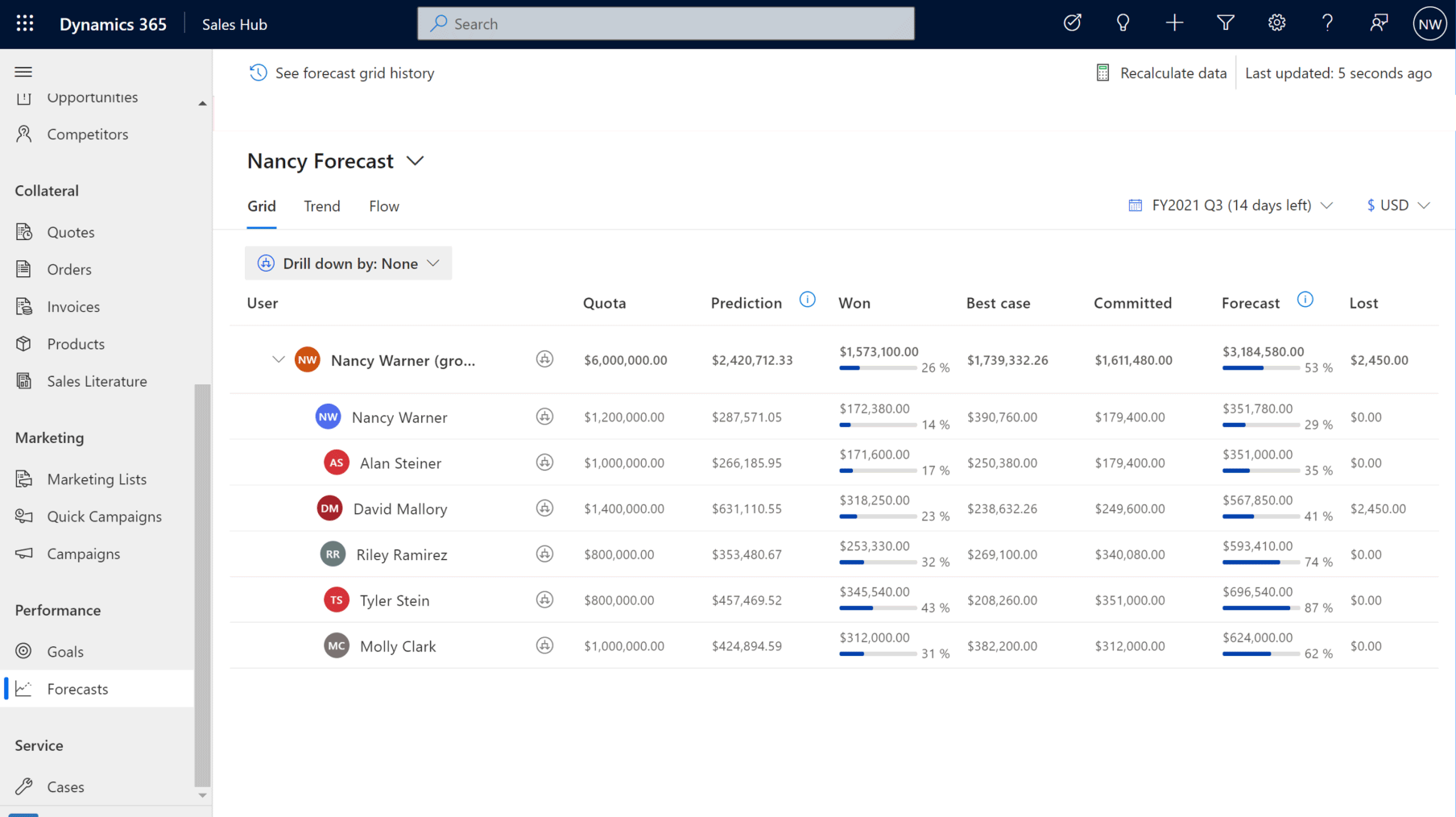
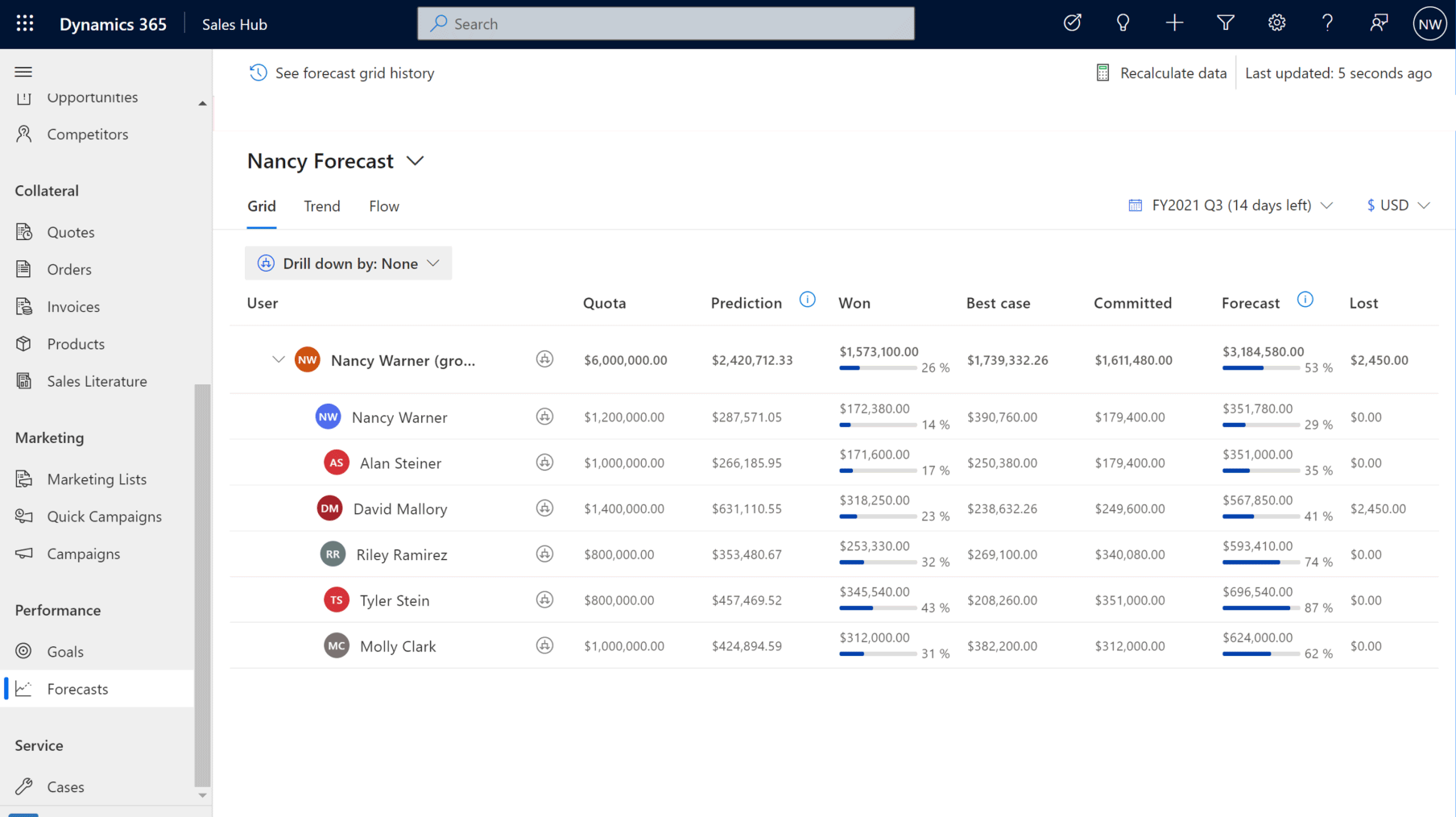
Microsoft Dynamics 365 Sales provides visual sales pipeline management capabilities that allow teams to monitor opportunities across multiple stages.
Pipeline management includes:
- Opportunity monitoring
- Forecasting
- Revenue projections
- Stage tracking
- Deal prioritization
- Performance monitoring
Managers gain improved forecasting accuracy while sales representatives maintain visibility into upcoming opportunities.
This functionality transforms Microsoft Dynamics 365 Sales into a powerful sales CRM software platform.
Marketing Automation
Modern customer acquisition depends heavily on automation.
Microsoft Dynamics 365 Sales supports marketing CRM activities through integrated customer communication and campaign management capabilities.
Marketing functionality includes:
- Email marketing
- Customer segmentation
- Engagement tracking
- Campaign execution
- Behavioral insights
- Automated communication
Marketing automation enables organizations to improve customer engagement while reducing manual execution requirements.
Sales Automation
Sales teams often lose valuable time completing repetitive administrative activities.
Microsoft Dynamics 365 Sales reduces this burden through sales automation.
Automation capabilities include:
- Workflow execution
- Automated reminders
- Follow-up scheduling
- Task assignment
- Opportunity progression
- Sales activity automation
This allows teams to focus more on customer conversations and less on administrative work.
Reporting and Analytics
Strong business decisions depend on access to reliable information.
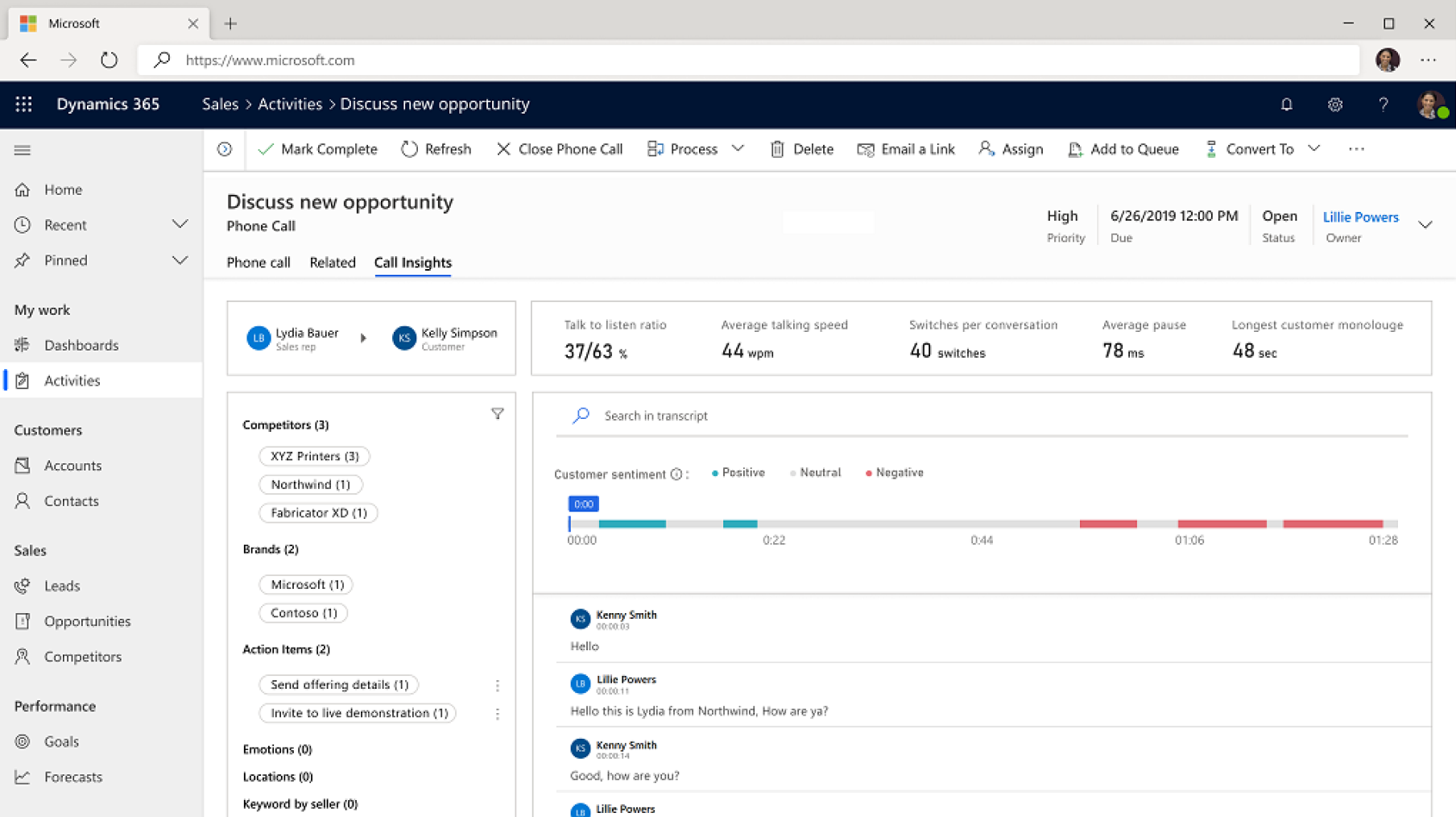
Microsoft Dynamics 365 Sales includes comprehensive reporting and analytics capabilities designed to improve visibility into sales performance.
Analytics capabilities include:
- CRM analytics
- Revenue analysis
- Performance dashboards
- Conversion tracking
- Forecast reports
- Activity measurement
The platform enables businesses to monitor KPIs and identify opportunities for optimization.
Workflow Automation
Workflow automation improves consistency and operational efficiency.
Microsoft Dynamics 365 Sales supports:
- Business rules
- Approvals
- Internal notifications
- Assignment workflows
- Escalation management
- Multi-step automation
Automation reduces manual effort and improves execution speed.
Mobile Accessibility
Modern teams require flexibility.
Microsoft Dynamics 365 Sales supports mobile operations through applications that provide access to CRM data and customer information.
Mobile capabilities include:
- Opportunity updates
- Contact access
- Task management
- Meeting scheduling
- Notifications
This supports remote work and improves customer responsiveness.
CRM Dashboard and Custom Reporting
The CRM dashboard provides visibility into performance metrics.
Organizations can build dashboards for:
- Sales KPIs
- Revenue tracking
- Team productivity
- Customer engagement
- Pipeline health
Dashboards support faster decision-making and stronger operational alignment.
Benefits of Using Microsoft Dynamics 365 Sales
Microsoft Dynamics 365 Sales delivers measurable business improvements by helping organizations streamline operations and improve customer relationships.
One of the most immediate benefits is increased productivity. Employees spend less time updating systems manually and more time focusing on strategic customer interactions.
Lead management becomes significantly more effective because businesses gain structured workflows and improved visibility into customer journeys.
Customer relationships improve because teams gain access to complete interaction histories and customer insights.
Team collaboration becomes stronger because departments operate from shared information rather than disconnected systems.
Organizations also benefit from improved reporting and analytics capabilities, allowing leadership teams to make more informed decisions.
These improvements contribute directly to business growth and long-term operational scalability.
Microsoft Dynamics 365 Sales Integrations
One of the strongest competitive advantages of Microsoft Dynamics 365 Sales is its extensive integration ecosystem. Modern businesses rarely operate with a single software platform. Instead, they rely on connected environments where CRM software works seamlessly alongside communication tools, productivity applications, analytics platforms, eCommerce systems, and operational software.
Microsoft Dynamics 365 Sales is designed to become the central customer intelligence hub while integrating with the tools businesses already use.
These integrations help organizations reduce manual data entry, improve customer visibility, and automate cross-platform workflows
Salesforce Integration
Although Salesforce is often viewed as a competing platform, some organizations use integration capabilities to synchronize customer information between environments during migrations or multi-platform operations.
Sales teams benefit from:
- Customer record synchronization
- Opportunity visibility
- Unified reporting
- Data consistency
Gmail Integration
Businesses using Gmail can connect communications directly to CRM records.
Capabilities include:
- Email synchronization
- Activity tracking
- Contact creation
- Conversation history
This integration reduces switching between systems and supports stronger customer engagement.
Outlook Integration
Microsoft Outlook integration is one of the platform’s most widely adopted capabilities.
Users can:
- Synchronize calendars
- Track customer conversations
- Schedule meetings
- Access CRM records directly from inboxes
This improves productivity and customer communication.
Slack Integration
Organizations that depend on team collaboration can connect Slack with Microsoft Dynamics 365 Sales.
Benefits include:
- Opportunity notifications
- Team communication
- Customer updates
- Workflow alerts
Shopify Integration
Retail and eCommerce businesses can connect Shopify with CRM workflows.
Capabilities include:
- Purchase tracking
- Customer segmentation
- Revenue reporting
- Customer journey visibility
Zapier Integration
Zapier enables businesses to automate workflows across thousands of applications.
Common use cases include:
- Automated lead creation
- Contact synchronization
- Campaign execution
- Task creation
Microsoft 365 Integration
This remains one of the most valuable integrations within the ecosystem.
Connected tools include:
- Outlook
- Excel
- Teams
- Word
- SharePoint
Organizations gain stronger collaboration and improved operational alignment.
Additional Business Integrations
Microsoft Dynamics 365 Sales also integrates with:
- LinkedIn Sales Navigator
- Power BI
- Microsoft Teams
- Adobe platforms
- ERP systems
- Accounting platforms
- Customer support software
- Analytics platforms
- Telephony tools
- Collaboration systems
These integrations strengthen Microsoft Dynamics 365 Sales as a complete CRM solution capable of supporting complex operational environments.
Pros and Cons of Microsoft Dynamics 365 Sales
Pros | Cons |
Deep integration with Microsoft 365 tools including Outlook, Teams, Excel, and SharePoint | Initial implementation can require technical expertise |
Powerful sales automation capabilities that reduce manual work | Advanced functionality may increase total ownership costs |
Strong reporting and analytics with customizable dashboards | The user interface may feel complex for first-time CRM users |
Scalable architecture suitable for startups through enterprise organizations | Customization and administration can require dedicated resources |
AI-powered insights for opportunity scoring and sales forecasting | Training may be needed for teams to fully utilize all features |
Excellent customer data management and centralized contact management | Some advanced capabilities depend on additional Microsoft services |
Extensive integration ecosystem across business applications | Setup and configuration may take longer than lightweight CRM platforms |
Flexible workflow automation for complex business processes | Smaller businesses may find certain enterprise features unnecessary |
Strong security, governance, and enterprise-grade controls | Licensing structures can become difficult to evaluate at scale |
Supports advanced sales pipeline management and lead tracking | Performance and customization complexity may increase in larger deployments |
Who Should Use Microsoft Dynamics 365 Sales?
Startups
Microsoft Dynamics 365 Sales is a valuable CRM software solution for startups looking to establish structured sales processes from an early stage. The platform helps startups manage leads, track customer interactions, automate sales activities, and improve pipeline visibility. By leveraging built-in automation, artificial intelligence, and reporting tools, startups can increase sales productivity and accelerate customer acquisition while preparing for future growth.
Small Businesses
Small businesses can use Microsoft Dynamics 365 Sales to centralize customer information, streamline sales operations, and improve relationship management. The platform enables sales teams to manage opportunities, automate follow-ups, forecast revenue, and monitor performance from a single environment. Businesses seeking a scalable CRM software solution that integrates with Microsoft products often find Dynamics 365 Sales particularly beneficial.
Mid-Sized Businesses
Growing organizations benefit from Microsoft Dynamics 365 Sales by gaining better visibility into customer relationships, sales pipelines, and revenue opportunities. The platform helps mid-sized businesses automate workflows, improve collaboration between departments, enhance forecasting accuracy, and scale sales operations efficiently. Its integration with Microsoft 365, Teams, Power BI, and other business applications supports productivity across the organization.
Enterprises
Large enterprises are among the primary users of Microsoft Dynamics 365 Sales. The platform offers advanced CRM capabilities, artificial intelligence-driven insights, sales forecasting, opportunity management, workflow automation, and extensive customization options. Enterprise organizations can use Dynamics 365 Sales to manage complex sales processes, support global sales teams, improve customer engagement, and drive revenue growth through data-driven decision-making.
B2B Sales Teams
B2B organizations use Microsoft Dynamics 365 Sales to manage long sales cycles, track account relationships, monitor opportunities, and coordinate customer engagement activities. The platform helps sales representatives maintain complete visibility into prospect interactions while supporting account-based selling strategies and complex sales workflows.
Account Managers
Account managers benefit from Dynamics 365 Sales by gaining a comprehensive view of customer relationships, purchase history, communication records, and sales opportunities. This visibility enables more personalized engagement, stronger customer retention, and increased cross-selling and upselling opportunities.
Sales Managers and Revenue Leaders
Sales managers use Microsoft Dynamics 365 Sales to monitor team performance, forecast revenue, evaluate pipeline health, and identify areas for improvement. Advanced reporting, analytics, and AI-powered insights help leaders make informed decisions and optimize sales strategies.
Organizations Using Microsoft Ecosystem
Businesses already using Microsoft 365, Microsoft Teams, Outlook, Power BI, Power Automate, and other Microsoft solutions can maximize value through seamless integration with Dynamics 365 Sales. The connected ecosystem improves collaboration, data sharing, productivity, and workflow automation across departments.
Microsoft Dynamics 365 Sales Use Cases
Microsoft Dynamics 365 Sales supports multiple business scenarios.
Lead Management
A B2B technology provider captures website inquiries and automatically routes qualified leads to the correct sales representatives.
This improves response times and increases conversion potential.
Sales Pipeline Tracking
A consulting organization monitors deal progression across multiple service lines and forecasts quarterly revenue.
Pipeline visibility allows leadership to allocate resources more effectively.
Marketing Campaigns
A retail organization launches segmented customer campaigns and monitors engagement metrics through integrated reporting.
Marketing automation improves campaign performance while reducing manual execution.
Customer Support
A service-based company centralizes customer interactions and improves support resolution times.
Customer service teams gain complete visibility into communication history.
Customer Retention
Customer success teams identify declining engagement patterns and launch proactive retention initiatives.
This improves long-term customer value.
Top Alternatives Microsoft Dynamics 365 Sales
Businesses evaluating CRM software frequently compare multiple platforms before selecting a solution.
Salesforce Sales Cloud
Salesforce Sales Cloud remains one of the most recognized enterprise CRM platforms.
It is known for:
- Extensive customization
- Large application ecosystem
- Enterprise capabilities
- Advanced automation
Salesforce often appeals to organizations with highly complex operational requirements.
HubSpot CRM
HubSpot CRM emphasizes usability and fast adoption.
Strengths include:
- User-friendly experience
- Marketing capabilities
- Free entry options
- Automation features
Zoho CRM
Zoho CRM provides a balanced approach between flexibility and affordability.
Popular capabilities include:
- Workflow automation
- Customer engagement
- CRM analytics
- Sales management
Pipedrive
Pipedrive specializes in visual sales pipeline management.
Organizations often choose Pipedrive for:
- Simplicity
- Pipeline visibility
- Sales execution
Freshsales
Freshsales focuses on growing sales organizations.
Key capabilities include:
- Lead management
- Automation
- Reporting
- Customer communication
Microsoft Dynamics 365 Sales vs Competitors
Microsoft Dynamics 365 Sales performs particularly well for businesses already invested in the Microsoft ecosystem.
Feature | Dynamics 365 Sales | Salesforce Sales Cloud | HubSpot CRM | Zoho CRM | Freshsales |
Ease of Use | Strong | Moderate | Excellent | Excellent | Good |
Sales Automation | Advanced | Advanced | Strong | Strong | Strong |
Reporting and Analytics | Enterprise | Enterprise | Advanced | Advanced | Good |
Integrations | Extensive | Extensive | Extensive | Extensive | Moderate |
Customer Engagement | Excellent | Excellent | Strong | Strong | Good |
Enterprise Capability | Excellent | Excellent | Strong | Strong | Moderate |
Workflow Automation | Advanced | Advanced | Strong | Strong | Moderate |
Scalability | Excellent | Excellent | Strong | Strong | Good |
Why Choose Salesforce Sales Cloud?
Salesforce Sales Cloud remains a commonly evaluated alternative for organizations researching enterprise CRM platforms.
Reasons businesses consider Salesforce Sales Cloud include:
- Enterprise-grade customization
- Extensive integration marketplace
- Advanced automation capabilities
- AI-driven sales recommendations
- Flexible workflow architecture
- Global deployment support
- Strong reporting capabilities
- Broad ecosystem adoption
Organizations evaluating Microsoft Dynamics 365 Sales often compare operational complexity, implementation preferences, and existing technology investments.
Frequently Asked Questions (FAQ)
What is Microsoft Dynamics 365 Sales?
Microsoft Dynamics 365 Sales is a cloud-based customer relationship management (CRM) software designed to help businesses manage leads, opportunities, customer relationships, sales processes, and revenue growth. The platform enables sales teams to improve productivity, automate workflows, gain customer insights, and close deals more efficiently.
Who should use Microsoft Dynamics 365 Sales?
Microsoft Dynamics 365 Sales is suitable for small businesses, mid-sized companies, and large enterprises that need a scalable CRM solution. It is particularly beneficial for organizations already using Microsoft 365, Teams, Outlook, and other Microsoft business applications.
Does Microsoft Dynamics 365 Sales support sales automation?
Yes. Microsoft Dynamics 365 Sales provides advanced sales automation capabilities including lead scoring, opportunity management, workflow automation, follow-up reminders, sales forecasting, and AI-driven recommendations that help sales teams improve efficiency and productivity.
Can Microsoft Dynamics 365 Sales integrate with Microsoft products?
Yes. Microsoft Dynamics 365 Sales integrates seamlessly with Microsoft 365, Outlook, Teams, Excel, SharePoint, Power BI, Azure, and other Microsoft business applications, creating a connected business ecosystem.
Where can I compare Microsoft Dynamics 365 Sales with other CRM software?
If you're evaluating Microsoft Dynamics 365 Sales alongside other CRM platforms, Krowdbase allows you to compare features, integrations, use cases, pros and cons, and software categories side by side. This helps businesses identify the CRM solution that best fits their requirements.
Where can I find Microsoft Dynamics 365 Sales alternatives?
Businesses looking for Microsoft Dynamics 365 Sales alternatives can explore Krowdbase to discover and compare leading CRM software solutions such as Salesforce CRM, HubSpot CRM, Zoho CRM, Insightly, Pipedrive, Freshsales, and other customer relationship management platforms. Krowdbase provides detailed software comparisons, feature breakdowns, integrations, and use cases to simplify the software selection process.
How do I choose the best CRM software for my business?
Choosing the right CRM software depends on factors such as business size, sales complexity, automation requirements, reporting needs, integration preferences, and budget. Krowdbase helps businesses evaluate and compare CRM platforms based on these requirements.
Can I compare CRM software features before making a decision?
Yes. Comparing CRM features such as contact management, lead tracking, sales automation, reporting, workflow automation, AI capabilities, integrations, and customer engagement tools is essential before selecting a platform. Krowdbase enables businesses to compare these capabilities across multiple CRM solutions.
Where can businesses discover new software solutions?
Krowdbase is a software discovery platform where businesses can explore CRM software, ERP systems, project management tools, HR software, marketing automation platforms, customer support solutions, and thousands of other business applications.
Why use Krowdbase for software research?
Krowdbase helps businesses make informed software decisions by providing detailed software profiles, feature comparisons, alternatives, use cases, category-specific recommendations, and buyer-focused insights. This makes software evaluation faster, easier, and more reliable.
Conclusion
Microsoft Dynamics 365 Sales has established itself as one of the leading customer relationship management software platforms by combining intelligent automation, customer data management, reporting and analytics, customer engagement, and workflow automation into a unified environment.
Its ability to support contact management, sales pipeline management, lead tracking, CRM analytics, and business growth makes it suitable for organizations ranging from startups to global enterprises.
Businesses evaluating the best CRM software should consider how well Microsoft Dynamics 365 Sales aligns with their operational requirements, customer management goals, integration needs, and long-term growth strategy.
With extensive integrations, strong automation capabilities, enterprise-grade functionality, and deep productivity connections, Microsoft Dynamics 365 Sales remains a compelling CRM solution for modern organizations.
Screenshots
Categories
FAQ
The official website of Microsoft Dynamics 365 Sales is http://www.microsoft.com/
Microsoft Dynamics 365 Sales belongs to the CRM, Customer Communications Management, Customer Engagement, Customer Journey Mapping Tools, Inside Sales, Lead Management, Online CRM, Sales Force Automation category.
Microsoft Dynamics 365 Sales is used in industries such as Financial Services, Retail, Professional Training, Education Management.
Microsoft Dynamics 365 Sales is built for Mid Size Business, Enterprise
Microsoft Dynamics 365 Sales supports English, French, German, Italian, Brazilian Portuguese, Spanish, Swedish, Turkish, Japanese, Korean, Arabic, Greek
Microsoft Dynamics 365 Sales supports Web-based, Windows, Mac, Android, iPhone/iPad devices.
The starting price of Microsoft Dynamics 365 Sales is USD 65/per month.
Yes, Microsoft Dynamics 365 Sales offers a free trial.
Microsoft Dynamics 365 Sales was founded in 1975.
Microsoft Dynamics 365 Sales has approximately 1000+ employees.
Microsoft Dynamics 365 Sales is located in United States.
Microsoft Dynamics 365 Sales was founded by Microsoft.
Need help choosing this software?
Have questions about features, pricing, integrations, or implementation? Send an enquiry to the vendor and get the information you need.
Pricing
Starting at:
$65/per month
Free Trial Available
Vendor Details
- Vendor
- Microsoft
- Founded
- 1975
- Locations
- United States
- Company Size
- 1000+
- Social Media


